

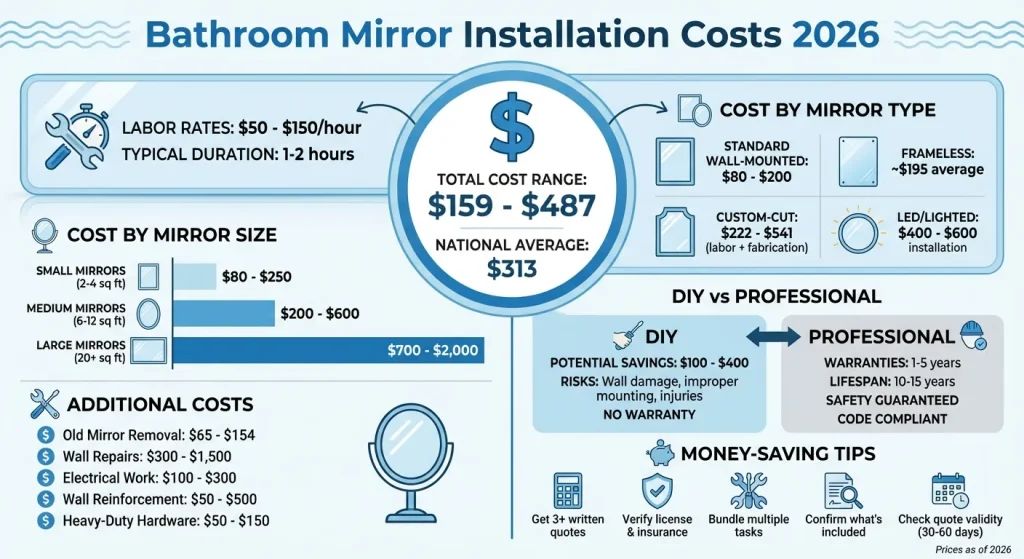
Hiring a professional to install a bathroom mirror typically costs $159 to $487, with an average of $313. Labor rates range from $50 to $150 per hour, and most installations take 1-2 hours. Factors like mirror size, wall type, and additional features (e.g., LED lights) significantly affect pricing. Removal of old mirrors, wall repairs, and electrical work can add $50 to $1,500 to the total cost.
Key Cost Factors:
- Mirror Size & Weight: Larger or heavier mirrors cost more due to labor and hardware needs.
- Mirror Type: Frameless, custom-cut, or LED mirrors require specialized installation, increasing costs.
- Wall Type: Tile, masonry, or uneven walls demand extra prep and tools, raising labor fees.
- Old Mirror Removal: Adds $65-$154, plus potential wall repair costs ($300-$1,500).
- Electrical Work: For lighted mirrors, wiring or outlet installation costs $100-$300.
DIY vs. Professional:
- DIY Savings: Can save $100-$400 on labor but risks costly mistakes (e.g., wall damage, improper mounting).
- Professional Benefits: Ensures safety, proper alignment, and durability (10-15 years lifespan). May include warranties.
To get the best deal, request at least three written quotes from licensed and insured contractors. Always confirm what’s included (e.g., removal, cleanup, hardware) to avoid surprises.
 Easy DIY Outlet and LED Mirror Install
 Easy DIY Outlet and LED Mirror Install

Why Hire a Professional for Bathroom Mirror Installation Near Me
Installing a bathroom mirror might seem straightforward, but it involves challenges like weight, fragility, and hidden risks. Hiring a professional ensures the job is done safely and correctly.
Safety Risks with Heavy or Frameless Mirrors
Frameless mirrors, with their sharp, unprotected edges, pose a high risk of lacerations. They’re also more likely to slip during installation, increasing the chances of injury [8]. Luxe Mirrors Australia highlights this danger:
The risk of injury is far greater than the cost of the material [8].
Large mirrors – especially those over 48 inches – can develop internal stress that leads to spontaneous shattering [10]. Carrying them overhead is particularly hazardous; if the glass breaks, it can result in severe or even fatal injuries [8]. Professionals mitigate these risks by using specialized tools and following the "Two-Person Rule" for safe handling [9].
Precision and Secure Wall Mounting
Achieving a secure and perfectly aligned mirror installation takes more than just basic tools. Professionals rely on advanced alignment equipment and stud finders to ensure the mirror lines up seamlessly with vanities, cabinets, and trim. For mirrors weighing over 50 pounds, they use heavy-duty hardware like toggle bolts and reinforcement plates, as standard drywall anchors aren’t reliable for long-term support [2][12].
Different mirrors require specific mounting systems. Frameless mirrors, for instance, often need J-channel systems or special adhesives, while larger mirrors rely on hardware that evenly distributes weight across the wall [4][12]. Labor costs typically range from $50 to $150 per hour, with most installations completed in one to two hours [12]. This professional precision not only ensures stability but also prevents potential wall damage.
Avoiding Damage to Tile, Drywall, or Plumbing
Hidden elements like plumbing, wiring, and moisture barriers add complexity to mirror installation. Professionals drill into grout lines instead of tile to avoid cracks and use adhesives designed for specific wall types [5][6][7]. Mistakes during installation can lead to costly repairs – fixing drywall damage alone can range from $300 to $1,500 per hole or crack [7].
Using the wrong adhesive can also cause permanent harm. For example, standard construction adhesives or acidic glass glues can react with the mirror’s silver backing, leading to "black edge" discoloration or mottling [10][11]. Professionals choose materials and techniques tailored to your wall type – whether it’s drywall, tile, or masonry – to prevent both immediate and long-term damage. These careful measures not only protect your walls but also ensure the mirror’s durability, saving you money over time.
Average Cost to Hire a Pro for Bathroom Mirror Installation

Typical Price Ranges for Installation Services
Hiring a professional to install a bathroom mirror typically costs between $159 and $487, with the national average landing around $313 [5][14]. Labor rates can vary from $50 to $150 per hour, depending on the contractor’s experience and your location [6][7]. Most standard installations take one to two hours, but more intricate projects – like those requiring wall reinforcement or electrical adjustments – will cost more [7].
Many contractors have a minimum service fee, usually between $100 and $200. While this may seem high for a single mirror, it can be more economical if combined with other home improvement tasks [5][6].
Understanding these base rates is key to navigating different pricing structures.
Flat-Rate vs. Hourly Pricing Models
Professionals generally offer two pricing options. Hourly rates work best for complex jobs, such as installing mirrors on tile or masonry, where the time required can be unpredictable [5][6]. On the other hand, flat-rate pricing is common for simpler projects, like mounting a mirror on drywall, as it provides a fixed cost per mirror or per square foot [5][6].
For larger installations, such as mirrored walls, contractors often charge $6 to $20 per square foot, which usually includes labor [7]. Always request a detailed quote that specifies whether the pricing is hourly or flat-rate. Be sure to ask about extra charges, such as wall reinforcement or debris disposal, to avoid surprises [1][13].
Regional differences also play a big role in pricing.
How Location Affects Pricing
Where you live can significantly influence the cost of installation. In urban areas or cities with a high cost of living, labor rates typically range from $100 to $150 per hour. In contrast, rural areas may see starting rates as low as $50 per hour [5][6]. However, contractors in remote locations often include travel fees to cover mileage and transit time [1][6].
Material costs and local taxes also impact the final bill. Sales tax on both materials and labor can add 5% to 10% to your total, with the exact rate varying by state and municipality [5][6]. To ensure you’re getting a fair price, it’s a good idea to gather at least three estimates from local professionals [7].
What Affects the Cost of Bathroom Mirror Installation
The cost of installing a bathroom mirror depends on several factors, such as the mirror’s size, design, the type of wall, and whether an existing mirror needs to be removed.
Mirror Size, Weight, and Thickness
The dimensions and weight of a mirror play a big role in determining installation expenses. For instance, small mirrors (2–4 square feet) typically cost between $80 and $250 to install. Medium-sized mirrors (6–12 square feet) range from $200 to $600, while large mirrors (20+ square feet) can reach $700 to $2,000 [5]. Most installations assume a standard thickness of 1/4 inch, which averages about $6 to $20 per square foot, including labor [7].
Heavier mirrors require additional support. If a mirror weighs over 50 pounds, installers may need to use heavy-duty hangers, adding $50 to $150 to the overall cost. In some cases, a second installer might be needed, further increasing labor expenses. These factors tie directly into the costs associated with different mirror styles.
Framed vs. Frameless Mirror Installation
The design of the mirror also impacts installation complexity. Framed mirrors are generally easier to hang, as they can be mounted like a picture using standard hooks or nails. However, the frame material can add to the cost. For example, wood frames typically increase material costs by $100–$150, while steel frames range from $80 to $200 [7].
On the other hand, frameless mirrors require more precision. Since their edges are exposed, they are more prone to chipping during installation. Contractors often use specialized hardware like J-channels, L-bars, or mirror mastic adhesive to secure them. While basic frameless mirrors may cost only $10 to $100 for materials, the labor and mounting hardware can bring the total installation cost to around $195. For larger custom-cut frameless mirrors, prices can range from $1,204 to $1,480 for approximately 120 square feet [7,14].
Wall Type and Preparation
The surface where the mirror will be mounted also affects labor and costs. Drywall is the easiest and most affordable option, serving as the baseline for installation pricing. However, more challenging surfaces like tile, masonry, or concrete require specialized tools – such as diamond or carbide drill bits – and careful techniques, like drilling into grout lines to avoid cracking tiles [5,15]. Mounting on these surfaces often demands heavy-duty anchors and adds time to the project.
Uneven or reinforced walls can increase preparation costs by $50 to $500. If wall damage occurs during installation or removal, repairs can add an additional $300 to $1,500 [7]. These factors make wall type and condition a key consideration for budgeting.
Removal of Existing Mirrors
If an old mirror needs to be removed before installing a new one, this can add both time and expense. For mirrors glued directly to the wall or mounted on tile, contractors must work carefully to avoid damaging the surface or breaking the glass. While many professionals include removal costs in their overall quote, it’s a good idea to confirm this in advance. If wall damage does occur during removal, repair costs can range from $300 to $1,500 [7]. To avoid surprises, always ask for a written estimate that specifies whether removal and disposal are part of the quoted price.
Bathroom Mirror Installation Costs by Mirror Type
The type of mirror you choose plays a big role in how much installation will cost. Standard mirrors are the most affordable, while options like LED or custom-cut mirrors require more skill, time, and sometimes additional professionals to install.
Standard Wall-Mounted Mirrors
Basic wall-mounted mirrors are the easiest and least expensive to install. They typically use simple mounting hardware like brackets, hooks, or adhesive, and a general contractor or handyperson can complete the job in about 1 to 2 hours [7]. Costs for these mirrors vary based on the frame material:
- Steel-framed mirrors: Expect to pay between $80 and $200.
- Wood-framed mirrors: Typically range from $100 to $150.
- Frameless mirrors: These average around $195 total, which includes $75 for labor and $20–$210 for the glass [7].
While standard mirrors are straightforward, frameless and custom-cut mirrors offer a more tailored look but come with added expenses.
Frameless and Custom-Cut Mirrors
Frameless and custom-cut mirrors are pricier due to the precision and care required during installation. Frameless mirrors, with their polished edges, are delicate and prone to chipping [4][6]. Installers often use specialized mounting systems like J-channels, L-bars, or mirror mastic adhesive to achieve a sleek, floating appearance [4][16].
Custom-cut mirrors are made to exact specifications and cannot be returned, so any measurement mistakes result in a total loss of material costs [6]. Here’s what you can expect:
- Material costs: $20 to $50 per square foot.
- Labor costs: Installation and fabrication range from $222 to $541 [16].
For oversized mirrors, you may need two professionals to handle the weight safely, further increasing labor costs [4][3].
LED and Lighted Bathroom Mirrors
Mirrors with integrated lighting are the most expensive to install, as they often require electrical work in addition to mounting. Standard LED mirror units range from $100 to $650, while high-end designer models can go up to $3,500 [7]. Installation costs typically fall between $400 and $600, covering both materials and labor [12].
If there’s no power source near the mounting location, you’ll need to add electrical wiring, which costs about $160 for valence or side-lighted mirrors [7]. Additionally, installing a GFCI outlet – often required in bathrooms – adds another $150 to $350 [7].
For smart mirrors with advanced features like Bluetooth, built-in displays, or voice activation, costs can range from $500 to $9,000. These require professional electrical work to ensure proper setup [7].
With so many options, balancing your budget, style preferences, and functional needs is key when choosing the right mirror for your bathroom.
sbb-itb-e0ea4e0
Additional Costs Homeowners Should Know About
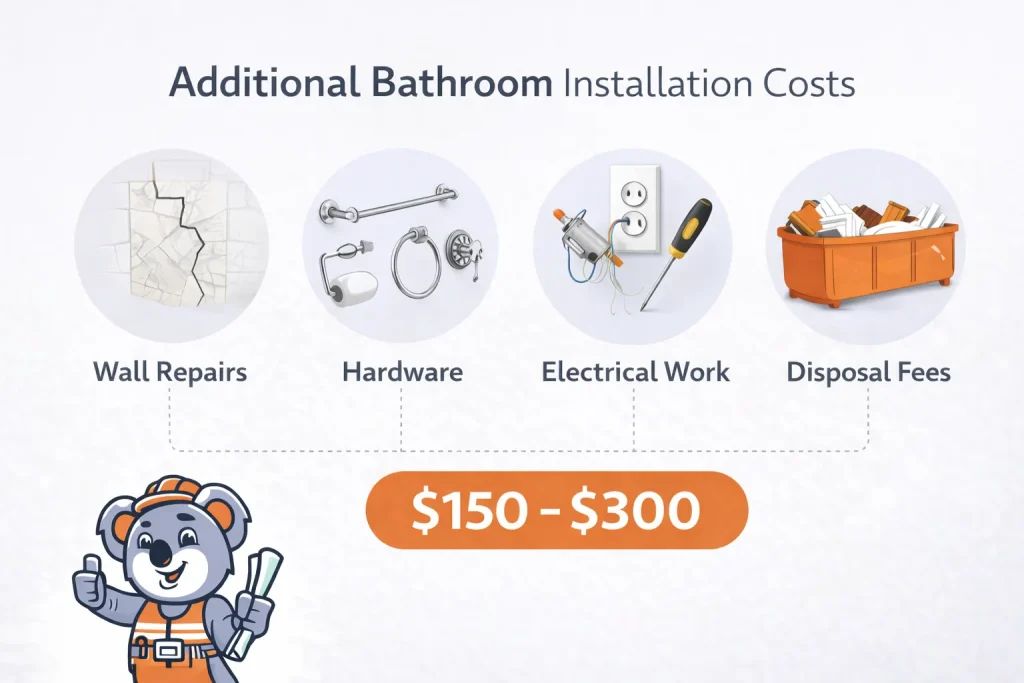
When planning your bathroom mirror project, it’s crucial to account for extra costs that might arise beyond the basic installation. These additional expenses can significantly impact your overall budget.
Wall Prep and Reinforcement
Before installation, walls often need repairs. Contractors may need to patch holes, sand surfaces, or address damage from previous mirror removal. These repairs typically add $50 to $150 to your total cost [4]. For heavy or oversized mirrors, walls may require reinforcement to ensure stability. This process involves installing plates, brackets, or cleat systems to prevent the mirror from pulling away or damaging the drywall. The cost of mounting hardware, such as specialized anchors and brackets, ranges from $10 to $40 [4][12], while more complex reinforcement can cost up to $500 [5].
To make the most of service fees, consider bundling other tasks with your mirror installation. This approach can help maximize the contractor’s time and reduce overall costs [12].
Electrical Work for Lighted Mirrors
If you’re installing a mirror with integrated lighting, you may need additional electrical work. If no power source exists at the installation site, a licensed electrician will need to add wiring or install a new outlet, costing between $100 and $300 [17]. Hardwired setups provide a cleaner look but must adhere to electrical codes, including GFCI protection [19][20]. Electricians typically charge hourly rates of $50 to $100 [12], and the total labor for electrical setup usually falls between $100 and $300 [17][18].
Mirrors with advanced features – like built-in defoggers, touch sensors, or Bluetooth connectivity – require more intricate wiring, which can increase labor time. If an outlet is installed behind the mirror, ensure it’s GFCI protected, as required by most building codes [20]. Some contractors suggest using a GFCI breaker instead of an outlet behind the mirror to avoid the hassle of resetting a hidden outlet [20].
Disposal of Old Mirrors
Removing and disposing of an old mirror is often not included in standard installation quotes. Professional removal services involve detaching the mirror, breaking it into pieces if necessary, and disposing of the glass properly. As of early 2026, these services cost $65.69 to $154 per mirror, with labor making up $46 to $99 of the total and disposal fees ranging from $68 to $77. Contractors may also charge a minimum fee of $100 to $200 [21][14][6].
To cut costs, you can remove and dispose of the old mirror yourself, potentially saving $100 to $400 [14]. Be sure to confirm whether debris disposal and cleanup are included in your contractor’s quote [21][13]. After removing the old mirror, plan for an additional $50 to $150 to repair the wall, including patching holes or smoothing rough areas [6].
DIY vs Hiring a Professional for Bathroom Mirror Installation
Choosing between installing a bathroom mirror yourself or hiring a professional comes down to weighing immediate cost savings against potential risks and long-term expenses. While going the DIY route can save you anywhere from $100 to $400 in labor costs[14], mistakes during installation can quickly overshadow those savings.
When DIY Installation Makes Sense
DIY installation is a good option for smaller, lightweight mirrors with frames, especially when mounting them on drywall. If the mirror weighs less than 5 lbs. and you’re confident handling basic tools, you can likely complete the job without much hassle[14]. These types of mirrors typically don’t require advanced skills, making the risk of damage relatively low. However, things get tricky with heavier mirrors (over 50 lbs.), frameless designs, or installations on materials like tile or masonry. These situations demand specialized tools and hardware – such as toggle bolts or cleat hangers – anchored into wall studs. Many homeowners find these tasks challenging to execute correctly[7]. For these more complex projects, professional help is often the safer choice.
Common DIY Mistakes and Their Costs
Mistakes during DIY mirror installation can lead to expensive repairs. For instance, accidentally drilling into hidden wiring or plumbing can cause thousands of dollars in damage[22]. Using the wrong adhesives is another common issue, as they can harm the mirror’s reflective backing[23]. Improper sealing is another risk, potentially allowing moisture to seep behind the glass. This can result in "mirror rot", where black or green spots form due to oxidation, often requiring a full mirror replacement[23][24]. If installation errors damage the drywall, repairs can range from $300 to $1,500 per hole or crack[7], which may end up costing more than hiring a professional in the first place.
Long-Term Value of Professional Installation
Hiring a professional for mirror installation provides several long-term advantages. Professionals often offer warranties lasting 1 to 5 years on both labor and materials, which are void if you choose to install the mirror yourself[14]. They ensure the mirror is securely anchored to wall studs and complies with local building codes, which can be crucial for maintaining your homeowner’s insurance[6]. Properly installed mirrors by professionals tend to last 10–15 years, whereas DIY installations may fail much sooner[6]. Additionally, professionally installed mirrors can increase your home’s appeal by enhancing light and space, offering a return on investment of 50% to 70%[6]. When you factor in risks like injuries, property damage, and installation errors, professional installation often proves to be the safer and more cost-effective option in the long run.
How to Get an Accurate Quote for Bathroom Mirror Installation
When planning a bathroom mirror installation, providing detailed project information upfront is key to getting a reliable quote. Miscommunication is a common issue in home renovations – 90% of problems arise from misunderstandings – so clear and thorough communication can save you from unexpected costs[26].
Information Contractors Need to Provide a Quote
To ensure contractors can give you an accurate estimate, you’ll need to supply specific details about your project. Start with the mirror’s dimensions, including height, width, and thickness (most mirrors are typically 1/4" thick), as well as its weight[7][15]. Specify the type of mirror – whether it’s framed, frameless, or custom-cut – and mention any additional features it might have, like LED lighting, anti-fog technology, or beveled edges[7][5].
Your wall type is also a critical factor. While drywall installations are fairly straightforward, mounting a mirror on tile, brick, or masonry may require specialized hardware and more labor[7][5]. If the project involves removing an old mirror or electrical work, make sure to include those details as well[7][5]. For remote estimates, sending clear photos of the installation area can help contractors identify potential challenges, such as uneven walls or tricky accessibility issues[5].
On-Site vs. Remote Estimates
On-site estimates are generally more accurate because they allow contractors to inspect the wall conditions and identify any hidden obstacles[6][5]. While remote estimates – based on photos or descriptions – are convenient for standard projects, they may miss critical details that could affect the final cost[16][25].
For more complex installations, like large frameless mirrors, lighted mirrors that require electrical work, or projects involving tile or masonry walls, an in-person evaluation is often worth the extra effort[6][4]. Remote quotes are helpful for initial budgeting but might not account for unexpected complications that arise during the installation process[16][25]. Choose the method that aligns with the complexity of your project.
Why Written Quotes Matter
A written quote acts as a binding agreement that outlines all costs and helps avoid unexpected fees[27]. It should break down expenses into categories like materials, labor, equipment, and overhead, rather than presenting a single lump sum[28][29]. The quote should also list what’s included – such as delivery, mounting hardware, wall preparation, and cleanup – and clarify what’s excluded[28][29].
Since material costs can fluctuate, most quotes are valid for 30 to 60 days, so make sure to check the expiration date[28]. Be cautious if a contractor refuses to provide a written quote, as this is a major warning sign[26].
"A written quote helps avoid mix-ups and protects your business from disputes or unpaid work." – business.gov.au[27]
It’s a good idea to gather at least three written quotes to compare labor rates and services[7]. Ensure the quote includes the contractor’s license number and proof of insurance[26]. To maintain control over your budget, structure payments around project milestones instead of paying a large sum upfront[26]. Clear and detailed quotes not only help you manage costs but also set clear expectations for the project.
How KoalatyRemodel.com Helps Homeowners Find Local Installers
Finding a reliable contractor for bathroom mirror installation doesn’t have to be a hassle. KoalatyRemodel.com simplifies the process by connecting homeowners with licensed professionals who specialize in mirror installation within their zip code. Instead of wasting time researching and calling multiple contractors, the platform matches your specific project needs – like mirror size, wall type, and custom features – with qualified installers in your area[12]. This approach ensures you find experts who can deliver quality results at a fair price.
Connecting Homeowners with Trusted Contractors
KoalatyRemodel.com links homeowners with up to three highly rated local contractors based on the details of their project[12]. By sharing specifics – such as mirror dimensions, weight, wall type, and any special requirements – you increase the likelihood of being matched with a professional who has the right expertise for your job.
The platform builds trust through real homeowner reviews and ratings. For instance, glass and mirror services in Ashburn, VA, boast an average rating of 4.5/5 from 196 reviews, while similar services in the NY Tristate Area have an impressive 4.8/5 rating based on 34 reviews[14][6]. These reviews highlight essential qualities like clear communication, professionalism, and the ability to handle complex installations safely.
Comparing Installation Prices with Ease
One of the standout features of KoalatyRemodel.com is its ability to simplify price comparison. The platform allows you to request and review multiple quotes in one place, eliminating the need to navigate confusing pricing structures across various contractors. By providing vendor-neutral estimates for educational purposes, it helps you establish a baseline cost before making any commitments[13].
No Obligation and No Pressure to Hire
KoalatyRemodel.com makes exploring your options effortless and pressure-free. The platform offers free, no-obligation quotes, letting you review contractor profiles and compare pricing at your own pace. There’s no rush to hire – just the tools and connections you need to make an informed decision when you’re ready.
Final Thoughts on Bathroom Mirror Installation Costs
Balancing Safety, Quality, and Budget
When installing a bathroom mirror, cutting corners on cost can lead to safety and quality issues. While tackling the project yourself might save $100 to $400 in labor fees, mistakes like improper mounting can result in broken glass, damaged walls, or even injuries[5][6]. Heavy mirrors, in particular, demand specialized hardware and precise installation techniques, including secure attachment to wall studs – something professionals are trained to handle effectively[7].
Hiring a professional ensures proper installation, often backed by warranties, and provides long-term durability. This makes it worth comparing several options to strike the right balance between cost, safety, and quality for your project.
Request Multiple Quotes for Comparison
To ensure you’re making an informed choice, gathering multiple quotes is essential. Aim for at least three written estimates to get a clear picture of pricing and included services. Look for details like whether hardware, wall reinforcement, old mirror removal, and cleanup are part of the package or considered extra. Labor costs typically range between $50 and $150 per hour, so understanding what’s included helps you budget more accurately[5][7].
Always confirm that contractors are licensed, bonded, and insured before hiring. Extremely low prices might indicate a lack of insurance or poor workmanship, both of which could jeopardize safety[7][6]. Proper verification not only ensures quality but also shields you from liability in case of accidents during the installation process[7].
FAQs
What are the main factors that affect the cost of installing a bathroom mirror?
The price of installing a bathroom mirror varies based on a few important factors. For starters, the size, weight, and thickness of the mirror are key considerations. Larger or heavier mirrors often demand extra effort and secure mounting methods, which can increase costs.
The type of mirror you choose also matters. Whether it’s framed, frameless, or a custom-cut design, each option can influence the overall price.
Another important factor is the wall type where the mirror will be installed. Surfaces like drywall, tile, or concrete can differ in terms of difficulty, often requiring specialized tools or preparation. Additional costs may arise if existing mirrors need to be removed or if wall reinforcement or repairs are necessary before installation. All these elements combined will determine the total expense for the project.
How can I get an accurate estimate for bathroom mirror installation?
To get an accurate estimate for installing your bathroom mirror, you’ll need to share some key details with the contractor. Start with the mirror dimensions, the type of mirror you’re installing (like framed, frameless, or lighted), and the wall material (whether it’s drywall, tile, or concrete). If you have any extra needs – like removing an old mirror or handling electrical work for a lighted mirror – make sure to mention those as well.
It’s always a good idea to request written quotes from professionals. While on-site estimates are typically more accurate, remote assessments can still give you a solid starting point. Don’t forget to clarify what’s included in the quote, like labor, materials, and any extra charges, so you can avoid unexpected costs later.
What are the risks of installing a bathroom mirror yourself instead of hiring a professional?
Installing a bathroom mirror on your own might seem like a straightforward task, but it comes with its fair share of risks. For starters, bathroom mirrors – especially larger or frameless designs – can be surprisingly heavy and fragile. Without the right tools or know-how, there’s a real chance of cracking the mirror, damaging your drywall or tiles, or even injuring yourself during the process.
Beyond safety concerns, DIY installations often lead to issues like uneven placement or insecure mounting. A crooked or poorly secured mirror isn’t just an eyesore – it’s also a hazard. If it isn’t firmly fixed, the mirror could fall, potentially causing damage or injury.
Bringing in a professional can make all the difference. They’ll ensure the mirror is installed correctly, securely, and safely, sparing you from costly mistakes and giving you confidence in the final result.