


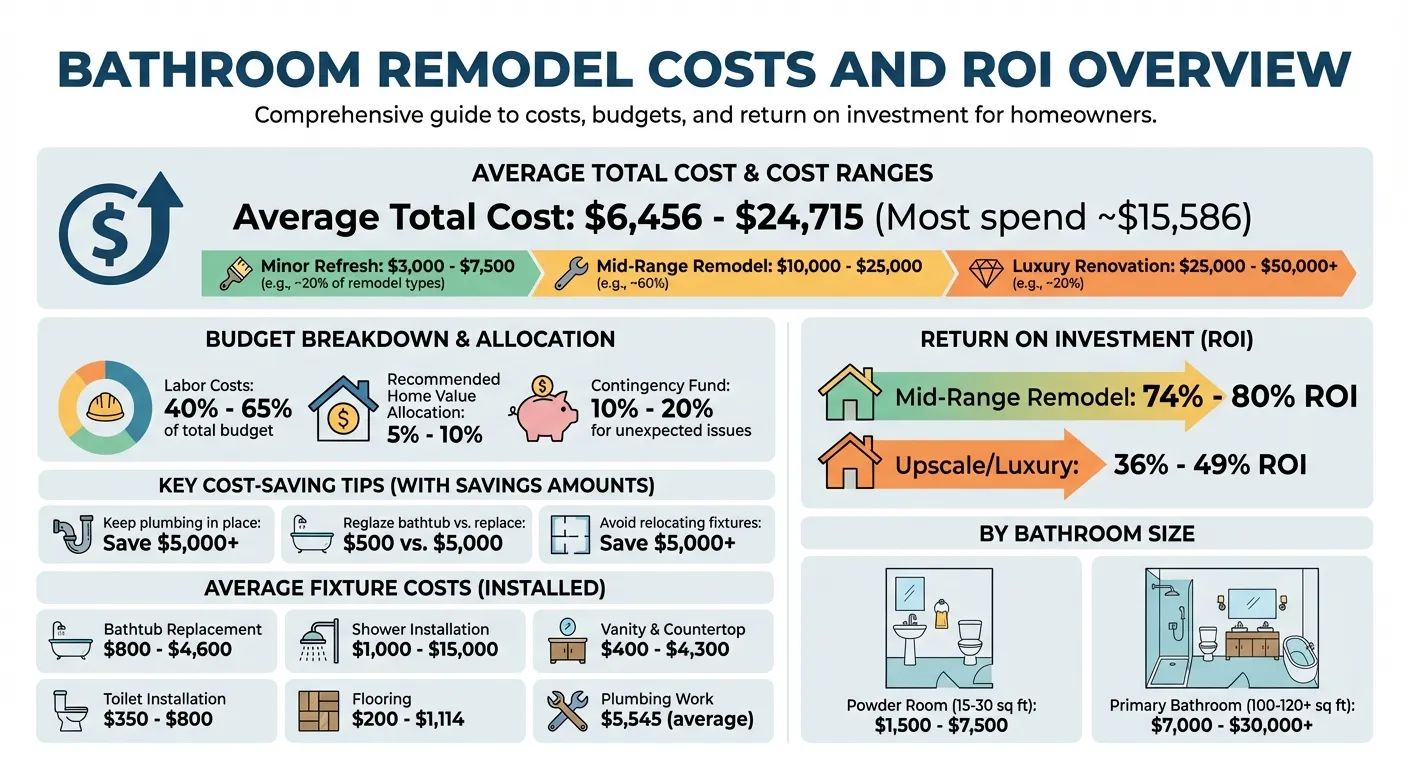
A bathroom remodel can transform your space, whether you’re making minor updates or a full renovation. Costs typically range from $6,456 to $24,715, with labor accounting for 40%–65% of the budget. Mid-range remodels often deliver an ROI of 74%–80%, making them a smart investment. Key tips:
- Budgeting: Plan for 10%–20% contingency to cover unexpected issues like water damage.
- Cost-saving: Keep plumbing and electrical lines in place to save $5,000 or more.
- Design Ideas: Walk-in showers, floating vanities, and recessed niches maximize space and add modern flair.
- Trends: Expect earthy tones, fluted glass enclosures, and stone basin sinks to dominate in 2026.
- Contractor Tips: Get at least 3 quotes, verify licenses, and confirm insurance.
Whether you’re updating for resale value or personal enjoyment, a bathroom renovation checklist and informed decisions will help you achieve your goals.
How Much Does a Bathroom Remodel REALLY Cost?
sbb-itb-e0ea4e0
Bathroom Remodel Ideas
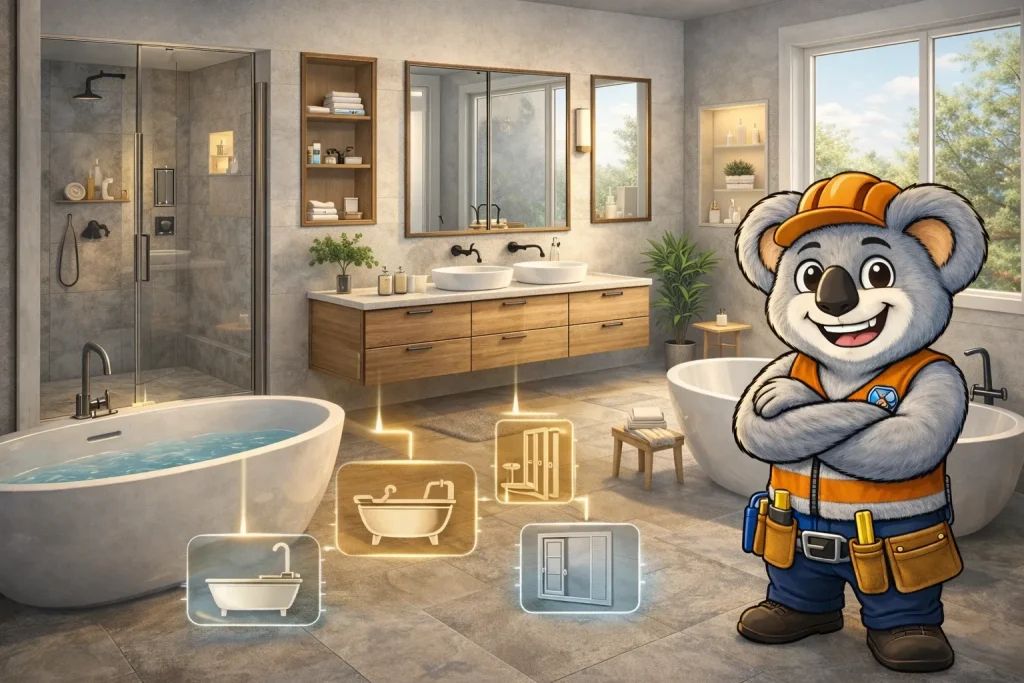
Modern bathroom remodels are all about making the most of your space while creating a retreat-like atmosphere. Swapping out bulky bathtubs for sleek walk-in showers not only saves space but also gives your bathroom a contemporary edge. Floating vanities help open up smaller spaces, and recessed niches provide extra storage without making the room feel cramped. These smart solutions lay the groundwork for tailored designs in both master and shared bathrooms.
In master bathrooms, the focus is on creating a spa-like escape. Think freestanding tubs, double vanities, and eye-catching stone basin sinks. Separating plumbing zones is another clever touch, allowing two people to use the space at once without getting in each other’s way. As Elizabeth Goltz of Design by Orion puts it:
"This is not a high-traffic room, so function is not as important as the wow factor" [7].
Shared bathrooms, on the other hand, require a bit more planning to balance accessibility with privacy. Jack and Jill layouts are a popular choice, but they need to be executed thoughtfully. Compartmentalizing the toilet and shower from the vanity area allows multiple users to get ready simultaneously without stepping on toes. Double sinks and individualized storage for each user help keep the peace during busy mornings. Olivia Horine of JayMarc Homes notes:
"When done correctly, a Jack and Jill bath can be an absolute gem in a family’s living space. However, if done wrong, they can be inconvenient and create frustration" [9].
Looking ahead, upcoming trends promise to refine both style and practicality even further. By 2026, expect to see built-in tub surrounds with handy ledge space, fluted glass shower enclosures that diffuse light while keeping water spots at bay, and warm, earthy tones like terracotta tiles. Stone basin sinks are also gaining popularity as striking design elements that elevate the overall look.
To get the most out of your average bathroom remodel budget, consider keeping your plumbing and electrical lines where they are – relocating major fixtures like toilets can add $5,000 or more to your costs [8]. Invest in durable faucets and showerheads with scratch-resistant finishes for everyday convenience. And while stain-resistant grout may come with a higher upfront price, it can save you time and effort on cleaning while keeping your tile work looking pristine [7][8]. These thoughtful choices not only enhance your bathroom’s style and functionality but also help you make informed decisions as you plan your remodel.
Fixtures, Finishes, and Design Features
Vanities and Sinks
The materials you select for your vanity and sink play a big role in shaping both the durability and overall style of your bathroom. Quartz is a standout choice for vanity tops. It’s non-porous, resists stains, and doesn’t require sealing, making it a practical option for busy households. As Kitchen Concepts Plus explains:
"Quartz is often considered the gold standard for bathroom vanity tops… Made from engineered stone, it’s non-porous, resistant to stains, and easy to maintain" [11].
At around $75 per square foot, quartz delivers excellent resistance to stains, abrasion, and heat [13].
When it comes to the vanity base, solid wood provides the strength needed to support heavy stone tops, while plywood offers moisture resistance without warping. On the other hand, particle board doesn’t hold up well in humid environments and should be avoided [12][14]. While natural marble offers undeniable beauty, its porous nature requires sealing every six months, making it less practical for high-traffic bathrooms [13].
Interestingly, 90% of homeowners prioritize durability when upgrading their bathrooms [10]. Engineered quartz now comes in marble-inspired designs, such as Calacatta Gold, offering the elegance of luxury stone without the high maintenance [13]. For professional installations, expect to spend an average of $2,929 for cabinetry and $332 for countertops [1].
Next, let’s look at how incorporating natural light and glass elements can elevate your bathroom’s ambiance.
Windows and Natural Light
Natural light has the power to transform a bathroom from purely functional to serene and spa-like. The good news? Achieving this doesn’t always require major renovations. Frameless glass doors and wall panels can maximize light flow by removing visual barriers, with costs typically ranging from $688 to $1,000 [2][6]. For larger remodels, a curbless shower with glass enclosures is worth considering. Not only does this design enhance accessibility, but it also allows more window light to flood the space [1][2].
Mirrors or mirrored medicine cabinets are another simple way to brighten up darker corners. Replacements generally cost between $140 and $430 [2]. To tie the look together, consider matching your mirror frame to the room’s moldings or selecting a bold frame to create a striking focal point [7]. Additionally, light-colored finishes on walls and ceilings help amplify the natural light entering through windows [15].
For those planning significant updates, adding new windows or skylights can make a dramatic difference, though these projects often require permits [1][15]. Doors and windows typically account for 4% of a bathroom remodel budget [6]. If structural changes aren’t in the cards, smaller updates like new window treatments, modern lighting fixtures (costing $70–$300), or sconce lights (around $350) can still make a big impact [2][6][15].
Interior designer Alecia Taylor highlights the broader benefits of bathroom upgrades:
"An updated bathroom not only improves functionality and safety… but also enhances energy efficiency with modern fixtures like low-flow toilets and LED lighting" [1].
Before diving into window-related projects, be sure to check your local building codes [15].
Bathroom Remodel Costs and Budgeting
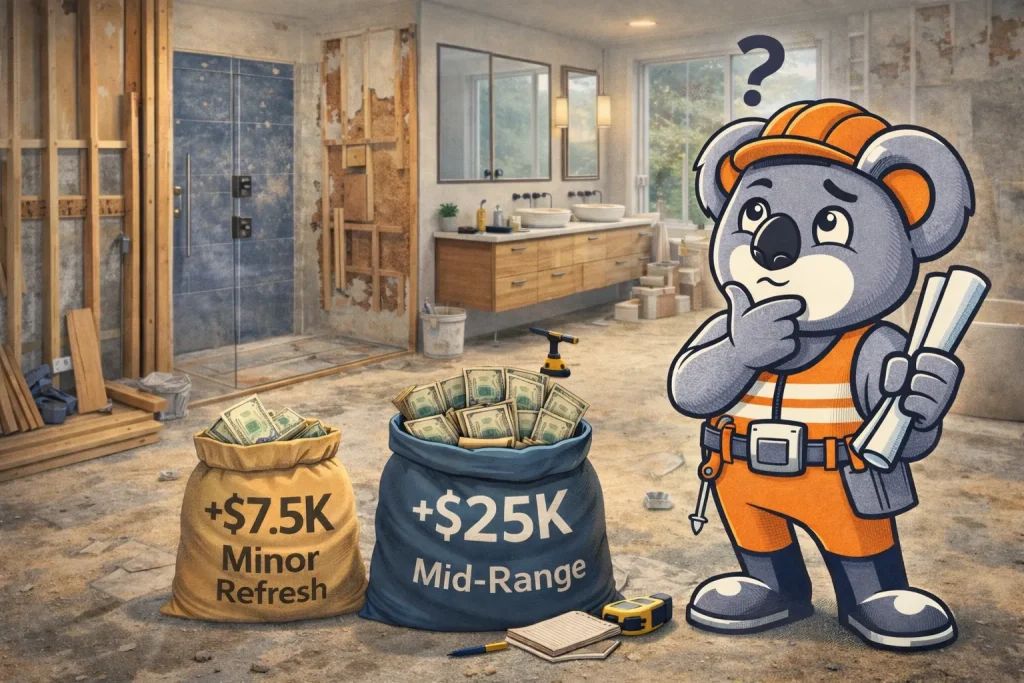
From layout upgrades to complete renovations, our bathroom remodeling experts bring function and style together.
Cost Breakdown by Remodel Type
To estimate your bathroom remodel costs, it’s essential to define the scope of your project. Whether you’re planning a minor refresh or a full-scale renovation, understanding the cost range helps you budget effectively. On average, bathroom remodels cost between $6,456 and $24,715, with most homeowners spending around $15,586 [1]. The final cost depends on whether you’re making surface-level updates, tackling a partial remodel, or gutting the space for a complete overhaul.
- A minor refresh (like painting, updating fixtures, or replacing a basic vanity) typically costs $3,000–$7,500 [2].
- A mid-range partial remodel – which might involve replacing major fixtures such as the tub, shower, or toilet and adding new tiling – ranges from $10,000–$25,000 [3].
- For a luxury renovation with custom materials and layout changes, expect to spend $25,000–$50,000 or more [6].
The size of the bathroom also plays a big role in determining costs. A small powder room (15–30 square feet) might cost $1,500–$7,500, while a primary bathroom (100–120+ square feet) can range from $7,000–$30,000+ [6]. Relocating plumbing fixtures adds a significant expense, often $5,000 or more [8]. Experts suggest allocating 5%–10% of your home’s total value for a bathroom remodel to maintain a balanced investment [6].
Labor costs typically make up 40%–65% of your budget [1]. Plumbers and electricians charge around $45–$200 per hour, with rates in urban areas sometimes exceeding the national average by 15%–25% [6]. Also, plan for unexpected repairs – like mold or water damage – which could increase your costs by up to 33% [6]. Setting aside a 10%–20% contingency fund is a smart way to handle surprises [1].
Fixture Costs and Material Selection
Here’s a breakdown of average installed costs for key bathroom components:
| Item | Average Installed Cost |
|---|---|
| Bathtub Replacement | $800 – $4,600 [2] |
| Shower Installation | $1,000 – $15,000 [2] |
| Vanity & Countertop | $400 – $4,300 [3] |
| Toilet Installation | $350 – $800 [2] |
| Flooring (Tile/LVP) | $200 – $1,114 [2] |
| Plumbing Work | $5,545 (average) [1] |
Material choices can dramatically affect your budget. For instance, ceramic tile costs $2–$3 per square foot, while marble or natural stone ranges from $5–$35 per square foot [3]. A basic vanity might cost $100, but custom options can climb to $2,600 or more [6]. High-tech features like smart toilets cost $1,000–$4,000, and heated flooring adds $500–$2,800 [8].
One real-world example comes from Jesus Soto, who quoted $30,950 for a primary bathroom remodel. His breakdown included $4,500 for custom shower tile labor, $3,000 for plumbing updates, and $3,000 for demolition. Mid-to-high quality finishes (toilet, vanity, fixtures) accounted for $4,850 of the total [6].
If you’re working with a tighter budget, refinishing can save you money. Reglazing a sound bathtub costs about $500, compared to a full replacement at $5,000 [8]. Interior designer Alecia Taylor advises:
"Opt for refinishing existing fixtures (such as bathtubs or cabinets) and focus on updating elements like cabinet doors rather than replacing entire units. Keeping the original layout of the bathroom is a big cost-saver" [1].
Smaller, often-overlooked expenses can add up quickly. Jordana Psiloyenis, Director of Interior Architecture at Queens University of Charlotte, notes:
"Some of the forgotten costs include delivery charges, disposal of demolished or excess materials, and additional materials needed for the installation that may not be known to the homeowner" [1].
Also, factor in permit costs, which range from $100–$1,000, depending on your location and the scope of work [3].
Financing and ROI Considerations
Once you’ve outlined your costs, consider financing options to ensure your remodel fits your budget. A mid-range bathroom remodel typically offers an ROI of 73.7%–80%, while upscale or luxury remodels yield a lower ROI of around 36%–49% [1]. Balancing mid-range materials and finishes is often the sweet spot for durability and resale value.
Here are some financing options to explore:
- Home equity loans: Offer a lump sum with fixed interest rates, often tax-deductible for home improvements [17].
- HELOCs (Home Equity Lines of Credit): Work like a credit line, allowing you to borrow as needed, though rates are usually variable [17].
- Personal home improvement loans: Best for projects under $15,000, with fixed rates and fast funding (often within 24–48 hours). These loans usually require a credit score of at least 640 [18].
- Credit cards: Ideal for smaller updates or DIY projects. Some cards offer 0% introductory APR for 6–18 months, but standard rates range from 15%–24% [18].
Some contractors offer financing options, including "same-as-cash" promotions or 0% interest for qualified buyers. However, be aware that credit card payments may incur a 5% surcharge [18].
Before committing to financing, get at least three itemized quotes from licensed contractors to compare costs [1]. For detailed planning tips, check out our complete bathroom remodel guide.
Choosing and Comparing Bathroom Remodel Contractors
Finding Local Bathroom Remodeling Services
When searching for a contractor, the first step is to confirm they have the necessary credentials. This includes a valid General Contractor license as well as specific licenses for plumbing and electrical work [19]. You can verify their license numbers through state or local authorities [21]. Additionally, ensure they carry liability insurance, workers’ compensation, and are bonded [31,32]. These precautions not only protect you but also ensure the work meets professional standards. In fact, 80% of homeowners prefer contractors with proper licensing and insurance [20].
Experience matters, especially when it comes to bathrooms. While general handymen might be skilled in various tasks, they often lack the expertise needed for waterproofing and making the most of small spaces [32,33]. Always review a contractor’s portfolio to assess their craftsmanship in areas like tiling and waterproofing. Ask for at least three recent references to confirm they deliver projects on time and within budget [31,32]. Online reviews can also be a great resource – 90% of consumers read them, and 85% trust them as much as personal recommendations [20].
Another key consideration is whether the contractor uses in-house teams or relies on subcontractors, as this can influence both the timeline and quality of the work [30,33]. For specialized tasks like plumbing or electrical work, confirm that licensed and insured professionals will handle these areas [2]. Communication is critical throughout the project. With 57% of construction project failures linked to poor communication [20], look for contractors who provide regular updates and are transparent about potential delays [19].
One-Day Remodel vs. Full Renovation
Once you’ve vetted contractors, the next step is deciding on the scope of your remodel. This comes down to choosing between a one-day remodel or a full renovation. One-day remodels focus on quick updates using proprietary acrylic systems and prefabricated inserts, allowing for fast installation with minimal demolition [23]. These projects usually target "wet areas", such as bathtub-to-shower conversions, shower replacements, or adding acrylic liners and wall surrounds [1,36]. While faster and less invasive, one-day solutions may not address underlying issues like mold, rotted subfloors, or outdated plumbing [36,10].
Full renovations, on the other hand, involve starting from the studs. This approach allows for structural repairs, layout changes, and complete fixture replacements [37,5]. Here’s a quick comparison:
| Feature | One-Day Remodel | Full Renovation |
|---|---|---|
| Scope | Focuses on "wet areas" (tub/shower liners, etc.) | Full gutting, layout changes, and more |
| Timeline | 1 to 5 days | 3 to 8+ weeks |
| Average Cost | $3,000 – $15,000 | $8,800 – $25,000+ |
| Benefits | Minimal disruption; great for accessibility updates | Total customization; fixes structural issues |
| ROI | Lower overall value increase | High ROI (up to 80% for mid-range) |
It’s important to note that "one-day" often refers only to the installation phase – prep and finishing work might extend the timeline. If your bathroom has significant issues like water damage or you want a layout overhaul, a full renovation is likely the better option.
Evaluating Contractor Quotes
After narrowing down your contractor options, request detailed quotes to make an informed decision. Aim for at least three itemized quotes that cover materials, labor, permits, and disposal costs to avoid surprises later [4]. Labor often makes up 40% to 65% of the total project budget [1].
Be cautious of the lowest bid – it might indicate subpar materials or inadequate work coverage [2]. Confirm whether the quote includes permit fees (which can range from $100 to $1,000) and the cost of removing and disposing of old materials [1,2]. As Jordana Psiloyenis, Director of Interior Architecture at Queens University of Charlotte, points out:
"Some of the forgotten costs include delivery charges, disposal of demolished or excess materials, and additional materials needed for the installation that may not be known to the homeowner" [1].
Check if the contractor uses licensed and insured subcontractors for specialized tasks [2]. Review the contract carefully for clauses that allow the contractor to change the schedule or price without your consent [21]. Be wary of contractors who demand full payment upfront, use high-pressure sales tactics, or lack a physical business address [19]. Lastly, set aside a contingency fund of 10% to 20% to cover unexpected issues like mold, water damage, or outdated wiring that might arise during demolition [4]. A clear and detailed quote is essential for aligning expectations and ensuring a smooth remodeling process.
Planning Your Bathroom Remodel
Defining Goals and Budget
Before reaching out to contractors, take time to define your goals for the remodel. Are you fixing functional issues like leaks or outdated plumbing? Maybe you’re upgrading the space for personal enjoyment or prepping the home for resale? Your goals will directly influence both your design choices and budget [22][25]. If this is your forever home, consider adding features like grab bars or a zero-entry shower – these can save you from needing another remodel down the line [15][24].
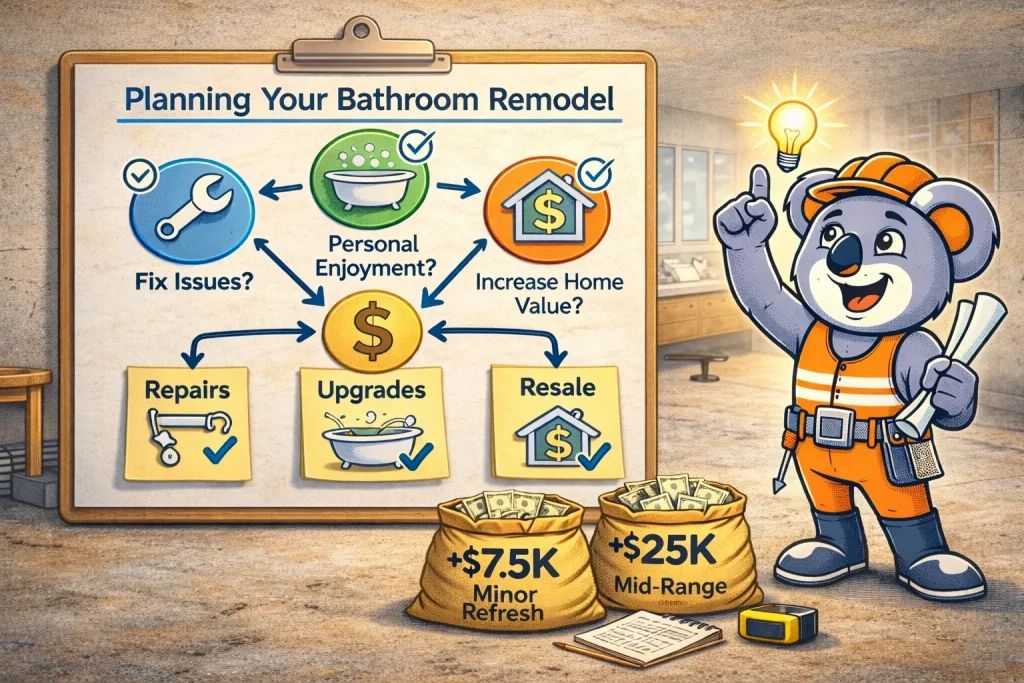
Separate the must-haves from the nice-to-haves. Essential updates might include fixing a cracked tub or adding much-needed storage, while extras could be features like heated floors or custom tile work [25][1]. This distinction helps you allocate funds where they’re needed most. A common rule of thumb is to budget 5% to 10% of your home’s value for a master bathroom remodel. For example, if your home is worth $400,000, plan to spend around $20,000–$40,000.
Set aside a 10%–20% contingency fund to cover unexpected surprises like mold, water damage, or outdated wiring [1][15][2]. Cameron Snyder, Past-President of the National Kitchen & Bath Association, offers this advice:
"A contractor’s allowances may not be realistic, and that’s where a $30,000 project can become a $50,000 project" [26].
To avoid budget overruns, finalize all fixture and finish selections before construction begins. This locks in a more accurate cost estimate [26].
If your budget is tight, focus on high-impact areas like the shower and vanity, as these make the most noticeable difference [1][2]. Additionally, sticking to the existing layout can save you a lot on labor costs. Moving plumbing or electrical lines can add $5,000 or more to your total [25][24]. Clear goals and a well-defined budget not only simplify the design process but also set the stage for a smoother remodel.
Timeline, Permits, and Final Checklist
A well-planned timeline minimizes disruptions and ensures compliance with local permitting rules. A typical bathroom remodel takes 3 to 8 weeks, though more complex projects can stretch to 12 weeks or longer [2]. Start planning at least six months in advance to give yourself time to research building codes and secure any necessary permits [15]. Permits are usually required for structural changes, major plumbing or electrical work, or adding windows. These can cost anywhere from $100 to $1,000 [4][3][5]. On the other hand, cosmetic updates like painting or replacing fixtures in their current locations usually don’t require permits [2].
Order all materials – such as fixtures, tiles, and vanities – at least three months before your start date to avoid delays caused by shipping or backorders [15]. About a month before construction, arrange for a dumpster and plan alternative bathroom access if this is your only bathroom [15]. In the week leading up to the project, clear out the space, protect floors and vents, and let your neighbors know about any expected noise [15].
Before demolition begins, double-check that all materials have arrived in good condition. Take "before" photos for your records and ensure your contractor has secured all required permits. Skipping permits can lead to failed inspections and expensive rework [15]. A detailed checklist will help keep the project on track and reinforce the organized planning approach discussed here.
Ready to transform your bathroom? Explore our professional remodeling services and start planning today.
Conclusion
A successful bathroom remodel hinges on careful planning, realistic budgeting, and partnering with skilled professionals. Begin planning 4 to 6 months in advance to finalize your design, order materials, and obtain permits without rushing into costly mistakes [15][29]. On average, bathroom remodels in 2026 range between $6,456 and $24,715, with labor accounting for 40% to 65% of the total cost [1]. Setting aside a 10–20% contingency fund can help cover unexpected issues like hidden water damage or outdated wiring [15][28].
One of the smartest ways to manage expenses is by keeping your existing plumbing and electrical layout intact. This approach not only simplifies the remodel but also saves a significant amount of money. As Kayla Carter, Designer at Reico Kitchen & Bath, points out:
"Keeping plumbing where it is one of the most impactful ways to control costs. Once you start moving drains or supply lines, labor and unforeseen issues add up quickly" [27].
This single decision can save you $5,000 or more in labor and permit fees [3][16].
While cosmetic updates like painting or replacing hardware can be tackled as DIY projects, structural, waterproofing, and electrical tasks should always be handled by licensed professionals [29][1]. Skipping professional help on these complex tasks can lead to failed inspections and expensive repairs, potentially reducing your home’s value [15]. A mid-range bathroom remodel often yields an 80% return on investment, making it a financially sound home improvement choice [1].
To ensure you get the best value, obtain 3–5 detailed contractor quotes to compare pricing and project scope [28][29]. Confirm that contractors are licensed, insured, and ideally affiliated with organizations like the National Kitchen and Bath Association (NKBA) [25]. These precautions, paired with earlier bathroom remodeling ideas and contractor selection, will help you cover every aspect of your remodel. Be sure to document payment schedules, timelines, and warranty terms to safeguard your investment.
For more detailed planning resources, check out our complete bathroom remodel guide.
Ready to begin your project? Compare local contractors and request a quote here.
FAQs
How much does a bathroom remodel cost?
A bathroom remodel usually costs $100 to $500 per square foot, with total expenses falling between $3,500 and over $25,000 for an average-sized bathroom. The final price depends on several factors, including the project’s scale, the materials you choose, and where you live.
What are the most popular bathroom remodel ideas?
Modern bathroom remodels often focus on swapping out traditional tubs for roomy walk-in showers, adding upscale touches like double showerheads or steam showers to primary bathrooms, and updating the look with sleek, contemporary fixtures and finishes. These updates highlight a growing desire for both practicality and aesthetic appeal.
Is a one day bathroom remodel worth it?
A one-day bathroom remodel is perfect if you’re looking for speed, ease, and a budget-friendly option. It offers a quick makeover with little interruption to your daily life. While it doesn’t offer the extensive changes of a full renovation, it’s a smart choice for anyone wanting an affordable, efficient way to refresh their bathroom.
How do I find reliable bathroom remodeling near me?
Finding dependable bathroom remodeling contractors starts with thorough research. Begin by exploring platforms like Google Reviews, Yelp, or Angi, where you can read verified reviews and check ratings. Pay attention to contractors with solid experience in your area – they’re likely to be familiar with local building codes and regulations.
Recommendations from friends or family can also be incredibly helpful. Once you’ve shortlisted a few options, compare quotes to understand pricing and services. Don’t forget to verify their credentials, such as licenses and insurance, to ensure you’re working with qualified professionals. This combination of research and due diligence can lead you to a contractor you can trust for your project.
What should I budget for a master bathroom remodel?
For a master bathroom remodel in 2026, you should expect to budget anywhere between $12,005 and $24,715. The final cost will depend on factors such as your location, the size of the project, and the materials you choose. If you’re considering luxury finishes or custom designs, be prepared for those to push your expenses higher. Planning ahead is key to managing these costs effectively.
Are Costco vanities good quality?
Costco vanities have a solid reputation for offering good quality at reasonable prices. While the level of quality can differ depending on the model and price range, these vanities are designed to strike a balance between durability and affordability. In general, their construction is seen as dependable and consistent.
Is marble sink material durable?
Marble sinks exude a sense of timeless elegance and luxury, making them a popular choice for many homeowners. However, their longevity largely hinges on how well they’re cared for. Because marble is a porous material, it’s prone to absorbing stains and can be damaged if not properly protected. Regular sealing is essential to safeguard its surface and maintain its charm. With the right upkeep, a marble sink can stay both stunning and practical for years to come.
What financing options are available for bathroom remodels?
When financing a bathroom remodel, there are plenty of options to consider. Many lenders provide loans with attractive rates, interest-free periods, and flexible repayment terms that can stretch up to 20 years. Some even offer straightforward approval processes and perks like 12-month same-as-cash plans, which allow you to pay off the balance without interest if done within a year. It’s essential to explore and compare these choices to find the one that aligns best with your budget and project goals.
How long does a full bathroom renovation take?
A complete bathroom renovation typically requires 4 to 9 weeks of construction when managed by skilled contractors. On top of that, planning and preparation may take an additional 1 to 2 weeks. The exact timeline can differ depending on factors such as the complexity of the project and how soon contractors are available.
What is the difference between Bath Fitters and ReBath?
Re-Bath handles complete bathroom remodels, which involve removing old materials and installing brand-new fixtures. On the other hand, Bath Fitter focuses on simpler solutions by fitting acrylic liners and surfaces over your current fixtures. The key difference is in the level of work: Re-Bath offers full-scale redesigns, while Bath Fitter provides faster, overlay-based updates.
How do I choose handicap bathroom remodel contractors?
When selecting contractors for a handicap bathroom remodel, focus on their expertise in creating accessible spaces. Features like grab bars, roll-in showers, and wider doorways should be second nature to them. Check that they are licensed, insured, and, if possible, hold certifications such as CAPS (Certified Aging in Place Specialist).
It’s also crucial that they have a solid understanding of ADA compliance and can tailor the design to meet your specific needs. Ask to see examples of their previous work to gauge their ability to combine functionality with style. Most importantly, choose someone who listens to your preferences and works collaboratively to bring your vision to life.
Are bathroom remodel reviews reliable?
When looking for reliable bathroom remodel reviews, trusted platforms like the Better Business Bureau (BBB) are a good starting point. The BBB offers verified reviews and a directory of accredited contractors, adding a layer of trust. On the other hand, reviews found on retail or service websites might not always be moderated or verified, so approach those with caution.
To get a clearer picture, don’t rely on a single source. Instead, gather feedback from multiple platforms, check the contractor’s credentials, and take a close look at their portfolio of past projects. While reviews are useful, they should only be one part of your overall research process.
What are the best window treatments for bathrooms?
When it comes to bathroom window treatments, the top priorities are moisture resistance, durability, and privacy. Bathrooms are high-humidity spaces, so choosing the right materials is key to ensuring your window coverings last.
Here are some popular options:
- Faux wood blinds and composite shutters: These are excellent for humid environments because they resist warping, staining, and other damage caused by moisture. Plus, they’re easy to maintain and clean.
- Vinyl blinds: Affordable and practical, vinyl blinds handle humidity well while offering privacy and light control.
- Moisture-resistant roller shades: Sleek and simple, these shades are designed to stand up to damp conditions without compromising style.
- Decorative curtains or café curtains: For renters, tension rods paired with light curtains can add a decorative touch without the need for permanent fixtures.
When choosing bathroom window treatments, focus on materials that can handle humidity while still being easy to clean and maintain.
Do bathroom remodels increase home value?
Yes, remodeling your bathroom can increase your home’s value. On average, midrange bathroom remodels tend to recoup about 70% of their cost, while upscale renovations recover closer to 60%. However, the actual return varies based on factors such as the quality of materials chosen and the conditions of your local real estate market.
What should be included in a remodeling contract?
A remodeling contract needs to spell out the details to keep everyone on the same page. It should include a clear scope of work, a project timeline with milestones, and specific material details. Payment terms are crucial too – this means listing the total cost, a payment schedule, and how changes will be handled through change order procedures.
Also, make sure the contractor provides proof of licensing and insurance. This protects both you and them, giving everyone peace of mind. By covering these bases, you can set clear expectations, handle changes smoothly, and minimize risks throughout the project.
Related Blog Posts
- Bathroom Renovation Checklist in 2025: Avoid the Red Flags! Planning to Completion
- Affordable Bathroom Remodeling Near You – Get a Free Estimate Today!
- The Average Cost to Remodel a Bathroom: Smart Investment Tips for 2025
- Bathroom Remodel: The Complete 2026 Guide Homeowners Wish They Read Before Starting!