


Replacing a bathtub can transform your bathroom while addressing structural or functional issues. Here’s what you need to know:
- Cost Range: $1,500–$8,000 (average $5,889). Basic swaps start at $2,000, while high-end projects can exceed $10,000.
- Timeframe: Typically 1–3 days for installation. Additional repairs may extend this.
- When to Replace: Cracks, leaks, mold, drainage issues, or outdated styles signal it’s time for a new tub.
- Replacement vs. Refinishing: Refinishing costs $400–$600 and lasts 5–10 years, while replacement offers a longer-term solution (10–30+ years).
- Material Costs: Fiberglass ($200–$1,000) is budget-friendly, while cast iron or stone ($2,000–$10,000) offers durability and luxury.
- Installation Steps: Removing the old tub, inspecting for damage, preparing the space, and installing the new tub.
If you’re upgrading, consider your space, budget, and desired features like jetted systems or soaking tubs. Always plan for potential hidden costs like subfloor repairs or plumbing adjustments.

Bathtub Shower Remodel Estimate. How Much Does It Cost?
sbb-itb-e0ea4e0
When to Replace Your Bathtub
Bathtubs don’t last forever, and knowing when to replace yours can save you from costly repairs down the line. Here are the key signs that it’s time to consider a replacement.
Cracks, Chips, and Stains
Cracks are more than just cosmetic – they’re a red flag for structural failure. Water can seep through cracks into the subfloor, leading to hidden rot and mold that can cost anywhere from $4,000 to $12,000 to repair [1]. If you have a fiberglass or acrylic tub, try a flex test: step inside and see if it moves or creaks. These sounds suggest the material is weakening and could crack soon [5].
"Swapping the tub now protects your bathroom from bigger (and pricier) repairs down the road." – HomeAdvisor [1]
Chips in the enamel, especially on steel tubs, expose the material underneath to rust and corrosion [7]. Meanwhile, permanent stains that won’t come out – even with scrubbing – mean the protective finish is gone. Without that finish, the tub’s surface becomes porous, trapping bacteria and making it impossible to restore true cleanliness [1]. At this point, refinishing isn’t enough; a full replacement is the only way to ensure hygiene and safety.
These visible problems often come with drainage issues, making replacement even more urgent.
Drainage and Leak Problems
Leaks that resist simple fixes often point to deeper structural issues with the tub or its plumbing [1] [7]. The real danger lies in what you can’t see: water sneaking behind walls or under the tub. This can rot floor joists and create an environment for mold to thrive [5] [2].
"The most stressful part of replacing a bathtub is the unknown behind the walls. Water can travel. A tiny leak at the drain can quietly damage a subfloor for years." – Steven Johnson, Horow [5]
Look for signs like soft or spongy flooring near the tub, loose tiles, or a musty smell – these often mean water has already compromised the structure. Chronic clogs or corroded drain assemblies that require removing the tub to fix are also strong indicators it’s time for a replacement. If you can, check ceilings or crawlspaces below for water stains or dampness to catch slow leaks before they escalate [5] [2].
Outdated Style
If you’re following a bathroom renovation checklist, an old tub might no longer fit your vision. Tubs that feel too narrow, lack modern safety features like slip-resistant surfaces, or clash with your updated design are worth replacing [7] [5]. Plus, replacing an outdated tub can boost your home’s value. Midrange bathroom remodels that include a new tub typically see an average return on investment (ROI) of about 70% [4]. Beyond aesthetics, upgrading your tub enhances comfort and functionality, making your bathroom a more enjoyable space.
| Warning Sign | What It Means | Cost If Ignored |
|---|---|---|
| Visible cracks or flexing | Imminent structural failure | $4,000–$12,000 in floor joist repair [1] |
| Soft floor or musty smell | Subfloor rot from hidden leaks | $300–$2,000 in subfloor replacement [5] [2] |
| Stains that won’t clean | Worn protective finish | Porous surface harboring bacteria [1] |
| Loose tiles near tub | Water damage to framing | $300–$1,500+ in wall repairs [5] |
Bathtub Replacement Cost Overview
Typical Price Ranges
Replacing a bathtub usually costs between $1,500 and $8,000, with the national average landing around $5,889 [1][6]. For a straightforward replacement – where the old tub is swapped for a new one in the same spot without altering plumbing or walls – expect to pay between $2,000 and $3,000 [5]. If you decide to upgrade with features like tiled surrounds or a jetted system, costs can climb to $4,000–$7,000 or more [5]. High-end projects, such as installing stone tubs, walk-in designs, or making significant layout changes, can easily surpass $10,000 [1]. Knowing these ranges can help you plan your budget effectively with a home renovation cost calculator.
What Affects the Cost
Labor typically makes up 40–60% of the total cost, with rates generally higher in urban areas [5][1]. Other factors that can add to the expense include:
- Removal and disposal: $150–$750, but can reach up to $4,200 for heavy materials [1][6]
- Hidden issues like mold or wood rot: $300–$2,000+ [5][6]
- Plumbing adjustments: $400–$1,900 [1]
- Floor reinforcement (for heavy tubs): $300–$800 [1][6]
- Permits: $50–$500 [1][6]
"Labor rates swing widely by region – pros in big cities often charge more than those in rural areas, so double-check local pricing before you finalize your budget." – HomeAdvisor [1]
Heavier tubs, such as those made of cast iron or stone, may require additional structural support for the floor [1][6].
Material Cost Comparison
The material you choose for your tub plays a significant role in both cost and installation complexity. Lightweight materials like fiberglass are easier and cheaper to install, while heavier options like cast iron or stone may require extra labor and even floor reinforcement.
| Material | Unit Price Range | Key Characteristics |
|---|---|---|
| Fiberglass | $200–$1,000 | Lightweight, affordable, but prone to scratches and fading [1][6] |
| Acrylic | $300–$1,200 | Durable, retains heat well, and easy to repair [5][6] |
| Enameled Steel | $300–$1,500 | Stronger than fiberglass but loses heat quickly [6][4] |
| Cast Iron | $400–$3,800 | Heavy (300–500 lbs), excellent heat retention [1][8] |
| Cultured Marble | $2,000–$5,000 | Offers a premium look, very heavy, may need floor reinforcement [1][4] |
| Copper | $2,000–$7,000 | Luxury appearance with antimicrobial properties [1][6] |
| Natural Stone | $2,000–$10,000 | Unique aesthetics, extremely heavy [6] |
To ensure you get the best deal, request at least three detailed quotes from contractors. Also, it’s wise to set aside a 10–15% contingency fund to cover unexpected issues like wood rot or plumbing surprises uncovered during the project [3][5][6]. Having this information at hand will help you navigate your bathtub replacement with confidence.
Types of Bathtubs for Replacement
When it’s time to replace your bathtub, you’ll find a variety of options, from practical alcove designs to luxurious freestanding and deeply relaxing soaking tubs.
Alcove Tubs
Alcove tubs are a go-to choice for many homeowners. Designed to fit snugly into three-walled spaces, they are both functional and space-efficient. These tubs typically cost between $200 and $800 for the unit itself, with installation costs bringing the total to $1,500–$2,000 [1][6]. Most alcove tubs fit a 60-inch opening and are often paired with a showerhead, making them a versatile option for family bathrooms or smaller spaces.
"Alcove tubs are set between three walls and are some of the most common tubs. If you want a shower head installed above the tub, this is the best style to go with." – Houzz [4]
If you have more room and want to make a statement, luxury bathroom ideas like freestanding tubs could be the perfect upgrade.
Freestanding Tubs
Freestanding tubs are all about style and flexibility. These stand-alone tubs can be placed anywhere in the bathroom, serving as a striking centerpiece. With options like clawfoot or pedestal bases, they add a touch of elegance to larger spaces. Unit costs range from $2,000 to $3,000, while installation can bring the total to $2,200–$5,000 [1][6]. However, they require more floor space and specialized plumbing, making them ideal for high-end remodels.
For those seeking the ultimate in relaxation, soaking tubs or jetted systems might be worth exploring.
Soaking Tubs and Jetted Systems
Soaking tubs are designed for comfort, offering a deeper basin for full-body immersion. These tubs come in various styles, including alcove, drop-in, and freestanding, with prices ranging from $600 to $13,000, depending on the size and material [1].
If you want to elevate your bathing experience, consider a jetted tub. Featuring water or air jets for a spa-like feel, these tubs cost $1,000 to $4,000 for the unit, with installed prices reaching $3,000 to $8,000 [1][6]. Keep in mind, jetted tubs require a dedicated GFCI electrical circuit and an accessible pump compartment for maintenance [7][8].
Each type of tub offers unique benefits, so consider your space, budget, and relaxation goals when making your choice.
How Bathtub Replacement Works
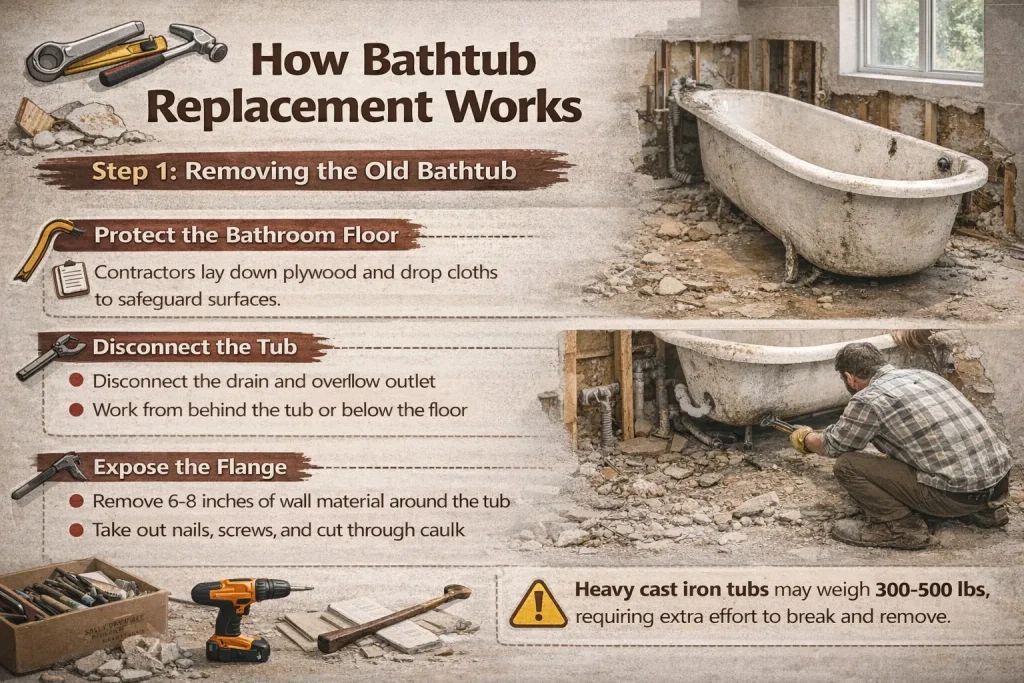
After deciding on costs and the type of tub you want, the actual replacement process unfolds in three main stages. Knowing what happens during each step helps you stay prepared and understand what to expect from your contractor.
Removing the Old Bathtub
The process begins with protecting your bathroom floor. Contractors lay down plywood and drop cloths to safeguard surfaces [7]. They start by disconnecting the drain, unscrewing the overflow cover plate, and using a strainer wrench to remove the drain flange. From there, they’ll disconnect the waste-and-overflow unit from the main drain line, usually working from behind the tub or below the floor [7].
Next, they remove about 8 inches of wall material around the tub to expose the flange [7]. After taking out the nails or screws securing the tub to the wall studs and cutting through any caulk, they use a crowbar to pry the tub free. Standard alcove tubs can often be lifted and slid out with help, but heavier cast iron tubs – sometimes weighing 300 to 500 pounds – may need to be broken into smaller pieces using a sledgehammer [2][7].
Preparing the Space
With the old tub removed, contractors inspect the exposed subfloor, wall studs, and framing for any signs of water damage, rot, or mold [5][2]. This is the time to fix any hidden issues before they worsen. They’ll also ensure the floor structure can handle the weight of the new tub.
Contractors then install 2×4 ledger boards at the height specified by the tub manufacturer to support the new tub’s flange [7]. They check that the drain and supply lines align with the new tub’s setup, replace any corroded pipes, and cover the studs with moisture-resistant cement backerboard to create a waterproof base [7]. Reinforcing the subfloor can cost between $300 and $800, while plumbing adjustments range from $400 to $1,900 [1][6].
Once the space is fully prepped and reinforced, it’s ready for the new tub.
Installing and Sealing the New Bathtub
Proper leveling of the new tub is critical since an uneven tub can lead to standing water and mold issues [7]. Contractors secure the tub by fastening the flange to the studs with nails or screws. Above the flange, they install cement backerboard instead of drywall to improve moisture resistance [7].
To connect the drain, they apply plumber’s putty to ensure a watertight seal. Silicone or tub-and-tile caulk is used at the wall-tub junction [7]. Before finishing the walls, the tub is filled with water and drained to check for leaks. Once everything is confirmed to be watertight, the installation phase is complete.
Typically, this process takes 1 to 3 days, while additional waterproofing and wall surround work can add $1,000 to $3,000+ to the total cost [6][5].
Materials and Design Options
The material of your bathtub plays a big role in its durability and upkeep. Popular options include acrylic, fiberglass, and cast iron, each catering to different needs and budgets.
Acrylic tubs are made from vacuum-formed sheets reinforced with fiberglass. These tubs weigh between 60–130 lb, making them a great choice for upstairs bathrooms without requiring extra structural support [10]. Acrylic is nonporous, warm to the touch, and comes in a variety of sleek designs. While it can scratch, it tends to hide imperfections better than other materials. Most acrylic tubs last 10 to 15 years, but with proper care, they can stretch to 30 years [10][11]. Pricing starts at $500 to $1,200, with high-end models beginning around $3,000 [9].
Fiberglass is the lightest and most budget-friendly option, costing $300–$900 installed [9]. Made from glass fibers and polyester resin with a gel-coat finish, fiberglass is ideal for low-use spaces like guest bathrooms or rental properties. However, it’s less durable – prone to fading, scratching, and flexing over time. Senior Project Planner Tenzin Dhondup highlights the difference:
"Acrylic tubs use a thicker, more resilient shell, offering superior durability against flexing, cracks, and stains" [9].
Cast iron tubs sit at the premium end of the market. These heavy-duty tubs, coated in porcelain enamel, weigh between 230–500+ lb and are known for their excellent heat retention and longevity. Master Plumber Joseph Wood shares:
"The best part of a cast iron tub is the lack of noise and high rigidity. There’s no flex or anything like that" [12].
With a lifespan of 50+ years [10][11], cast iron tubs cost $1,200 to $5,000+, and installation can be pricier due to the weight and potential need for floor reinforcement [9][11]. Beyond the material, the finish and surrounding design can further enhance your bathroom’s overall look.
Tile Surrounds and Finishes
The area around your tub, or the surround, plays a big role in both style and functionality. Tile surrounds offer unmatched design flexibility and an upscale appearance, but they require expert installation and regular grout maintenance [12][13][5]. Costs for tile surrounds range from $1,000 to $3,000+, depending on the type of tile. Alternatively, prefabricated wall panels made from acrylic or composite materials are a lower-maintenance option, costing $500 to $2,000 [12][5].
For a full makeover that includes a new tub and a rebuilt three-wall surround, expect to spend between $4,000 and $7,000 [5]. If you choose tile surrounds, consider incorporating built-in niches during the framing stage. These provide streamlined storage without needing bulky, surface-mounted shelves [3]. While the walls are open, it’s also a good idea to upgrade the shower valve, saving you from future plumbing headaches that could damage your new finishes [5].
Matching Bathroom Fixtures
Coordinating your tub’s finish with other fixtures, like vanities and lighting, creates a polished, cohesive look. Popular finishes include brushed nickel, matte black, and polished chrome. Standard bathtub hardware and faucet installations range from $50 to $900, while luxury options, like spa-style or waterfall faucets, can exceed $700 [12]. To avoid extra costs, keeping the tub in its current location is ideal, as moving plumbing can add $1,500 or more to your project [14].
If you’re pairing a cast iron or stone tub with a stone vanity, check whether your subfloor needs reinforcement – this typically costs $300 to $800 [12][14]. For integrated tub-shower setups, an alcove tub is the most practical choice. On the other hand, freestanding tubs work best as eye-catching centerpieces in larger bathrooms with flexible layouts.
Maintaining Your New Bathtub

Once your new bathtub is installed, taking care of it properly ensures it stays in great condition and lasts as long as possible. Acrylic and fiberglass tubs usually last 10 to 15 years, while cast iron tubs can endure for over 50 years with the right care [1]. The secret? Protecting the surface and staying ahead of moisture issues.
Cleaning Without Damaging the Surface
When it comes to cleaning, the right products make all the difference. Avoid harsh chemicals or abrasive sponges, as these can harm acrylic and fiberglass finishes. As JSB Home Solutions points out:
"A porous tub is nearly impossible to clean and may even harbor mold" [3].
Stick to non-abrasive cleaners made specifically for your tub material. Acrylic tubs are more forgiving and retain their shine longer with regular cleaning [5]. Fiberglass, on the other hand, needs extra care – gentler cleaners help avoid scratches and dulling [7]. For tough grime, skip metal tools and opt for a plastic putty knife to protect the surface [7].
Preventing Mold and Drainage Issues
Mold thrives in damp environments, especially if water seeps into porous surfaces or behind the tub. To combat this, always run your exhaust fan during and after baths to minimize moisture. Applying silicone caulk where the tub meets the wall can also help seal out water – just make sure to check it regularly for wear.
Address leaks immediately, no matter how small. Even a minor drip can cause serious problems over time. Steven Johnson from Horow highlights the hidden dangers:
"The most stressful part of replacing a bathtub is the unknown behind the walls. Water can travel. A tiny leak at the drain can quietly damage a subfloor for years" [5].
Discovering mold or rot during a replacement can add anywhere from $300 to $2,000 or more to your costs [5]. Regularly inspecting the drain and overflow assembly can help you catch potential problems early, saving you from expensive repairs [3].
Regular Maintenance Tasks
Beyond cleaning and moisture control, a little routine maintenance goes a long way. Rinse the tub after each use to prevent soap scum buildup, and clean grout regularly to stop water from seeping into cracks. Check for chips or cracks often, and repair them quickly to avoid water damage. For enameled steel tubs, which can last around 40 years [15], be cautious of heavy impacts that might chip the enamel. Address any damage immediately to prevent rust from forming.
Planning Your Bathtub Replacement
Key Benefits of Replacement
Replacing your bathtub isn’t just about upgrading the look of your bathroom – it solves practical problems, too. A new tub can address issues like leaks, poor drainage, or structural damage that refinishing simply can’t fix. Plus, modern materials make upkeep easier. For instance, acrylic is low-maintenance, while cast iron is both durable and excellent at retaining heat [5].
From a financial standpoint, replacing your bathtub offers an average return on investment of 70% [4]. This makes it a smart choice, especially if you’re planning to sell your home. Many buyers value having at least one bathtub in the house, and a newly installed, functional tub can make your home more appealing [12]. With these advantages in mind, careful planning becomes key to a successful upgrade.
Project Planning Checklist
Here’s how to get started:
- Measure your space and check the drain alignment: Take note of your tub’s width, length, and drain position (left, right, or center). This ensures the new tub fits without requiring extensive plumbing changes [5][7].
- Evaluate floor support: If you’re upgrading to heavier materials like cast iron or stone, check whether your flooring needs reinforcement to handle the added weight [1][8].
- Set your budget: A straightforward replacement typically costs between $2,000 and $3,000. However, if you’re including new surrounds or more extensive work, the price can climb to $4,000–$7,000 or more [5].
- Plan for unexpected costs: Add a 10%–15% contingency to your budget for surprises like subfloor damage or outdated plumbing [5].
- Get multiple quotes: Request itemized estimates from at least three licensed contractors. Be sure to ask what’s excluded to avoid hidden fees [5][6].
- Check for permits: If your project involves moving plumbing or installing electrical components for features like jets, find out whether permits are required [5][6].
A well-thought-out plan can help prevent delays and unexpected challenges during installation.
Get a Quote for Your Project
Once your plan is set, keep in mind that professional bathtub installation typically takes 1 to 3 days [1][6][7]. Ready to get started? Request a quote from Koalaty Remodel. For additional tips on incorporating your tub replacement into a larger renovation, explore our complete bathroom remodel guide.
FAQs
How much does bathtub replacement cost?
Replacing a bathtub can cost anywhere from $1,995 to $9,402, with the average landing at about $5,698. The total expense varies based on factors like the type of tub you choose, the materials it’s made from, and whether plumbing modifications are needed. Labor and installation fees also play a big role in determining the final price.
How long does bathtub replacement take?
Replacing a bathtub professionally typically takes 1 to 2 days. This includes removing the old tub, adjusting the plumbing if needed, and installing and sealing the new one.
Is it cheaper to refinish or replace a bathtub?
Refinishing a bathtub generally costs between $300 and $600, making it a budget-friendly choice. On the other hand, replacing a bathtub can range from $1,995 to $9,402, depending on factors like materials and labor. Refinishing works well for fixing minor surface damage, while replacement is better suited for addressing serious issues or upgrading the tub completely.
What is the best material for a replacement bathtub?
Acrylic stands out as a top choice for replacement bathtubs due to its combination of practical benefits. It’s lightweight, budget-friendly, and comes in a range of shapes and sizes to suit different bathroom layouts. Plus, its durability and low-maintenance nature make it a favorite among homeowners.
Can I replace a bathtub without replacing tile?
Yes, it’s possible to replace a bathtub without tearing out the surrounding tile. The process involves carefully removing the old tub while preserving the tiles. After the new tub is installed, the original tiles can either stay in place or be reattached if any were removed during the process.
Are jacuzzi bath remodel reviews reliable?
Jacuzzi bath remodel reviews can offer helpful insights, as they often combine expert opinions and customer experiences. However, they shouldn’t be the sole focus when planning a bathtub replacement. It’s important to cross-reference reviews to ensure they align with your specific requirements and preferences.
What is the best bathtub cleaner for acrylic tubs?
When it comes to cleaning acrylic tubs, stick to non-abrasive cleaners to keep the surface looking its best. Great options include dishwashing detergent, CLR Bath & Kitchen Cleaner, Formula 409 All-Purpose Cleaner, or Iron Out Rust Stain Remover. Pair these with soft cloths or sponges to avoid scratches. Steer clear of harsh chemicals or abrasive tools, as they can damage the tub’s finish.
What size is the best baby bath tub for safety?
The best baby bathtub for safety should be compact enough to provide secure support for your baby. Look for features like non-slip surfaces to prevent sliding and a design that offers a comfortable height for easy access. While exact dimensions aren’t critical, choosing a tub specifically made for infants with built-in safety elements is essential for peace of mind.
Do I need a permit for bathtub replacement?
Whether or not you need a permit to replace a bathtub depends largely on your local building codes. If the project doesn’t involve any changes to plumbing, electrical systems, or structural elements, you might not need one. However, if the work includes altering plumbing lines, electrical wiring, or making structural adjustments, a permit is usually required. To be sure, it’s always a good idea to contact your local building authority and confirm the specific requirements in your area.
Can I convert my tub during bathtub replacement?
If you’re considering a bathtub replacement, you have the option to convert your tub into something new. For instance, you could switch it out for a shower or upgrade to a different style of bathtub that better suits your needs or space. Just keep in mind that such changes may require plumbing adjustments and ensuring the new design aligns with your bathroom’s layout. Proper planning is key to avoid complications.
How do I know when my tub needs replacing?
If your bathtub has visible damage like leaks, cracks, peeling, or stubborn stains that won’t go away, it might be time to think about replacing it. Persistent mold or mildew can also signal deeper structural problems or heavy wear that a simple repair won’t fix.
Does bathtub replacement increase home value?
Replacing a bathtub can increase a home’s value by improving both the appearance and functionality of the bathroom. A sleek, updated tub not only makes the space more visually appealing to potential buyers but also leaves a lasting positive impression, enhancing the overall appeal of the property.