


Upgrading your master bathroom can improve daily comfort and increase your home’s value, with midrange remodels offering a 74% return on investment. Whether you’re considering a walk-in shower, freestanding tub, or smart features, the right updates can balance style and functionality. Here are 10 ideas to transform your space:
- Walk-In Showers: Frameless glass designs for a modern, low-maintenance look.
- Freestanding Tubs: A stylish focal point for a spa-like feel.
- Double Vanities: Practical for shared spaces with added storage.
- Statement Tiles: Bold patterns or textures for floors or walls.
- Improved Lighting: Layered fixtures for ambiance and practicality.
- Smart Features: Digital showers, heated floors, and voice-controlled systems.
- Custom Storage: Built-in cabinets and recessed niches for organization.
- Neutral Palettes: Warm tones paired with natural materials.
- Upgraded Fixtures: Matte finishes, rain showers, and touchless faucets.
- Accessibility Features: Curbless showers, grab bars, and comfort-height toilets.
Pro Tip: Plan your budget carefully, keeping labor costs (40%-65%) and a 15%-20% contingency fund in mind. Small updates can yield $1.71 for every $1 spent, while midrange remodels recoup about 74% of their cost at resale.
Ready to start? Define your goals, prioritize needs, and consult professionals to bring your vision to life.
STUNNING Bathroom Remodel – DIY Master Ensuite Guide
sbb-itb-e0ea4e0
What to Consider Before Remodeling Your Master Bathroom
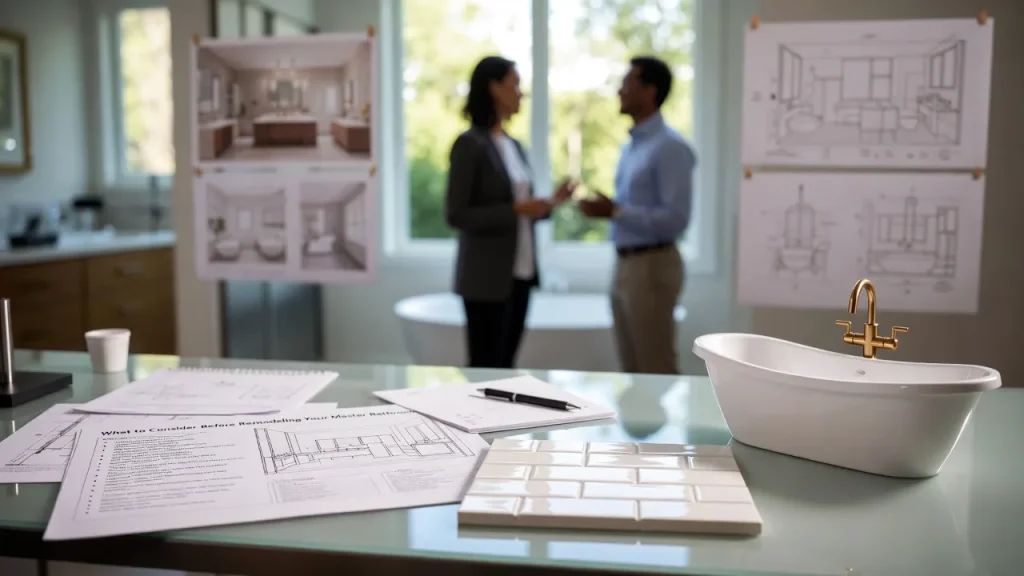
Before diving into tile samples or fixture catalogs, it’s essential to think through the practical side of your bathroom remodel. Start by deciding on the scope of your project. Are you planning a simple refresh – like new paint and fixtures – or a full-scale renovation? A cosmetic update typically costs between $12,005 and $17,516, while a premium remodel with structural adjustments can range from $18,920 to $48,000 or more [3][2].
Keeping your current layout can save you money. Avoid relocating major features like the toilet, shower, or vanity if possible, as moving plumbing lines dramatically increases labor costs and complexity [3][11]. Labor alone can account for 20% to 65% of your total budget [8]. Cameron Snyder, Past-President of the National Kitchen & Bath Association, cautions against underestimating contractor allowances:
A contractor’s allowances may not be realistic, and that’s where a $30,000 project can become a $50,000 project [10].
Budget for surprises. Setting aside a contingency fund of 10–20% is smart, especially for hidden issues like water damage, mold, or outdated wiring that might surface during demolition [8]. If you’re working on an older home, consider increasing this buffer to 30%, as older properties often come with challenges like galvanized pipes or unsafe electrical panels. For example, Federal Pacific panels are known fire hazards and should be replaced. Modern bathrooms also require a dedicated 20-amp circuit to support features like heated floors and advanced lighting systems [13].
Consider how long you plan to stay in your home. If you’re remodeling with resale in mind, focus on upgrades that appeal to buyers, such as walk-in showers, high-quality tile, and stylish vanities. If this is your forever home, prioritize features that enhance your daily routine, even if they don’t add resale value. To stay on budget, separate your "needs" (like plumbing upgrades or extra storage) from your "wants" (think heated floors or smart mirrors) [8][10].
Blend trends with timeless design. While features like spa-inspired wet rooms or smart technology are trendy, classic choices – neutral colors and durable materials – tend to stand the test of time. To avoid delays, order all materials well in advance and ensure they’re on-site before demolition starts. Backorders can stall your project for weeks [9][12]. On average, a master bathroom remodel takes 3 to 8 weeks to complete [3][2].
1. Walk-In Shower With Frameless Glass

Daily Use and Practical Benefits
Walk-in showers with frameless glass make daily routines simpler and require less upkeep. Their curbless design allows for easy entry, removing the need to step over a tub edge – an advantage for anyone with mobility challenges. Without shower curtains, water stays contained, reducing mess and cutting down on mold or mildew buildup that can occur in fabric or metal tracks. Cleaning is straightforward: a quick pass with a squeegee keeps the glass spotless. Many homeowners also include built-in niches or recessed shelves for storing shampoo and soap, keeping the shower floor clear and safe to use [14][6].
Design Style and Current Trends
Frameless showers have become a signature feature in modern bathroom makeovers [14]. The clear glass design allows natural light to flow, giving even smaller spaces an open and airy feel. For bathrooms with white or light tiles, low-iron glass is a popular choice because it eliminates the green tint found in standard glass, maintaining a crisp and bright appearance [4][17]. Curbless entries are trending as they create a spa-like ambiance, and wet rooms – featuring both a freestanding tub and a walk-in shower within a single frameless glass enclosure – are increasingly sought after [4][5]. For a more distinctive look, some homeowners opt for Crittal-style doors with black metal grids or fluted glass for added privacy, blending industrial and Art Deco influences [6]. These design choices can influence both the project scope and costs.
Cost Range and Budget Planning
The cost of installing a frameless walk-in shower ranges from $1,400 to $10,980, depending on size, glass thickness, and customization options [15][16]. Standard installations typically cost $1,400 to $2,000, while mid-range projects with custom glass panels run between $2,000 and $3,500. High-end setups, featuring premium materials like 1/2" thick low-iron glass, can exceed $10,000. For example, a Connecticut homeowner documented a 60" x 37" frameless shower installation with a 28" door that started at $2,420. After adding ultra-clear glass ($648), an upgraded handle ($200), and a custom height adjustment ($100), the final cost was $3,368 [17]. To keep costs under control, consider using standard sizes, sticking with clear glass, and avoiding major plumbing relocations [16][3]. Beyond the initial expense, it’s worth considering the long-term durability of the investment.
Durability and Long-Term Performance
Frameless showers are built with tempered safety glass, usually 3/8" to 1/2" thick, making them far sturdier than the thinner glass used in framed systems [14][15]. With proper care, they can last 20 to 30 years [15]. The absence of metal frames also eliminates concerns about rust or corrosion, further enhancing their lifespan. Professional installation is critical, as frameless designs rely on precise measurements and heavy-duty hinges to prevent leaks [14]. The investment is often worthwhile: midrange bathroom remodels featuring walk-in showers yield an average ROI of 74%, and homeowners report a satisfaction score of 9.6 out of 10 after completing the upgrade [3][1].
2. Freestanding Tub as a Focal Point
Design Style and Current Trends
Freestanding tubs are becoming a standout feature in modern bathrooms, much like the frameless shower trend. These tubs bring a touch of elegance and can transform your bathroom into a relaxing, spa-like retreat. Acting as both a functional fixture and a sculptural centerpiece, freestanding tubs offer flexibility in placement, adding to their design appeal. The organic modern style expected to dominate in 2026 highlights natural textures and curved shapes, making tubs with soft, sculptural designs a popular choice [4]. Similarly, Japandi designs, which mix Japanese and Scandinavian influences, emphasize neutral tones and functional simplicity [6]. Freestanding tubs embody this elegance, creating a focal point that enhances the overall ambiance of the space [18].
Daily Use and Practical Benefits
Freestanding tubs are more than just visually appealing – they provide a deeper, more immersive soaking experience compared to standard alcove models [2]. However, they require careful planning to ensure functionality. Designers recommend leaving 4 to 6 inches of space around the tub to avoid a cramped look and to simplify cleaning [19]. Since these tubs lack built-in ledges for storage, you might need to add a tub caddy or floating shelves for essentials [21]. Proper ventilation is crucial to prevent moisture issues, especially in enclosed spaces [20]. Naomi Neilson, Founder and CEO of Native Trails, notes:
Freestanding bathtubs are in high demand for those looking for the perfect at-home spa experience [18].
Cost Range and Budget Planning
Freestanding tubs come with a wide price range, typically costing between $1,000 and $5,000, with professional installation adding another $500 to $1,500 [2]. Acrylic tubs are a cost-effective option, offering durability and good heat retention at a lower price point [21]. On the higher end, stone resin and cast iron models deliver a luxurious look but come with added costs. If you’re relocating plumbing or installing a floor-mounted faucet, be prepared for additional expenses, as moving pipes under the floor can significantly increase labor costs [3]. Large soaking tubs might also necessitate a water heater upgrade, which can add $500 to $2,000 to your budget [3]. To account for surprises – like outdated plumbing – set aside an extra 15% to 20% of your budget [1].
Durability and Long-Term Performance
The material you choose for your freestanding tub affects both its upkeep and lifespan. Acrylic tubs are lightweight, retain heat well, and are easy to maintain, making them a practical choice for many homeowners [19]. Cast iron tubs, while exceptionally durable and classic in appearance, are heavy and may require floor reinforcement on upper levels [22]. Stone resin offers excellent heat retention and a high-end look but, like cast iron, demands structural support due to its weight [19]. Copper tubs are another option, known for their antimicrobial properties and unique patina, but they require regular maintenance and come at a higher cost [21]. On the financial side, bathroom remodels featuring freestanding tubs often recoup 60%–70% of their cost [2], and these tubs can boost a home’s value by as much as 5.4% [20].
3. Double Vanity for Shared Bathrooms
Daily Use and Practical Benefits
Double vanities are a smart way to combine functionality with style, especially in shared bathrooms. They simplify hectic mornings by providing each person their own sink and mirror. This setup allows for simultaneous use, which eliminates the need to take turns. As Choice Home Remodeling explains:
"His and her sinks make starting and ending your day together even easier and more satisfying since you’ll never have to wait for the sink or fight for mirror space." [5]
Aside from convenience, double vanities help reduce countertop clutter. With separate under-sink cabinets and drawers, each person can keep their toiletries, hair tools, and skincare essentials neatly stored. Modern designs even include features like vertical storage and custom dividers to keep everything in its place, making this upgrade a perfect fit for contemporary master bathrooms.
Design Style and Current Trends
Floating vanities are gaining attention for their ability to make a bathroom feel more spacious while also making cleaning easier [6]. For a modern edge, look for vanities with built-in outlets and USB ports in the drawers, which keep cords and devices off the counter [4]. Popular designs lean toward warm wood tones and textured cabinet fronts, such as fluted or ribbed patterns, paired with durable quartz or porcelain countertops [4]. Some homeowners are also opting for asymmetrical sink placement to maximize usable counter space [6].
Cost Range and Budget Planning
The cost of a double vanity unit typically falls between $1,000 and $3,000, depending on whether you choose prefabricated or custom designs, as well as the materials used. Additional costs include cabinetry, sinks, and countertops [2][3]. Plumbing can significantly impact the price, especially if pipes need to be relocated for the second sink [3]. To save on expenses, consider keeping the new vanity in the same location as the old one to avoid costly plumbing changes. Another budget-friendly option is refinishing a high-quality existing vanity by repainting it and updating the hardware [1][2]. It’s also wise to allocate an extra 10% to 20% of your budget for unexpected issues, such as outdated plumbing discovered during the installation process [1][3].
Durability and Long-Term Performance
Quartz countertops are an excellent choice for double vanities, offering durability, resistance to stains, and low maintenance [1]. Their non-porous surface also helps prevent bacteria buildup, making them ideal for daily use. Additionally, midrange bathroom remodels that include double vanities often deliver an average return on investment (ROI) of 74% [3]. Many homebuyers even view this feature as a must-have, making it a worthwhile addition to your bathroom [1].
4. Statement Tile for Floors or Shower Walls
Design Style and Current Trends
Statement tiles can completely transform a master bathroom, offering a touch of elegance and personality while keeping the space balanced. Large-format tiles are a go-to choice for achieving a sleek, modern look with fewer grout lines, which also makes smaller bathrooms feel more open. If you’re aiming for a bold design, geometric patterns like hexagons, chevrons, and herringbone are trending – perfect for accent walls behind vanities or in showers. For added texture, consider fluted, ribbed, or 3D tiles to create depth and interest. Marble-look porcelain tiles are another favorite, providing the luxurious feel of natural stone without the upkeep. Meanwhile, the "Japandi" aesthetic, blending Japanese and Scandinavian styles, emphasizes calming tones with wood-look tiles, terrazzo, or travertine in neutral shades. These choices not only elevate the design but also balance beauty with functionality.
Daily Use and Practical Benefits
The right tile selection doesn’t just look great – it makes your life easier. Large-format porcelain tiles, for instance, cut down on grout lines where dirt and grime tend to accumulate, making cleaning much simpler. Porcelain tiles are especially practical because they’re dense, water-resistant, and less prone to staining or mold compared to ceramic. For shower floors, smaller mosaic tiles are ideal since their grout lines provide the necessary slip resistance. If you love the elegance of marble but dread the maintenance, porcelain tiles with marble-like veining are a smart choice – they deliver the aesthetic without requiring regular sealing or special care.
Cost Range and Budget Planning
Tile costs can vary significantly depending on the material and design. Basic ceramic or porcelain tiles typically range from $5 to $15 per square foot, while natural stone options like marble or travertine are priced higher, between $15 and $30 per square foot. For premium designer tiles, such as glass or specialty marble, expect to pay anywhere from $20 to $50 per square foot. Installation labor adds another $5 to $10 per square foot. To balance cost and style, consider using standard tiles for most surfaces and saving high-end statement tiles for a feature wall. If you’re redoing the floor, you might want to splurge on electric radiant heating, which costs around $5 to $12 per square foot. Not only does it add a touch of luxury, but it also helps keep the bathroom dry, reducing mold risks over time. Thoughtful budgeting ensures your investment pays off in both style and durability.
Durability and Long-Term Performance
Porcelain and ceramic tiles are built to last, requiring minimal care – just regular cleaning with mild solutions keeps them looking new. On the other hand, natural stone demands more attention, including periodic sealing to guard against stains and water damage. For grout, it’s wise to choose stain-resistant or epoxy options, especially in wet areas, to simplify maintenance. When it comes to resale value, mid-range bathroom remodels that feature quality tile work typically recoup about 71% of their cost, while minor updates can bring back $1.71 for every dollar spent [1]. To ensure safety, always opt for textured or anti-slip finishes on shower floors. Finally, be prepared to set aside 15% to 20% of your budget for any unexpected repairs, like structural or plumbing issues uncovered during the renovation process [1][3].
5. Improved Lighting and Layered Fixtures
Design Style and Current Trends
Lighting upgrades can completely transform your master bathroom, blending style with practicality. Modern bathroom lighting typically incorporates four layers:
- Ambient lighting: Provides overall illumination, usually through ceiling fixtures or recessed lights.
- Task lighting: Ensures bright, shadow-free light for daily routines like grooming.
- Accent lighting: Highlights architectural features, such as niches or unique design elements.
- Decorative fixtures: Adds a touch of elegance and artistic flair.
Curved light fixtures are increasingly popular, softening the sharp edges often found in bathroom designs. Backlit mirrors have also become a must-have for sleek, contemporary spaces [4]. Many homeowners are gravitating toward mixed metal finishes – think brass paired with matte black or polished nickel – for a custom, upscale appearance [1]. For bathrooms with taller ceilings, a statement chandelier above a freestanding tub can evoke the luxurious feel of a boutique hotel [7]. These thoughtful choices not only enhance design but also elevate your daily experience.
Daily Use and Practical Benefits
A well-planned lighting system makes everyday tasks easier and more enjoyable. Wall-mounted sconces, positioned at eye level on either side of the mirror, eliminate those annoying shadows that can make grooming a challenge. Dimmers are another game-changer, letting you switch from energizing morning brightness to a softer, relaxing glow in the evening.
Be mindful of placement – recessed lights directly above the vanity can create unflattering shadows. For optimal lighting, task areas should have around 700 lux at eye level, while relaxation zones feel best at about 300 lux [24]. Subtle additions like LED strips under vanities serve as gentle night lights, while motion sensors prevent sudden, jarring lighting changes during late-night trips. Smart lighting systems with voice control and programmable features are also gaining traction, offering both convenience and customization.
Cost Range and Budget Planning
Here’s a quick breakdown of typical costs:
- Ambient fixtures: $100–$500 each
- Wall sconces: $50–$250
- Backlit mirrors: $200–$600
- Skylights: $1,000–$2,500 [2]
Electrical work generally costs around $456 and accounts for roughly 20% of a bathroom remodel budget [3][27]. Impressively, even small lighting updates can yield a return of $1.71 for every dollar spent [1]. Plus, switching to LED bulbs can save you money in the long run – they’re 90% more energy-efficient and last up to 10 times longer than traditional incandescent bulbs [24].
Durability and Long-Term Performance
For wet or splash-prone areas, look for fixtures rated IP67 (direct water contact) or IP65 (splash zones) to ensure durability [23]. LEDs are a smart choice for their long lifespan and energy efficiency, as they produce less heat than older bulb types [25]. When installing sconces, space them at least 28 inches apart and mount them about 60 inches from the floor to minimize shadows [24].
To create the perfect atmosphere, use warm white light (2,700K to 3,000K) in relaxation areas, while daylight tones (4,000K to 6,500K) work best near vanities for precise makeup application [24][26]. Installing separate circuits with dimmer controls for each lighting layer allows you to effortlessly shift between functional, bright mornings and calming, ambient evenings [24].
6. Smart Bathroom Features
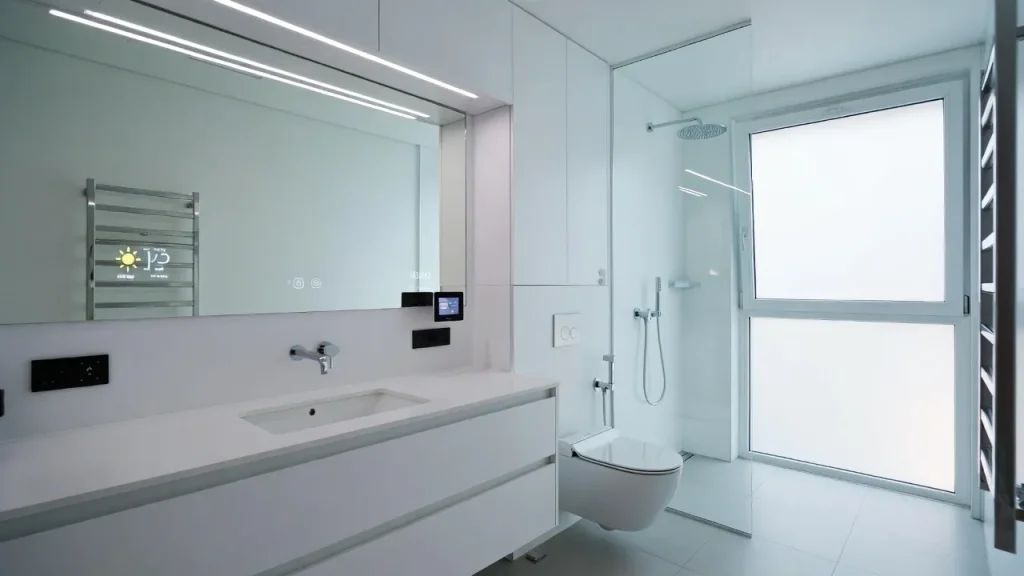
Smart upgrades are redefining the master bathroom, blending luxury with everyday practicality.
Design Style and Current Trends
Master bathrooms are evolving into personalized spa-like retreats, thanks to smart technology. One standout trend is circadian lighting, where LED systems adjust from energizing cool tones in the morning to relaxing warm hues at night – helping align with natural sleep cycles [4]. Another innovation is smart glass for windows and shower partitions, which can switch between transparent and opaque or tint automatically.
Voice-activated systems, integrated with platforms like Alexa, Google Home, or HomeKit, offer hands-free control over showers, lighting, and even mirrors [29]. Wellness-focused features are also gaining traction, including chromotherapy lighting, aromatherapy steam showers, and smart mirrors that analyze skin conditions to create a "home spa" experience. As Jeff Lexvold, CEO of Tropic Renovations, points out:
The bathroom uses more water than any other room in your home. Smart technology addresses this by offering features like smart toilets with WaterSense labels that reduce water consumption up to 20% [28].
These advancements are turning bathrooms into both functional and restorative spaces.
Daily Use and Practical Benefits
Smart bathroom features can make a big difference in your daily routine. Digital showers, for example, can remember your preferred water temperature and pressure settings, while smart toilets come with perks like heated seats, automatic lids, UV sterilization, and customizable bidet functions [28]. Touchless faucets and soap dispensers help cut down on water waste compared to traditional fixtures [28].
Radiant heated floors provide steady warmth and are about 25% more energy-efficient than forced-air systems [28]. For safety and convenience, motion-activated lighting ensures you’re never fumbling around in the dark, and humidity-sensing exhaust fans automatically kick in to prevent mold growth [28]. Meanwhile, smart mirrors with anti-fog features, Bluetooth speakers, and built-in displays keep you informed and entertained as you get ready [28].
Cost Range and Budget Planning
Smart bathroom upgrades come in a variety of price points. Here’s a quick breakdown:
- Smart toilets: Entry-level models start at $1,000, while high-end options can exceed $5,000 [28].
- Smart mirrors: Typically range from $200 to $600 [2].
- Heated flooring: Costs around $5 to $12 per square foot [2].
- Digital shower systems: Prices range from $3,000 to $8,000 [2].
For those planning a full-scale renovation with multiple smart features, costs usually fall between $40,000 and $70,000 [28]. On the bright side, smart LED lighting helps offset long-term expenses by using up to 75% less energy than traditional bulbs [28].
Durability and Long-Term Performance
To ensure your smart bathroom features work seamlessly over time, strong Wi-Fi coverage in the bathroom is essential. Choosing devices that integrate with your existing smart home system can simplify both use and upkeep [28]. Professional installation is often necessary for complex items like smart toilets or digital showers, as they may involve specialized plumbing or electrical work.
Maintenance is another factor to consider. Some components, like filters, need periodic replacement, and regular software updates are key to keeping systems running smoothly [28]. High-quality LED mirrors, for instance, are built to last approximately 120,000 hours [30]. To protect your investment, secure devices with strong passwords and two-factor authentication. Be cautious with lesser-known IoT brands, as their long-term support might not be reliable [30].
7. Built-In Storage and Custom Cabinetry
Built-in storage and custom cabinetry are game-changers for keeping your master bathroom organized while making the most of every square foot.
Daily Use and Practical Benefits
Drawer-first designs are a smarter choice compared to traditional deep cabinets because they utilize vertical space more effectively and provide easier access to items stored in the back [31][33]. Features like pull-out shelves with dividers help keep small items organized, while hidden hampers discreetly store laundry. Modern vanities now even include docking drawers equipped with outlets and USB ports, keeping countertops clutter-free.
Recessed storage options, such as medicine cabinets and shower niches, make clever use of wall space while preserving floor area. Adding tall linen towers or recessed shelving is especially useful in smaller bathrooms where every inch counts [31][32]. These solutions not only enhance practicality but also align with sleek, modern design trends.
Design Style and Current Trends
Floating vanities are a standout trend in contemporary bathroom design. Mounted directly to the wall, they create the illusion of more space and make cleaning a breeze [2][7]. Warm wood tones and textured finishes, like fluted or ribbed cabinet faces, are replacing the previously popular stark white styles, bringing a natural, spa-like vibe to bathroom spaces.
White quartz shelves are also gaining traction for their sleek appearance and practical features. Unlike tiled niches with grout lines, quartz shelves are non-porous, durable, and easier to maintain. Combining closed cabinetry for everyday items with open floating shelves for decorative touches, like towels or plants, strikes a balance between functionality and style.
Cost Range and Budget Planning
When planning your storage solutions, balancing functionality, style, and cost is crucial. Prices for storage options vary widely. Basic built-in shelving starts around $500, while custom cabinetry systems can range from $3,000 to over $10,000 [2]. Double sink vanities are typically priced between $1,000 and $3,000, while floating vanities range from $500 to $2,000 [2]. On average, cabinetry costs for a master bathroom remodel hover around $2,929 [3].
Labor costs can take up 40% to 65% of your total budget [1]. To save money, consider keeping your existing bathroom layout, as moving plumbing or electrical fixtures can significantly increase expenses. It’s wise to allocate an extra 15% to 20% for surprises, such as outdated plumbing that may need replacing during installation [1].
Durability and Long-Term Performance
Durability is just as important as aesthetics. Custom cabinetry and quartz countertops deliver both longevity and practicality. Quartz, in particular, offers a combination of beauty and low maintenance. As Ryan Norman, Founder of Norman Builders, explains:
Quartz countertops are both beautiful and practical. They offer the best of both worlds [18].
When ordering custom vanities, request internal power outlets during the design phase to avoid costly retrofitting later. Drawer dividers designed to fit perfectly will help keep your items organized for the long haul. For tight spaces, pocket doors are a smart choice to prevent collisions and maintain smooth traffic flow, protecting your cabinetry investment over time.
8. Neutral Color Palettes With Warm Accents
A neutral color palette can bring together both style and functionality in your master bathroom, creating a timeless design that feels modern and welcoming.
Design Style and Current Trends
Neutral tones are at the heart of contemporary master bathroom design, offering a serene, spa-like vibe while making the space feel larger, especially when paired with natural light [34][35]. Think soft whites, grays, and beiges – these shades provide a clean backdrop that feels open and inviting. As Jamey Miller from The Designery puts it:
Neutral colors, such as soft whites, grays, and beiges, create a clean and relaxed atmosphere that stands the test of time [35].
In 2026, the focus has shifted toward warm neutrals. Shades like sandy apricot, peach beige, and terracotta are replacing cooler, clinical tones. These colors bring a cozy feel to the space and pair beautifully with natural wood vanities, brass fixtures, and textured stone surfaces [34][36]. Popular styles like Organic Modern and Japandi combine these warm neutrals with natural materials and mixed metal finishes, adding depth without overwhelming the room [4][6]. This approach not only creates a welcoming atmosphere but also complements the high-tech upgrades and fixtures discussed earlier.
Daily Use and Practical Benefits
Beyond their aesthetic appeal, neutral bathrooms are incredibly practical. They offer balanced lighting that doesn’t distort colors, making them perfect for daily grooming tasks when paired with good lighting [4]. The calming effect of these tones transforms your master bathroom into a peaceful retreat after a long day.
Another key advantage is their versatility. If the bathroom ever feels too cool or bland, you can easily introduce warmth by swapping out towels or updating hardware [35][7]. This flexibility allows you to refresh the look without committing to a full renovation, making neutral palettes a smart, adaptable choice for the long term.
Cost Range and Budget Planning
Neutral designs can deliver a fresh look without breaking the bank [35]. A simple refresh using neutral paint and accessories is an affordable way to update the space. For those considering a full remodel, costs start around $9,000 to $15,000 for basic updates with ready-made materials. Mid-range renovations, which might include custom vanities and quartz countertops, typically range from $16,000 to $32,000 [2].
Adding warmth through small changes – like swapping chrome fixtures for brass or matte black – can modernize the space affordably. Large-format neutral tiles are another great option; they reduce grout lines for a sleek, hotel-inspired look and are low-maintenance [7][37]. These thoughtful updates not only enhance the bathroom’s style but also offer a strong return on investment, with remodels recouping about 60% to 70% of their cost at resale [2]. It’s a budget-friendly way to elevate both the look and value of your home.
9. Upgraded Fixtures and Finishes
Design Style and Current Trends
Today’s master bathrooms are all about blending sleek design with the latest trends. Matte and brushed metal finishes – like black, brass, champagne bronze, polished nickel, and brushed gold – are dominating the scene [4]. Mixing finishes, such as combining brass with matte black or polished nickel, creates a layered, curated aesthetic [1]. Popular styles like Organic Modern and Japandi pair matte black and brass fixtures with warm wood vanities and natural textures for a cozy yet sophisticated vibe [4]. For a more classic look, polished nickel and brushed gold pair beautifully with marble surfaces and neutral tones [7]. If you’re after an industrial edge, Crittal-style black-framed shower doors are a bold choice [6], while fluted textures on vanity doors or shower glass bring an Art Deco-inspired tactile charm [4].
Daily Use and Practical Benefits
Upgraded fixtures aren’t just about looks – they make everyday routines smoother and more enjoyable. Features like digital thermostatic controls, touchless faucets, and backlit LED mirrors add convenience and a modern touch [4][7][37]. Rainfall showerheads, body sprays, and handheld sprayers can turn an ordinary shower into a spa-like retreat [2]. Thoughtful details, such as relocating shower controls to the entrance, let you adjust settings without stepping into cold water [6]. Even lighting gets an upgrade – tunable LED lights that shift from cool to warm tones throughout the day help support your natural sleep-wake cycles [4]. These updates combine style with practicality, offering a smart way to enhance your bathroom experience.
Cost Range and Budget Planning
When it comes to upgrading fixtures, there’s something for every budget. For basic remodels, expect to spend between $9,000 and $15,000, focusing on ready-made fixture swaps [2]. Mid-range projects, which cost between $16,000 and $32,000, allow for more durable and stylish options [2]. High-end remodels, starting at $33,000 and going up to $48,000 or more, often include premium fixtures and smart technology. Keep in mind that labor typically makes up 40%–65% of the total cost [1][2]. Financially, these upgrades can pay off – minor bathroom updates return about $1.71 for every $1 spent, and mid-range remodels recoup around 71% of their cost at resale [1].
Durability and Long-Term Performance
While style and function are key, durability is what ensures long-term satisfaction. Choose fixtures built to last, with finishes that resist tarnishing and corrosion, so they maintain their look over time [1]. High-quality construction reduces the need for frequent replacements, making these upgrades a smart investment for years to come.
10. Accessibility and Aging-in-Place Features
Expanding on the practical designs mentioned earlier, accessibility features bring an added layer of ease and safety to a master bathroom, making it more functional for everyone.
Daily Use and Practical Benefits
Incorporating accessibility features into a bathroom can make everyday routines safer and more comfortable. For instance, curbless showers eliminate the 3-to-6-inch step that often causes trips, making them wheelchair- and walker-friendly – or simply easier to navigate when carrying items[44][45]. Comfort-height toilets, measuring 17 to 19 inches tall (compared to standard models under 17 inches), reduce strain on your back and knees, offering a more comfortable experience[38][40]. Lever-style faucets are a game-changer for those with arthritis or limited hand strength, as they’re much easier to operate than traditional knobs. Meanwhile, handheld showerheads and grab bars not only provide stability but can also double as stylish design elements[38][40][41][42]. These upgrades blend practicality with thoughtful design, ensuring safety without compromising style.
Design Style and Current Trends
Forget outdated, clinical-looking designs. Modern accessibility features are all about combining functionality with elegance. Grab bars now come in a variety of finishes that complement your bathroom’s décor seamlessly[38]. Floating vanities offer knee clearance for wheelchair users while maintaining a sleek, contemporary appearance[38][42]. The rise of bidet seats with heated options and touchless controls adds both convenience and independence to the space[39][41]. Additionally, smart technology – like motion-activated lighting and voice-controlled systems – integrates effortlessly into these designs, making accessibility features feel like a natural extension of modern living[40][42].
Cost Range and Budget Planning
The cost of accessibility upgrades varies widely based on the features you choose. For example, grab bars typically cost between $150 and $800 each, including installation, while non-slip flooring can range from $1,500 to $4,000 depending on the material and room size[40][42]. Installing a curbless shower can cost anywhere from $4,000 to over $18,000, depending on the design and materials. Widening doorways to at least 32 inches – though 36 inches is ideal – usually costs between $700 and $2,000[40][42]. If you’re planning a full aging-in-place remodel, expect to spend anywhere from $15,000 to $60,000 or more. Pre-installing blocking behind walls for future grab bars is a smart move that can save money down the line[38].
Durability and Long-Term Performance
Currently, only 18% of the 115 million homes in the U.S. have safety features like grab bars or handrails, and around 4 million households with adults aged 65 or older face challenges with home accessibility[43]. Choosing durable materials and fixtures ensures your bathroom evolves with your needs over time. For example, textured porcelain tiles are not only slip-resistant but also easy to clean, making them a practical choice for long-term use[38][42]. When installing grab bars, ensure they’re ADA-compliant and anchored securely with blocking to support weight safely for years to come[42]. By investing in quality materials and thoughtful design, these upgrades will serve you well through every phase of life.
How Much Does a Master Bathroom Remodel Cost?
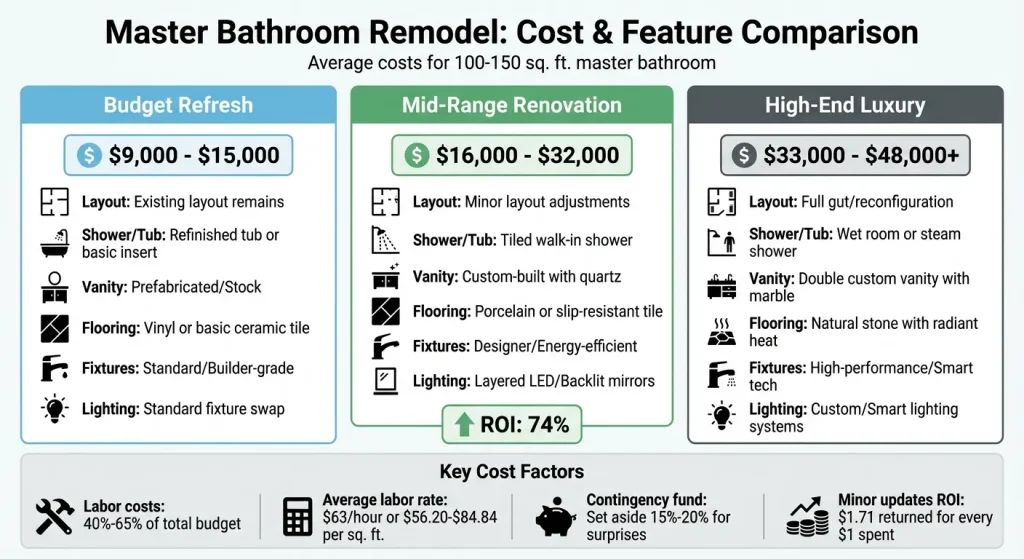
When planning a master bathroom remodel, it’s essential to prepare for potential costs upfront. On average, remodeling a 100–150 sq. ft. master bathroom costs between $12,005 and $24,715 [3]. The final price depends on factors like the scope of the project, materials, and whether you’re making major changes to the layout.
Labor costs typically make up 40%–65% of your total budget [1]. On average, labor runs about $63 per hour or between $56.20 and $84.84 per square foot [3]. Keeping your existing plumbing and electrical systems intact can help keep these costs down.
Material choices also play a big role in determining the overall cost. Here’s a breakdown of typical budgets:
- Budget remodels ($9,000–$15,000): Focused on surface updates like refinishing or replacing basic fixtures.
- Mid-range projects ($16,000–$32,000): Include upgraded finishes and minor layout changes.
- High-end remodels ($33,000–$48,000+): Feature custom cabinetry, luxury materials, and smart technology [3][2].
| Feature | Budget Refresh ($9,000–$15,000) | Mid-Range Renovation ($16,000–$32,000) | High-End ($33,000–$48,000+) |
|---|---|---|---|
| Layout | Existing layout remains | Minor layout adjustments | Full gut/reconfiguration |
| Shower/Tub | Refinished tub or basic insert | Tiled walk-in shower | Wet room or steam shower |
| Vanity | Prefabricated/Stock | Custom-built with quartz | Double custom vanity with marble |
| Flooring | Vinyl or basic ceramic tile | Porcelain or slip-resistant tile | Natural stone with radiant heat |
| Fixtures | Standard/Builder-grade | Designer/Energy-efficient | High-performance/Smart tech |
| Lighting | Standard fixture swap | Layered LED/Backlit mirrors | Custom/Smart lighting systems |
To handle surprises like outdated plumbing or hidden water damage, set aside an additional 10%–20% as a contingency fund [1][3].
From an investment standpoint, mid-range bathroom remodels typically offer an average ROI of 74% [3]. Even minor updates can be financially rewarding, returning $1.71 for every $1 spent [1]. A master bathroom remodel isn’t just a style upgrade – it’s also one of the best ways to boost your home’s value.
Common Mistakes to Avoid During a Master Bathroom Remodel
When tackling a master bathroom remodel, steering clear of common missteps can save you time, money, and stress. One of the biggest mistakes? Underestimating labor costs. Labor typically accounts for 40%–65% of the total budget [1]. On top of that, many homeowners forget about hidden expenses like permit fees, demolition, debris removal, or even water heater upgrades for high-flow shower systems [3]. To avoid getting blindsided, set aside a 15%–20% contingency fund for unexpected costs like outdated wiring or water damage lurking behind walls [1][3].
Another pitfall is changing plans mid-project. It might seem harmless to tweak the design once work has started, but this can lead to scope creep, delaying the project and inflating costs by as much as 40% [49]. Finalize your design and material choices before demolition begins to prevent expensive change orders and disruptions.
Focusing too much on aesthetics can also backfire. Prioritizing style over function might leave you with features that look great but are impractical. For instance, vessel sinks and open shelving may be trendy, but they’re harder to clean and maintain. Interior designer Sarah Trop points out that vessel sinks, in particular, can be a hassle to keep spotless [46]. Instead, aim for upgrades that enhance both the look and functionality of your space.
Skipping professional advice is another major mistake. Without expert guidance, you risk overlooking critical details like proper rough-in valves for shower faucets or reinforcing floors to support heavy cast-iron tubs [47][48]. These oversights can lead to code violations, work stoppages, or even tearing down completed work [49]. Bringing in licensed professionals early can help you avoid structural issues and ensure everything meets local building codes.
Finally, don’t cut corners when hiring contractors. Going with the cheapest bid might seem like a win, but it often results in subpar workmanship and costly repairs down the line [49]. Take the time to vet contractors thoroughly – check their licenses, bonding, and references from past clients to ensure you’re hiring someone reliable and skilled.
How to Start Your Master Bathroom Remodel
Ready to transform your master bathroom? Here’s how to get started on the right foot. First, set clear goals by listing your must-haves and nice-to-haves. For example, a walk-in shower or double vanity might be essentials, while heated floors or smart mirrors fall into the "nice if possible" category. This approach helps prioritize your needs and keeps the project aligned with your budget.
Next, gather inspiration and take accurate measurements of your space. Platforms like Pinterest or Houzz are great for collecting design ideas – save images that showcase the style, colors, and features you love, then share them with your contractor. Don’t forget to measure your current bathroom layout carefully, noting any problem areas like cramped showers or limited counter space. These details help contractors assess what’s realistic for your remodel.
Once you’ve got your ideas and measurements, schedule an initial consultation. During this phase, contractors will evaluate your plumbing, electrical systems, structure, and ventilation. This step is crucial for identifying layout changes and addressing potential moisture issues. Many contractors offer 3D renderings to help you visualize the final design before demolition begins, minimizing costly surprises later.
For the actual work, hire licensed professionals for specialized tasks like waterproofing, plumbing, and electrical work. A design-build firm can be a smart choice, offering a team of designers, project managers, and builders all working together under one roof. Make sure to interview at least three contractors, check their licenses and insurance, and request detailed written estimates that outline the scope, timeline, and payment schedule.
Finally, set aside a 15%–20% contingency fund for unexpected issues – hidden water damage or outdated wiring can pop up during renovations. Ready to take the first step? Request a free, no-obligation quote at KoalatyRemodel.com to get started!
Conclusion
A master bathroom remodel isn’t just about following the latest trends – it’s about creating a space that improves your daily routine and feels inviting. The best remodels address real needs, like fixing cramped layouts or adding more counter space, rather than simply chasing popular designs. As King Remodeling wisely states, "A successful remodel begins with defining your goals and setting a realistic budget, including a 15–20% contingency fund." [1]
Finding the right balance is key. Features such as double vanities and walk-in showers not only make your daily life easier but also add resale value, often recouping 60% to 70% of your investment [2]. On the other hand, focusing too much on high-end luxury upgrades without addressing practical functionality can lower your overall return [1]. Throughout this guide, we’ve highlighted how blending everyday usability with resale value creates the best outcomes.
Start by designing a layout that fits your morning routine, choose durable and low-maintenance materials like quartz [1], and always set aside 15–20% of your budget for unexpected expenses [1]. These steps help ensure your remodel is both practical and stress-free.
Your bathroom should also reflect your personal style. Take cues from your master bedroom to create a seamless flow between the spaces [50]. If you share the bathroom, consider practical upgrades like double sinks or separate zones to accommodate everyone’s needs. For a touch of relaxation, think about adding features like heated floors or a freestanding tub to elevate comfort [5].
Good planning leads to great results. Ready to bring your vision to life? Visit KoalatyRemodel.com to get a free quote and collaborate with local experts who can help make your dream bathroom a reality.
FAQs
What should I consider when setting a budget for a master bathroom remodel?
When you’re planning the budget for your master bathroom remodel, the first step is to set a clear spending limit. Be sure to include a contingency fund – around 15-20% of your budget – for any surprises that might pop up along the way. In the U.S., remodel costs usually fall between $12,000 and $25,000, but the final price depends on factors like the size of your bathroom, the materials you choose, and how extensive the project is.
Several elements can drive up costs, including major layout changes, high-end fixtures and finishes, or custom additions like a walk-in shower or double vanity. To keep your project on track financially, focus on upgrades that improve both functionality and long-term value. Bringing in a professional can also make a big difference – they can provide accurate cost estimates and help you steer clear of common mistakes, like underestimating expenses or project timelines.
What are some smart technology features I can include in my bathroom renovation?
Upgrading your bathroom with smart technology can bring a whole new level of convenience and comfort. Some popular choices include smart mirrors that come with built-in lighting and anti-fog capabilities, as well as dimmable LED lighting to create the perfect ambiance. For eco-conscious options, water-efficient fixtures with touchless or programmable controls are a great addition.
Want more luxury? Consider heated floors with adjustable settings to keep your feet warm and smart showers that let you preset your ideal temperature and water flow. These features don’t just make life easier – they transform your bathroom into a sleek, spa-like retreat.
What are the advantages of using a neutral color palette in a bathroom remodel?
Neutral color palettes bring a host of benefits to bathroom remodels. Shades like white, beige, gray, and taupe provide a timeless and adaptable foundation that works well with a range of design styles, whether you lean modern or prefer something more traditional. These tones also create a serene, spa-like vibe, making your bathroom a more soothing and welcoming space.
Another advantage of neutral colors is their ability to make smaller bathrooms feel larger and more open, enhancing the overall sense of space. They’re also a smart choice for the long haul – neutral tones rarely go out of fashion and make it easy to refresh the look with updated accessories or accents. Incorporating textures, wood elements, or metallic finishes can take the design up a notch, adding warmth and elegance that suits a variety of preferences.