

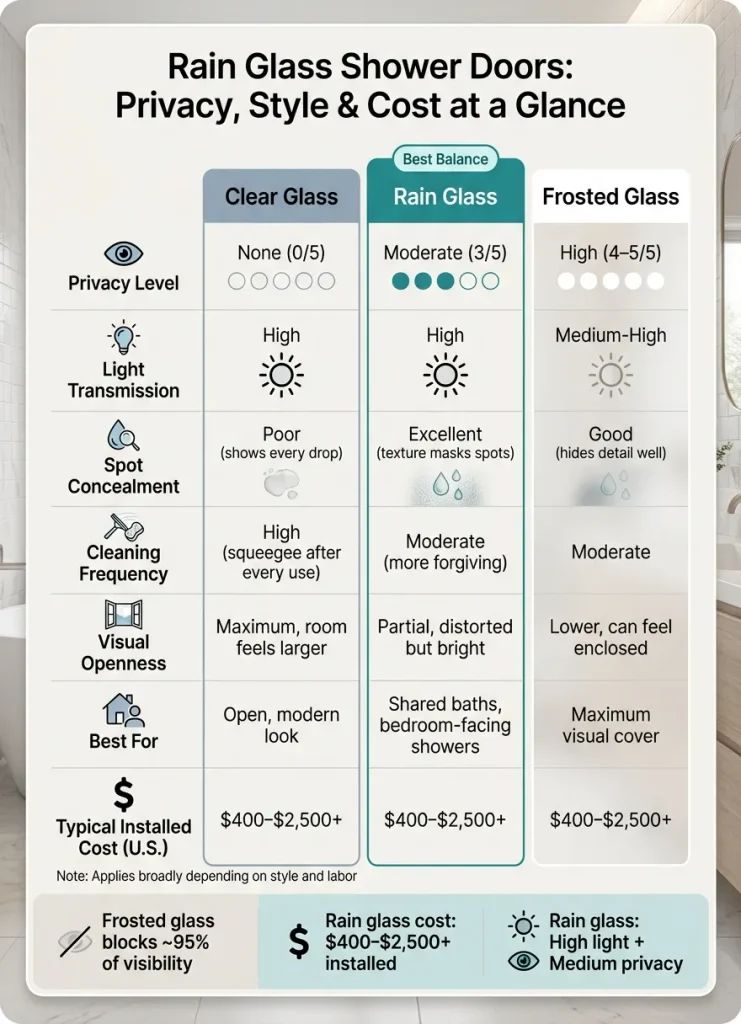
If you want more privacy than clear glass without making the bathroom feel dark, rain glass is often a solid middle pick. I’d sum it up this way: it gives moderate privacy, keeps high light flow, hides many water spots, and usually costs about $400 to $2,500+ installed in the U.S., based on door type and labor.
Before I choose it, I’d check four things:
- Privacy: Rain glass blurs shapes, but it does not block views like frosted glass.
- Style: It can look clean and calm, but in a small bath or with busy tile, it may feel too visually heavy.
- Cleaning: It hides streaks better than clear glass, though soap and minerals can sit in the texture.
- Price: The final cost depends on glass thickness, hardware, framing, custom sizing, and wall conditions.
If I needed the shortest possible answer, it would be this: rain glass works best when I want some privacy, plenty of light, and a softer look – without paying for glass that fully blocks the view.
Quick Comparison
| Glass Type | Privacy | Light | Cleaning Look | Best For |
|---|---|---|---|---|
| Clear | Low | High | Shows spots fast | Open look |
| Rain | Medium | High | Hides many spots | Shared baths, bedroom-facing showers |
| Frosted | High | Medium-High | Hides detail well | More visual cover |
Bottom line: I’d pick rain glass when privacy matters, but I still want the shower area to feel open and bright.
 Rain Glass vs. Clear vs. Frosted Shower Doors: Full Comparison
Rain Glass Shower Door Installation
How Much Privacy Rain Glass Actually Provides
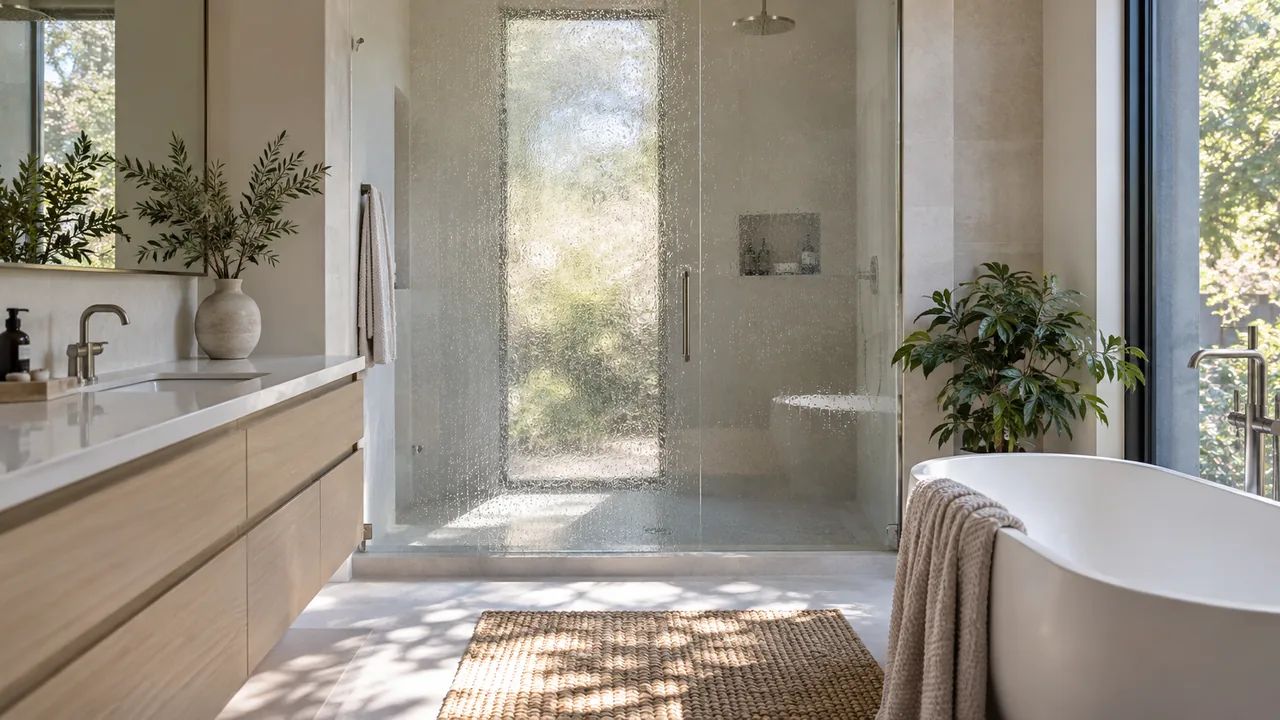
Rain glass gives you moderate privacy, not total cover. Its vertical pattern softens shapes and motion while still letting plenty of light pass through.
How much privacy you get comes down to a few things: the depth of the texture, how close someone is to the glass, and the lighting on each side. Up close, more detail tends to show. At night, interior lighting can make silhouettes easier to spot. During the day, natural light usually does a better job of hiding detail. So yes, rain glass is a privacy pick, but it’s also a style pick.
A simple way to judge it: test a sample under a lamp. If you can make out the bulb’s shape, you’ll likely make out silhouettes at night.
Where rain glass works for privacy without blocking light
Rain glass sits in the middle ground between clear and frosted glass. That makes it a good fit for spaces that need some separation without going fully opaque. The big upside is simple: you get privacy without making the space feel dark.
Clear vs. rain vs. frosted glass: a side-by-side comparison
| Feature | Clear Glass | Rain Glass | Frosted Glass |
|---|---|---|---|
| Privacy Level | None (0/5) | Moderate (3/5) | High (4–5/5) |
| Light Transmission | High | High | Medium-High |
| Visual Openness | Maximum; makes the room feel larger | Partial; distorts the view but stays bright | Lower; can make smaller bathrooms feel enclosed |
Frosted glass blocks roughly 95% of visibility [1], so it’s the better option when privacy comes first. Rain glass lands in the middle. For many shared bathrooms, that feels like enough. But it’s not a full visual shield, and if you want total obscurity, it may not be enough.
Privacy is only one part of the choice. The texture also changes how the shower looks and feels in the room.
How Rain Glass Affects Bathroom Style and Room Feel

Privacy is only part of the story. Rain glass also changes how open, polished, and settled a bathroom feels.
It adds a light texture that softens the shower’s look and gives the room more visual depth, aligning with several modern bathroom trends that prioritize both style and light. That surface blur helps hide the shower interior, which can make the whole space look a bit calmer. It also tends to work well with clean tile and simple hardware, especially matte black or brushed-gold finishes.
That said, rain glass doesn’t fit every setup. If your bathroom already has bold tile or busy patterns, the texture can fight for attention and make the room feel crowded.
When the texture helps and when it makes the room feel closed in
In a larger bathroom, this texture can add interest without weighing the room down. In a smaller bath, it can make the shower feel more boxed in, especially when paired with dark finishes.
A lighter palette usually helps. Light finishes and simple tile patterns can keep the space feeling more open and less cramped.
How lighting changes the look of rain glass
Lighting shapes the look of rain glass more than most homeowners expect.
Depending on the light, the texture can read like soft ripples or stronger stripes. It can also make the pattern stand out more while still letting the shower stay bright. And because rain glass still lets in plenty of light, it usually helps the bathroom keep an open feel.
Before you lock in the design, it’s smart to look at the vanity, ceiling, and shower lighting together. For a deeper look at how to coordinate fixtures across the whole room, the Bathroom Lighting & Mirrors Guide covers fixture placement and layering in detail.
That same texture also affects how much upkeep the door will need.
Cleaning, Maintenance, and Daily Use Tradeoffs
That texture does two things at once: it adds privacy and softens the look of the door. But it also changes how you clean it.
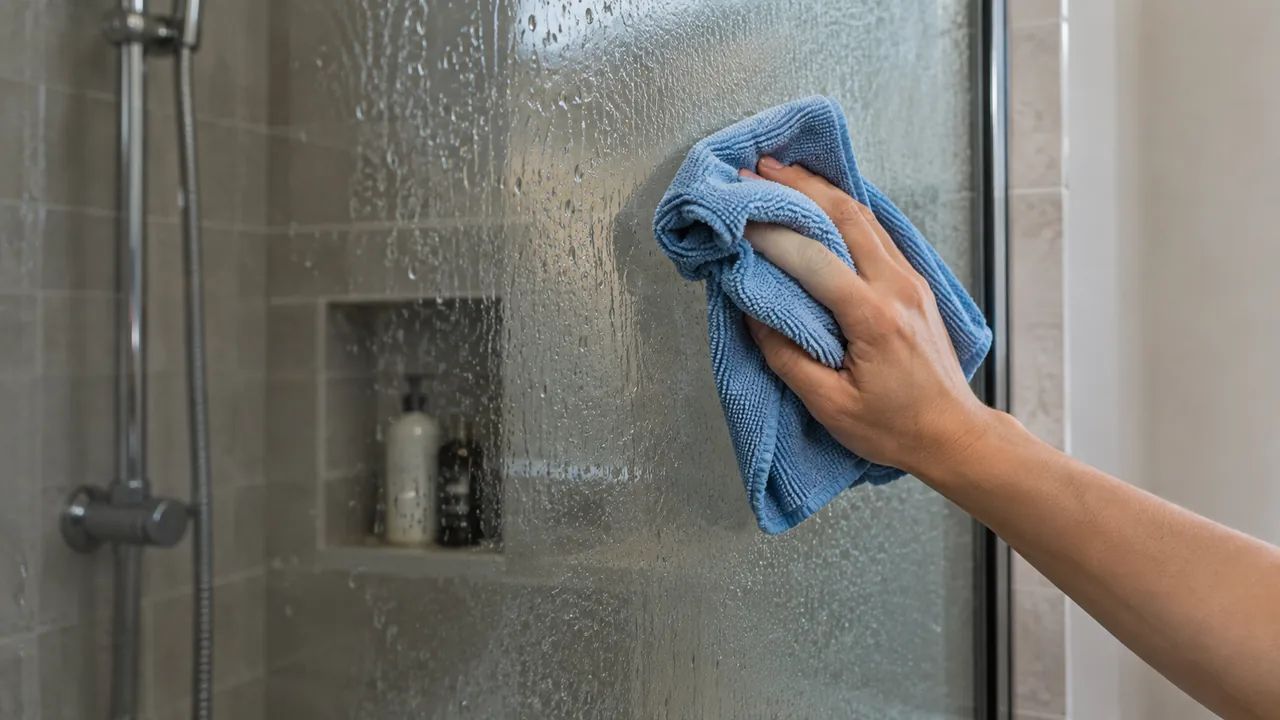
Rain glass hides water spots and streaks better than clear glass. That’s the good news. The catch is that the textured surface can hold onto soap and mineral deposits if you let buildup sit too long. So while rain glass often looks cleaner for longer stretches, residue can still collect over time.
What cleaning rain glass typically requires
For day-to-day care, use a squeegee or microfiber cloth after each shower so water doesn’t dry on the surface. When you need a cleaner, go with a mild, pH-neutral product. Skip abrasive pads and stiff brushes since they can scratch the glass or damage the hardware.
If you want less hassle, install the smooth side facing the shower and the textured side facing the room. That setup makes routine cleaning easier. And when it’s time for a deeper wash, clean along the vertical grooves instead of across them.
Ventilation helps too. Run the exhaust fan during the shower and for a while after. Less moisture in the bathroom means fewer mineral deposits settling into the texture. Factory-applied water-repellent coatings can also help water bead up and slide off, which cuts down on mineral buildup.
Spot concealment vs. residue buildup: what to expect
| Feature | Clear Glass | Rain Glass |
|---|---|---|
| Spot Concealment | Poor – shows every water drop and fingerprint | Excellent – texture masks minor spots and streaks |
| Residue Collection | Low – smooth surface wipes clean easily | Moderate – grooves can trap soap and minerals |
| Cleaning Frequency | High – needs squeegeeing after every use | Moderate – more forgiving of missed cleanings |
| Care Requirements | Simple wiping or squeegeeing | Squeegee recommended; clean along the vertical texture |
| Hard Water Impact | Visible white mineral haze | Haze is hidden, but minerals can build up in grooves |
Upgrade your space with bathroom remodeling focused on comfort and functionality.
Rain glass does a nice job hiding spots, which is why many people like it for busy bathrooms. Still, routine cleaning matters. If not, residue can settle into the grooves and become more annoying to remove later.
That tradeoff matters when you compare quotes and decide what fits your bathroom remodeling budget, cleaning habits, and day-to-day use.
Cleaning routine, coating options, and glass orientation can also affect the total project value.
Cost Factors, Best-Fit Scenarios, and a Final Decision Checklist
After privacy, light, and upkeep, cost becomes the last big test. The price of rain glass depends on a few main things: glass thickness, door style, hardware, and the condition of the opening. If the walls are out of square or the opening needs custom sizing, labor and fabrication costs usually go up. In most bathrooms, a typical installed price lands somewhere between $400 and $2,500+, depending on whether you’re buying a standard framed unit or a fully custom frameless setup.
What to look for in a shower door quote
A good quote should spell out the full job, not just the glass panel. That means precise measurements taken from finished tile surfaces, the glass type and thickness, hardware finish, labor, removal of any existing door or enclosure, silicone sealing, and any water-repellent coating.
When you compare bids, focus on the full installed price. A lower glass price can look good at first glance, then get padded with labor, removal, or sealing charges later. For a broader look at what goes into a shower project, the Shower Remodel Guide covers the full scope of what to plan for.
When rain glass is a good fit and when it is not
Once you know the installed price, the next step is simple: decide whether the look and the upkeep make sense for your bathroom.
Rain glass works well when privacy matters more than a fully open look and when the texture is worth paying for as a design feature. It tends to fit shared bathrooms, bedroom-facing showers, and simple tile layouts.
It tends to be a weaker match in small baths, busy tile schemes, or homes where the top goal is the easiest possible cleaning routine. In those spaces, the texture can make the room feel a bit busier, and the upkeep may feel like more trouble than it’s worth.
Key questions to answer before choosing rain glass
Use these questions to make sure the glass, the room, and the quote all line up:
- How much privacy do you actually need? Rain glass blurs visibility without fully blocking it.
- Does the bathroom get enough natural light? Test a sample under your actual lighting before you commit.
- Does the texture coordinate with your tile and hardware? Simple finishes usually pair best.
- Is the cleaning routine realistic? If you won’t squeegee often, factor that into your choice.
- Does the quote cover the full installed price? Measurements, glass, hardware, labor, removal, sealing, and any protective coating should all be itemized.
You can also explore the Complete Bathroom Remodeling Guide for broader planning resources.