


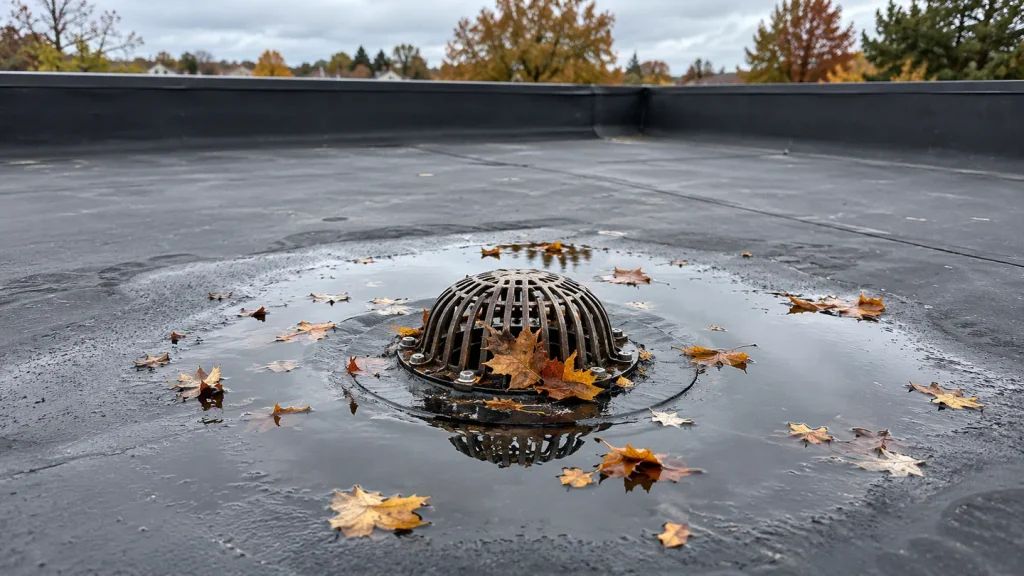
I’d fix drainage and deck problems before choosing any roofing membrane. If water remains more than 48 hours after rain, investigate the cause before installing a new roof.
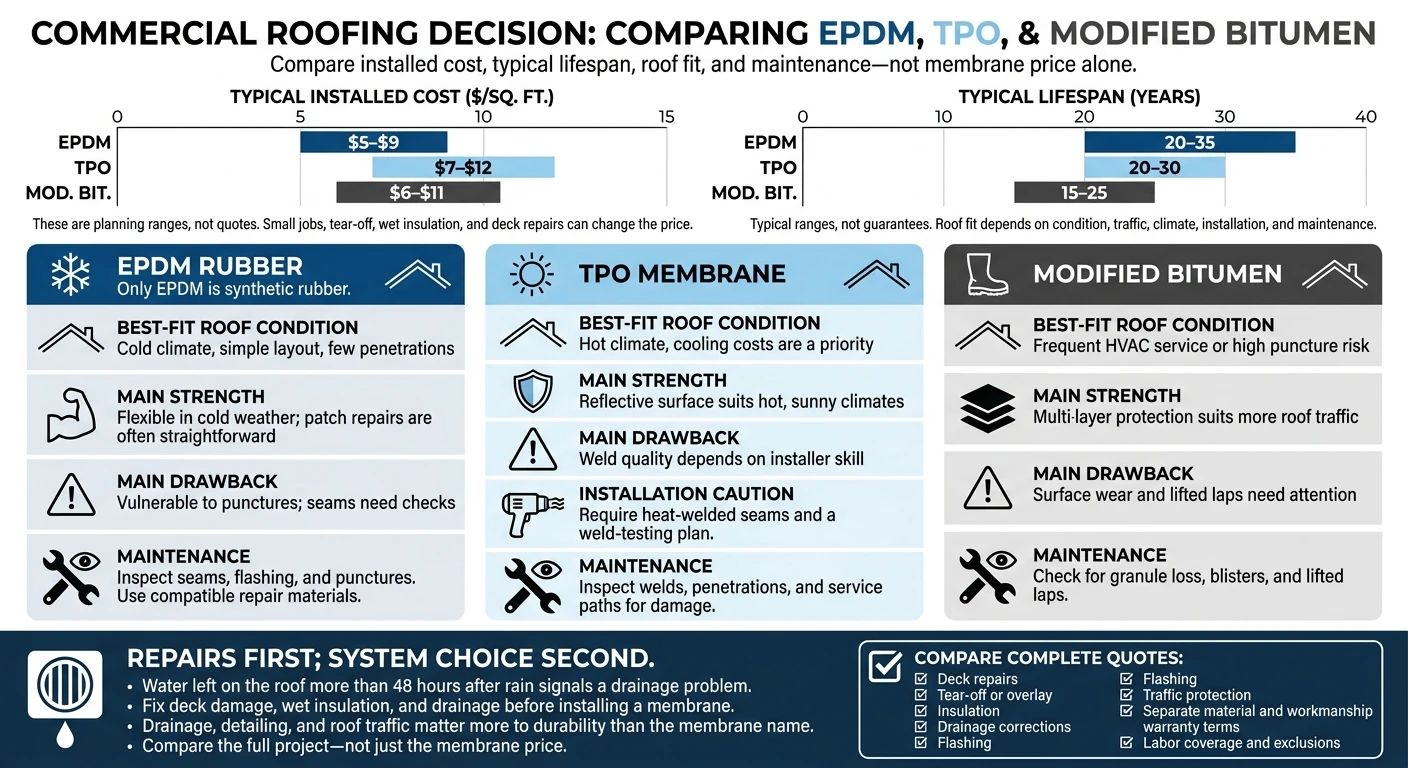
For a low-slope roof, I’d compare three options: EPDM for cold-weather flexibility and simpler repairs, TPO for a reflective surface and heat-welded seams, and modified bitumen for better puncture resistance. Strictly speaking, only EPDM is synthetic rubber.
Quick Comparison
| System | Typical installed cost | Typical lifespan | Main strength | Main drawback |
|---|---|---|---|---|
| EPDM | $5–$9/sq. ft. | 20–35 years | Flexible in cold weather; patch repairs are often straightforward | Vulnerable to punctures; seams need checks |
| TPO | $7–$12/sq. ft. | 20–30 years | Reflective surface suits hot, sunny climates | Weld quality depends on installer skill |
| Modified bitumen | $6–$11/sq. ft. | 15–25 years | Multi-layer protection suits more roof traffic | Surface wear and lifted laps need attention |
These are planning ranges, not quotes. Small jobs, tear-off, wet insulation, and deck repairs can change the price.
My bottom line: <u>compare the whole roof project – not just the membrane price</u>. Ask each contractor to spell out drainage work, flashing, traffic protection, maintenance needs, and separate material and labor warranty terms.
 Protect your property with roofing solutions built for strength and durability.
1. EPDM Rubber Roofing
Roof Fit and Installation
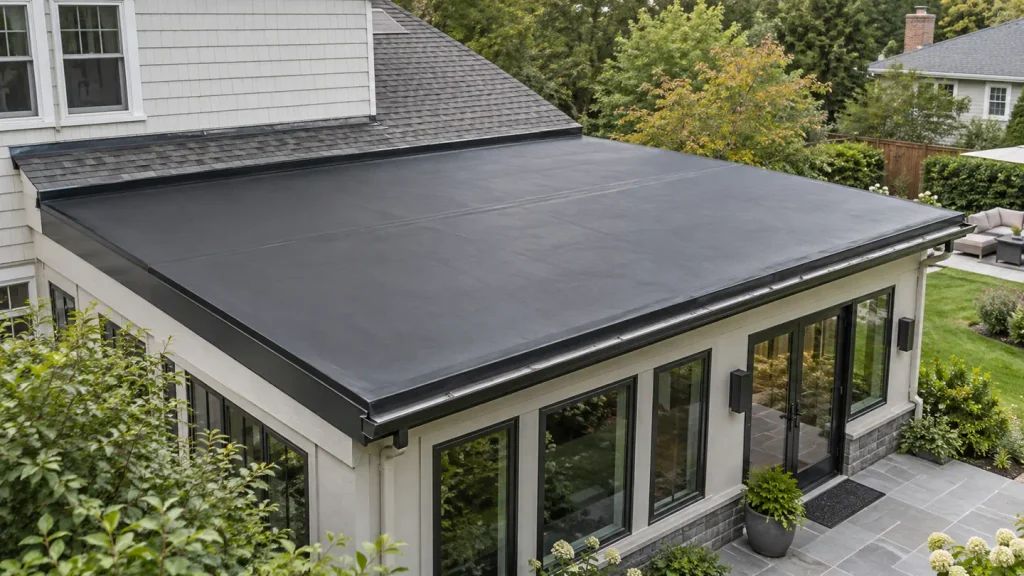
EPDM offers good value when the roof drains well, the deck is sound, and the details are simple [1][2][4]. The roof should slope at least 1/4 inch per foot. Water that remains after 48 hours signals ponding; tapered insulation can fix low spots [2][3][5]. An overlay is an option only if the existing substrate is sound – not saturated or weak [1][4].
Simple roof shapes let installers use wide sheets with fewer joints [1][2][4]. Skylights, vents, and wall connections add flashing work [1][2][3]. The attachment method must suit the deck, wind load, and structure [1][3][5].
| Assembly | Where it fits | Main trade-off |
|---|---|---|
| Fully adhered | Residential additions and high-wind applications [1][3][5] | Needs a clean substrate and more installation labor [1][3] |
| Mechanically fastened | Larger roofs with suitable decks [1][3] | Faster installation, but fastener penetrations and wind movement need attention [1][3] |
| Ballasted | Strong structures in low-wind areas [3] | Adds roughly 10–12 pounds per square foot and makes inspection harder [3] |
Follow the selected system’s attachment requirements. A ballasted assembly also needs structural verification [1][3][5].
With the roof shape and drainage sorted out, EPDM offers a simple main roof surface and relatively straightforward repairs.
Durability and Maintenance
A properly installed EPDM roof typically lasts 20–35 years, but foot traffic and service work can cause punctures sooner [1][3]. Even a well-installed roof needs regular care at seams, drains, and traffic paths.
Specify protective walk pads around equipment and along access routes. Inspect the roof in spring and fall for traffic damage and blocked drains [1][3].
Installed Cost and Long-Term Value
The membrane price is only part of the cost. Prep work and hidden repairs also affect long-term value.
Residential EPDM installation generally costs $5–$9 per square foot, which you can estimate by roof type to plan your budget. Small porch roofs may cost $8–$14 per square foot because of minimum mobilization charges [5]. Tapered insulation can add roughly $2–$4 per square foot [3]. Fixing moisture, slope, and drainage problems before installing the membrane helps you get the most from that spending.
Ask for a quote that details tear-off or overlay, insulation, flashing and edge details, drain work, and warranty terms [3][5]. Compare system coverage, labor coverage, and exclusions – not just the warranty’s length [3].
2. TPO Membrane Roofing
Roof Fit and Installation
Compared with EPDM, TPO means more involved detailing, but offers welded seams and higher reflectivity.
White TPO (thermoplastic olefin) works well for homeowners who want to reflect sunlight on broad, sun-exposed low-slope roofs. It reflects roughly 70–80% of solar radiation, which can reduce cooling costs by 20–30% in hot climates [3]. It’s best suited to roofs with simple drainage and limited foot traffic. On unvented roofs, control air leakage and vapor to prevent condensation on the deck [5].
Heat-welded seams need skilled installation. Heat and welding speed affect seam quality, so ask whether the crew probe-tests every seam [2][3]. Fully adhered and mechanically fastened systems have different deck and attachment requirements. Vents, skylights, and HVAC curbs also need manufacturer-specific flashing – not improvised patches [3][5].
Durability and Maintenance
TPO generally lasts 20–30 years, depending on installation and roof conditions [3][5]. Rooftop equipment increases the risk of punctures, so specify walk pads along service routes. Inspections should cover welded seams, flashing around roof penetrations, and drainage. Clean the surface as recommended to maintain its reflectivity [3].
Installed Cost and Long-Term Value
Residential TPO installation typically costs $7–$12 per square foot [5]. Each quote should state the membrane thickness: 45, 60, or 80 mil. Moving from 45 mil to 60 mil adds about 15–20% to the cost; choosing 80 mil adds 30–40% [3]. Upgrading from 45 mil to 80 mil can also extend the roof’s lifespan by about 30% [3].
 Work with trusted roofing professionals focused on quality craftsmanship.
TPO offers the most value on sun-exposed roofs in hot climates, where its reflectivity can lower cooling costs [3]. Those savings depend on the climate, insulation, and building – not color alone. Compare full quotes that include welding, flashing, walk pads, and drainage work. Check for standing-water exclusions, too: ponding can void warranties and speed up degradation [3].
Modified bitumen shifts the trade-off toward puncture resistance and a tougher surface.
3. Modified Bitumen Roofing
Roof Fit and Installation
Compared with EPDM and TPO, modified bitumen offers less reflectivity but a tougher, multi-layer surface. It works well on small porches, dormers, and additions. Its reinforced assembly typically uses two to three layers, adding puncture resistance and making details around multiple roof penetrations easier to handle. That toughness helps on roofs with frequent foot traffic or regular HVAC service, but the deck and perimeter still need to be sound [3][4][5].
Self-adhered, torch-applied, and cold-applied systems each require different installation methods. Torch-applied versions add fire risk on wood framing [2][3]. Good drainage matters, too: the roof usually needs a slope of at least 1/4 inch per foot. Use tapered insulation to correct low spots before installation, since standing water shortens the roof’s service life [4][5].
Durability and Maintenance
Modified bitumen typically lasts 15–25 years [5]. Its multiple layers provide backup protection, so a puncture in one layer doesn’t cause an immediate leak.
Inspect the roof every 6–12 months for lifted laps, blisters, cracks, and granule loss, especially along equipment service routes. Check wall terminations and transitions where the flat roof meets a sloped section closely [3][5].
Installed Cost and Long-Term Value
Residential installation generally costs $6–$11 per square foot [5]. When comparing quotes, check what each includes: tear-off, deck repairs, insulation, drainage corrections, flashing, and the specified installation method.
Tapered insulation can add roughly $2–$4 per square foot [3]. Paying for that preparation may offer better value than choosing a cheaper installation that leaves standing water. These trade-offs affect durability, weather exposure, and upkeep.
Pros and Cons: Durability, Weather, and Maintenance
A roof’s long-term value depends on its condition – not just the material. The main differences involve seams, surface wear, foot traffic, and how each system handles water.
| System | Advantages | Disadvantages | Climate considerations | Maintenance needs |
|---|---|---|---|---|
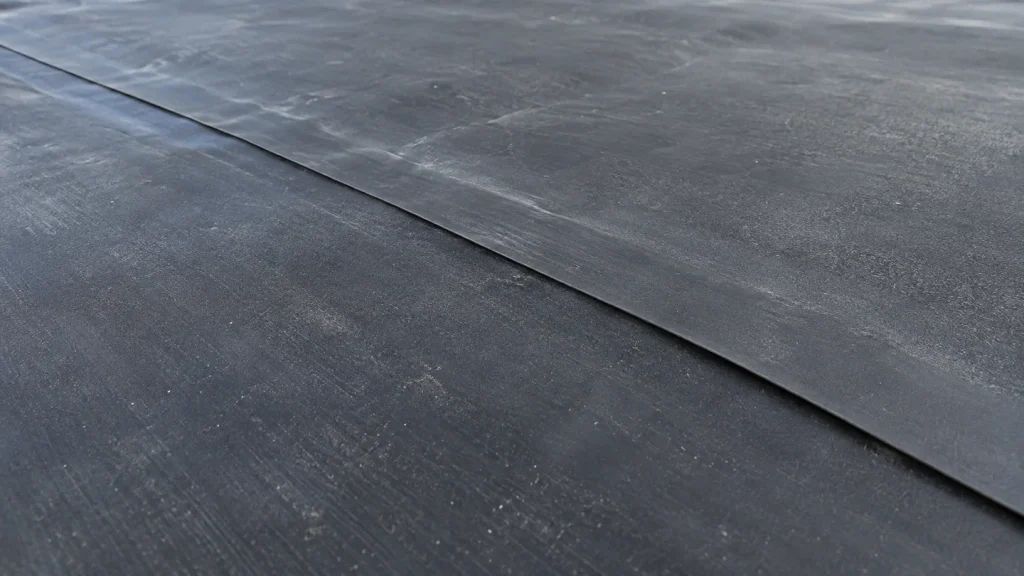
| EPDM rubber | Large sheets mean fewer field seams. Flexibility allows for temperature-related movement, and isolated damage can often be patched. | Performance depends on a dry substrate and properly installed seams or adhesion. Sharp debris and foot traffic can cause punctures. | Stays flexible in cold weather. Dark membranes absorb more heat. | Inspect seams, flashing, and punctures. Use compatible repair materials. |
| TPO membrane | A white, reflective surface. Properly heat-welded seams form strong joints. | Weld quality depends on installer skill. Seam repairs usually need heat-welding equipment. | Reflective membranes can stay cooler in sunny climates, but lower energy costs aren’t guaranteed. | Inspect welds, penetrations, and service paths for damage. |
| Modified bitumen | Multi-ply construction resists punctures better than single-ply membranes, making it useful for frequent service traffic. | Surface wear, blisters, and lap problems still need attention. | Performs well in freeze-thaw climates. Surface finish affects heat gain. | Check for granule loss, blisters, and lifted laps. |
Drainage, detailing, and roof traffic matter more to durability than the membrane name. Timely maintenance helps keep future repair costs down.
 Start your roofing project with experienced contractors you can trust.
Color affects surface temperature. But insulation, climate, and roof design have more influence on indoor comfort and energy costs. [3][6] The finish also affects reflectivity, heat gain, and appearance.
Water left on the roof more than 48 hours after rain signals a drainage problem. Clear blocked outlets and fix low spots before patching the surface. [2][3] Use the Roof Flashing Guide to check wall connections, edges, and roof transitions.
Inspect the roof after major storms and during routine seasonal checks. Protect service paths with walk pads, and repair punctures promptly. Repeated patching usually points to a failed detail. [2][3]
Installed Cost and Long-Term Value: Compare Complete Quotes
Compare the full project – not just the membrane price. Roof size, access, removal, insulation, and detailing all affect installed cost. Small residential jobs can also have higher setup costs per square foot. Use the Roof Replacement Cost Guide for pricing context, then compare quotes that include the same work. [3][5]
| System | What the quote must specify | Why it affects value |
|---|---|---|
| EPDM rubber | Membrane thickness, attachment method, seam materials, and small-job charges | Shows assembly specifications and setup costs |
| TPO membrane | Membrane thickness, attachment method, and welding scope | Lets you compare material and skilled-labor allowances |
| Modified bitumen | Number of plies, application method, and surface finish | Defines the assembly and installation labor included |
Beyond the roofing system, the bid should explain which roof problems the work will address.
Ask for inspection findings, moisture-testing plans, and a clear choice between tear-off and overlay. The quote should describe the roof’s condition beneath the new membrane and list deck repairs, insulation type, drainage corrections, tear-off, and disposal. It should also explain how extra work will be documented, priced, and approved if hidden damage turns up. [3][5]
Require details for the full assembly: membrane type, brand, thickness in mils, attachment method, and flashing at every penetration, edge, and roof transition. Include traffic protection wherever equipment needs servicing. Get written exclusions, including ponding-water exclusions, and separate material and workmanship warranty terms. Confirm labor coverage and any drainage or maintenance requirements. [3][5][7]
Final Verdict: Choose the System That Fits Your Roof
Once you’ve compared systems and quote details, base your choice on roof condition, traffic, and climate – not material reputation. Address drainage and substrate problems before choosing a membrane.
| Roof condition | Best fit | Key caution |
|---|---|---|
| Cold climate, simple layout, few penetrations | EPDM rubber | Its flexibility suits temperature swings, but seams and flashings still need inspection. |
| Hot climate, cooling costs are a priority | Reflective TPO | Require heat-welded seams and a weld-testing plan. Poor detailing can still shorten service life. |
| Frequent HVAC service or high puncture risk | Multi-ply modified bitumen | Check structural capacity and protect walk paths. This system isn’t damage-proof. |
| Persistent ponding, sagging, or trapped moisture | Repairs first; system choice second | Fix deck damage, wet insulation, and drainage before installing a membrane. |
Before approving the project, check these details:
- Drainage and substrate: Are low spots addressed? Standing water calls for investigation and drainage correction.[3][4] Has the deck been checked for rot, soft spots, and sagging?
- Installation details: Does the quote cover seams, edges, drains, and wall transitions?
- Hidden repairs: Is there a written allowance or unit price?
- Service access: Are walk pads planned for equipment maintenance?
- Warranties: Are coverage, labor, and exclusions clear?
- Ownership timeline: Does the system fit how long you plan to stay?
Use the Complete Roof Replacement Guide to compare quotes against these checks, with roof repairs first and membrane fit second – the order that delivers the best value.
See What Your Roof Project Costs
FAQs
How long can rubber roofing last?
Rubber roofing, primarily EPDM, typically lasts 20 to 30 years on low-slope residential roofs. How long it holds up depends on drainage, installation quality, climate exposure, maintenance, and foot traffic on the roof.
Inspect the roof twice a year. Clear debris, check drainage, and examine seams, edges, and penetrations. Small punctures can be patched, but seam failure across much of the roof or structural sagging usually calls for replacement.
Is EPDM rubber roofing good for residential roofs?
Yes. EPDM rubber roofing is a durable, flexible, and cost-effective choice for low-slope residential roofs, especially those with simple layouts. It typically lasts 20 to 30 years, with residential costs ranging from $5 to $9 per square foot.
Performance depends on proper drainage and careful installation at seams, edges, and roof penetrations. Inspect the roof twice a year to clear debris, check drainage, and examine flashing.
Does rubber roofing need maintenance?
Yes. Rubber roofing needs inspections twice a year to clear debris, check drainage, and examine seams, edges, flashing, and penetrations. Even a durable membrane needs regular care in these areas.
Small punctures are easy to patch, but seam failure across much of the roof or structural sagging usually calls for replacement. Water that stays pooled may point to drainage or slope problems that need fixing.
Can standing water damage a rubber roof?
Yes. Standing water that remains for more than 48 hours can speed up membrane and seam failure. Water that keeps pooling can also signal drainage or slope problems that need fixing.
During regular inspections, clear debris, check drainage, and inspect seams, edges, and flashing. If water pools on your roof, drainage fixes may include tapered insulation to create a slope of at least 1/4 inch per foot.
What should I look for when searching EPDM roofing near me?
Compare contractors’ experience with low-slope residential roofs, the quality of their inspections, and how they plan drainage. Check installation quality, too – especially at seams, edges, and penetrations. EPDM works best on simple roof layouts, and proper drainage is critical.
Ask for itemized quotes that spell out membrane thickness, flashing work, and the drainage plan. Review workmanship terms, how the contractor handles hidden damage, and what maintenance the roof needs, including twice-yearly inspections.
Is rubber roofing worth the investment?
Yes. Rubber roofing, primarily EPDM, is a durable, flexible, cost-effective option for simple, low-slope residential roofs. It typically lasts 20 to 30 years and costs $5 to $9 per square foot.
Getting that long-term value takes proper drainage, well-installed seams, edges, and penetrations, plus twice-yearly inspections. Ask for itemized quotes that spell out the membrane thickness, flashing work, and drainage plan.