

If I were budgeting for Andersen windows today, I would plan for installed cost, not just the window price. Most projects land around $400 to $4,300 per window installed, with many homeowners near $1,900 per window. The unit alone may cost $300 to $3,500, but labor, trim, flashing, insulation, and hidden repairs can change the total fast.
Here’s the short version:
- 100 Series is usually the lowest-cost Andersen line.
- 400 Series is often the middle pick for price, looks, and options.
- A-Series and E-Series cost more due to materials and custom work.
- Renewal by Andersen is usually the highest-priced path because it bundles product and installation.
- Insert replacement costs less, but it keeps the old frame.
- Full-frame replacement costs more, but it lets me fix rot, flashing issues, and framing problems.
- Glass upgrades like triple-pane or laminated glass can add $150 to $1,000+ per window.
- For full-frame jobs, I’d keep 10% to 25% extra in the budget for hidden damage.
Are Andersen Windows Worth the Cost? A Window Installer Explains
Quick comparison
| Item | Typical Cost |
|---|---|
| Andersen window unit only | $300–$3,500 |
| Basic installed Andersen window | $400–$4,300 |
| National average installed cost | ~$1,900 |
| Insert replacement | $1,000–$2,800 |
| Full-frame replacement | $1,500–$4,300+ |
| Bay or bow window | $3,500–$12,000+ |
| Glass upgrade add-on | $150–$1,000+ |
When I compare quotes, I don’t just look at the bottom-line number. I check whether each bid includes removal, disposal, flashing, sealing, trim, casing, and repair allowance. That’s what tells me whether the lower price is a deal – or just an incomplete scope.
Andersen Windows Cost by Product Line and Frame Material
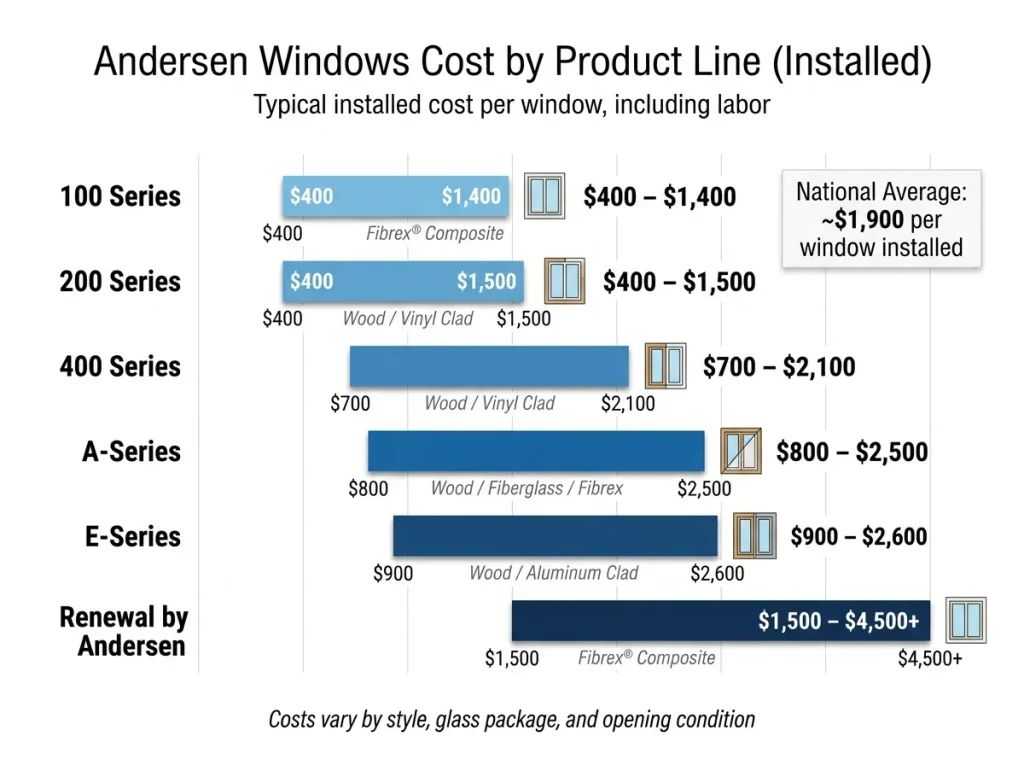 Andersen Windows Cost by Product Line: Installed Price Comparison
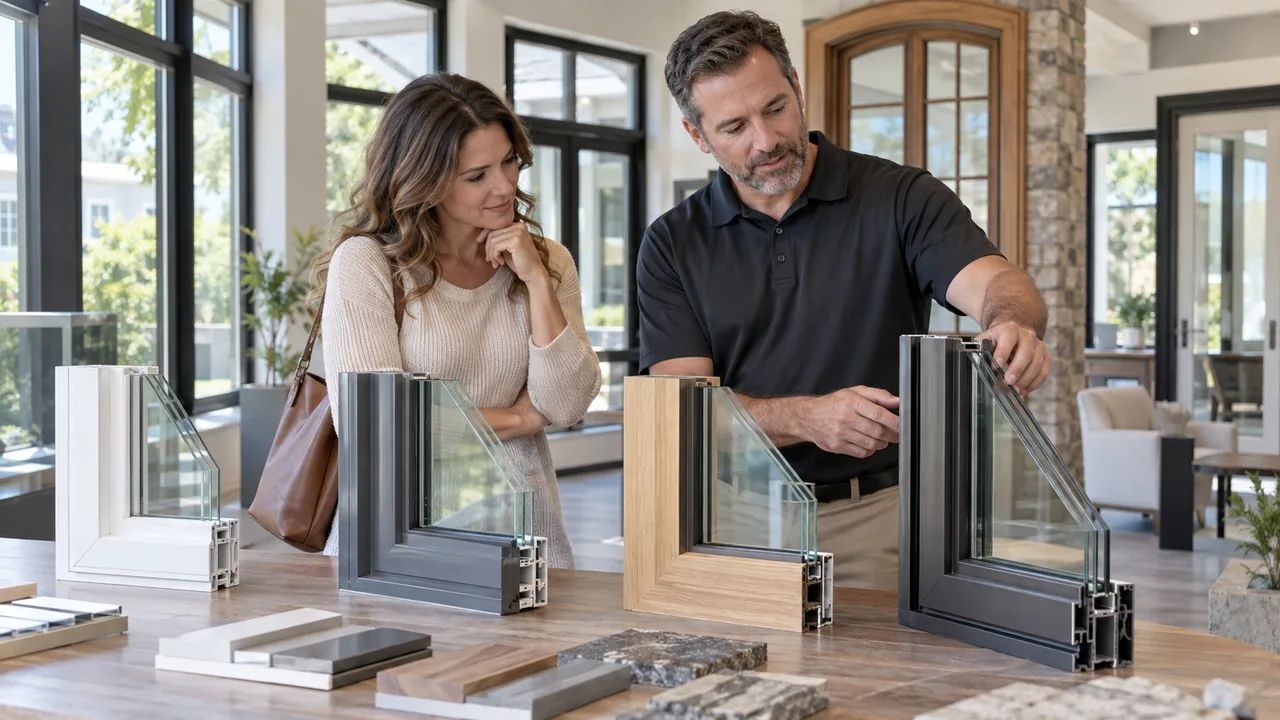
Once the budget is set, the next step is picking the Andersen series that fits the home and the room. The series and frame material set the starting price. From there, the total can climb with more custom options, tougher materials, and installation packages.
How Series and Materials Change the Price
The 100 Series uses Fibrex composite, which keeps upkeep low and holds up well over time. The 200 Series and 400 Series pair wood interiors with vinyl-clad exteriors. That gives you a warmer look inside without pushing the price into premium territory. The 400 Series is often the middle ground for customization, appearance, and cost [4].
Step up from there, and the materials change again. The A-Series combines wood, fiberglass, and Fibrex on the exterior, which makes sense for coastal areas or places with harsh weather [4][3]. The E-Series uses extruded aluminum cladding and comes in 50+ colors, so it’s often chosen for custom home designs and architectural work [4][3].
When Paying More for Materials Makes Sense
Spend more on materials where the window gets noticed every day, gets opened and closed often, or takes a beating from sun, wind, rain, or salt air.
Andersen Product Lines Compared: Materials, Customization, and Value
| Product Line | Primary Materials | Customization Level | Maintenance | Typical Installed Cost | Where Added Cost May Be Justified |
|---|---|---|---|---|---|
| 100 Series | Fibrex® Composite | Standard | Very Low | $400 – $1,400 [1] | Budget projects; rental or quick-sale prep |
| 200 Series | Wood / Vinyl Clad | Basic | Low | $400 – $1,500 [1] | Entry-level wood look; limited styles |
| 400 Series | Wood / Vinyl Clad | High | Low | $700 – $2,100 [1] | Long-term primary residence; high customization |
| A-Series | Wood / Fiberglass / Fibrex | Very High | Low | $800 – $2,500 [1] | Severe climates; maximum energy performance , often found in the best energy efficient replacement windows |
| E-Series | Wood / Aluminum Clad | Unlimited | Low | $900 – $2,600 [1] | Custom colors; custom architectural projects |
| Renewal by Andersen | Fibrex® Composite | Standard–High | Very Low | $1,500 – $4,500+ [2] | Full-service turnkey install |
Renewal by Andersen bundles the product and the installation, so the quote covers both.
The series sets the base price, but it doesn’t tell the whole story. Different window types and styles, glass packages, and the condition of the opening all shape the final quote. After you choose the series, the price can move up or down based on window size, glass choices, and how much installation work the job needs.
What Raises Andersen Window Replacement Cost Beyond the Brand
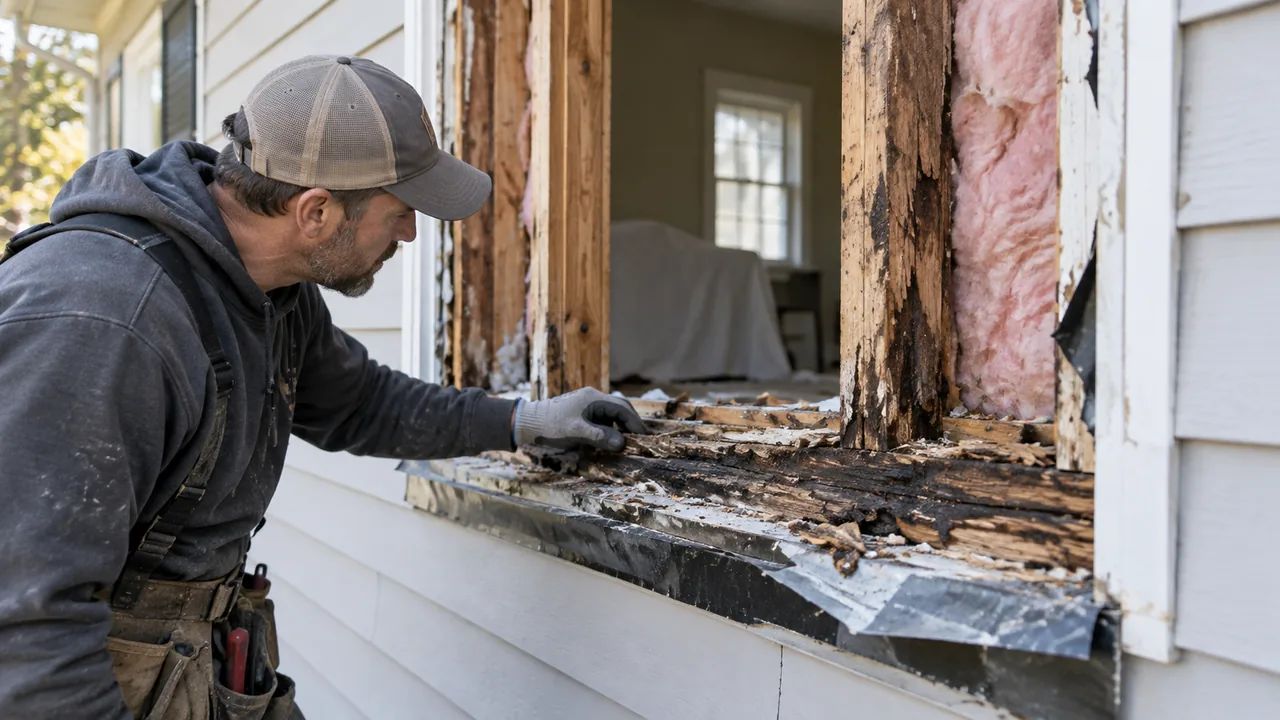
Once you’ve picked the series, the final price comes down to the job itself: window style, size, glass package, install method, and the condition of the opening.
Style, Size, and Glass Upgrades
Style and size can move the price a lot. Bigger windows and more complex designs need more glass, more hardware, and more labor. A standard double-hung window usually costs $1,000–$3,500 installed, while a casement is often around $1,100–$3,800 [2].
Picture windows can climb to $4,500+ based on size. Bay and bow windows often land in the $3,500–$12,000+ range because they need structural support, roof kits, and more interior trim work [2].
Glass upgrades add another layer of cost. Moving from standard double-pane Low-E glass to triple-pane, laminated, or UV-protective glass usually adds $150–$1,000+ per window [2]. A good way to compare options is the NFRC label. Match the U-factor and SHGC to your climate: lower SHGC for hot areas, higher SHGC for cold ones [3].
Those choices matter, but the install method can shift the quote just as much.
Insert Replacement vs. Full-Frame Replacement
Installation method is one of the biggest cost factors in an Andersen project.
An insert replacement puts the new window inside the existing frame. It’s faster, involves less tear-out, and keeps the original trim in place. Installed cost usually falls between $1,000–$2,800 per window [2]. The downside is simple: you lose some glass area because the new frame sits inside the old one [3].
A full-frame replacement removes the entire unit down to the rough opening. That gives the installer room to fix hidden rot, replace flashing, and even change the opening size if needed. If the old frame is in bad shape, this is often the better path. It also costs more, usually $1,500–$4,300+ per window installed [2].
The condition of the opening often decides which route makes sense.
Opening Conditions and Upgrade Choices That Affect the Final Quote
If the opening has rot, water damage, or framing that’s out of square, the job may need a full-frame replacement instead of a simple insert install. That can add repair work that wasn’t part of the first estimate [2]. On full-frame jobs, it makes sense to budget a 10%–25% contingency for surprises behind the trim or under the sill [2].
Before work starts, check for signs like:
- Soft or stained trim
- Drafts around the frame
- Water marks near the sill
- Failed caulk
- Windows that stick or won’t lock
These aren’t small issues. They often point to an opening that needs more than a basic swap, and the quote should account for that up front, not after the crew starts pulling things apart [2].
| Factor | Cost Driver | Typical Cost Impact |
|---|---|---|
| Window Style | Bay, bow, or specialty shapes | Adds $2,000–$8,000+ per unit [2] |
| Glass Package | Triple-pane, laminated, or UV | Adds $150–$1,000+ per unit [2] |
| Installation Method | Full-frame vs. insert | Adds $400–$1,700+ per unit [2] |
| Opening Condition | Rot, water damage, or failed flashing | Adds $300–$3,000+ per project [2] |
| Finishing Work | New interior casing and exterior trim | Adds $200–$1,200+ per unit [2] |
Installation Scope and Long-Term Value
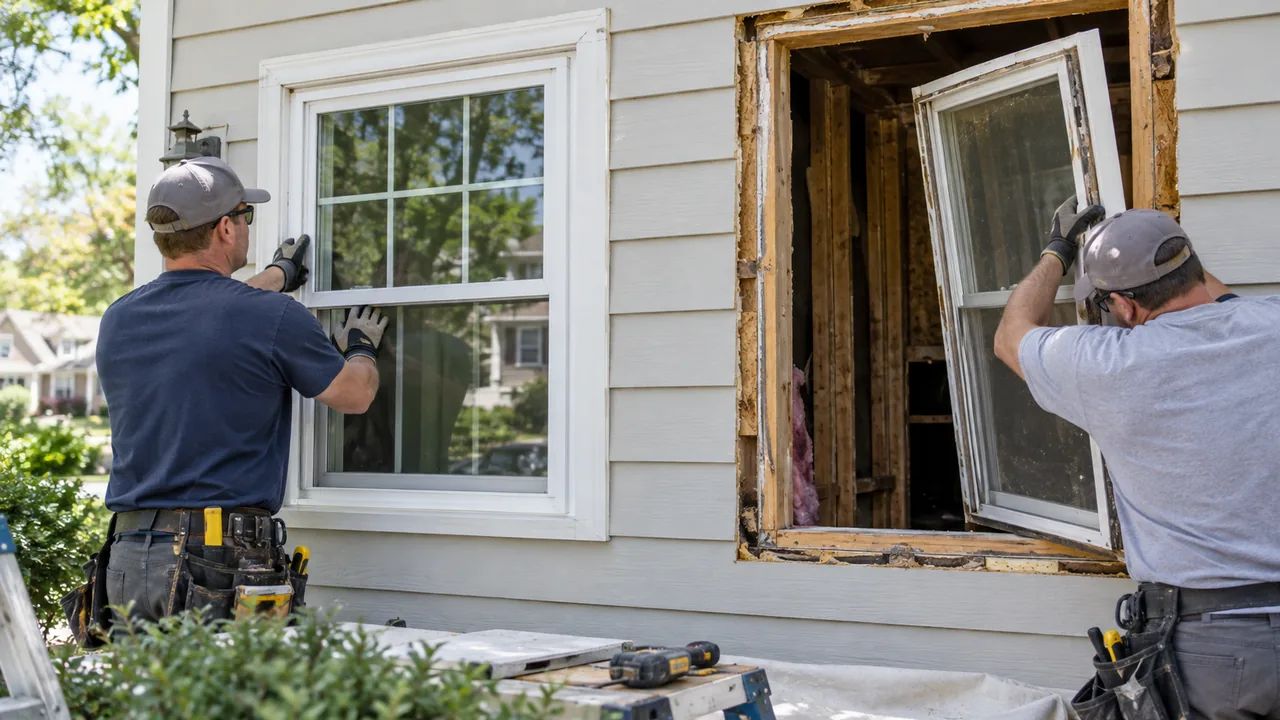
Once you’ve settled on the product, the style, and the condition of the opening, installation scope is what separates a fair quote from one that delivers long-term value. Product quality matters, of course. But installation quality matters just as much. And with Andersen pricing, this is often the part homeowners overlook.
What a Complete Installation Scope Should Cover
A full scope covers far more than swapping out the old window. It should include removal, disposal, opening prep, flashing, insulation, air sealing, trim, cleanup, and any paint or stain work. If flashing or sealing is done poorly, warranties can be voided. That’s a big deal.
Professional installation by Andersen Certified Contractors also often comes with a two-year labor warranty, which gives you a useful point of comparison when you’re lining up quotes [1][4]. Every quote should spell out that scope line by line, so you can see what’s included and what’s being left out.
When Spending More on Premium Options Is Worth It
Pay more when the gains in comfort and durability are easy to see, especially in bedrooms, sunny rooms, and openings with damage. Triple-pane or laminated glass can cut noise and block UV rays in high-sun rooms, which helps limit fading [5].
Material upgrades are optional. Repair work isn’t. If there’s hidden damage, full-frame replacement makes sense because it allows those issues to be fixed before the new window goes in [2][3]. In many cases, solid professional installation is what leads to fewer drafts and more even indoor temperatures.
How to Compare Quotes and Set a Window Budget That Fits the Home
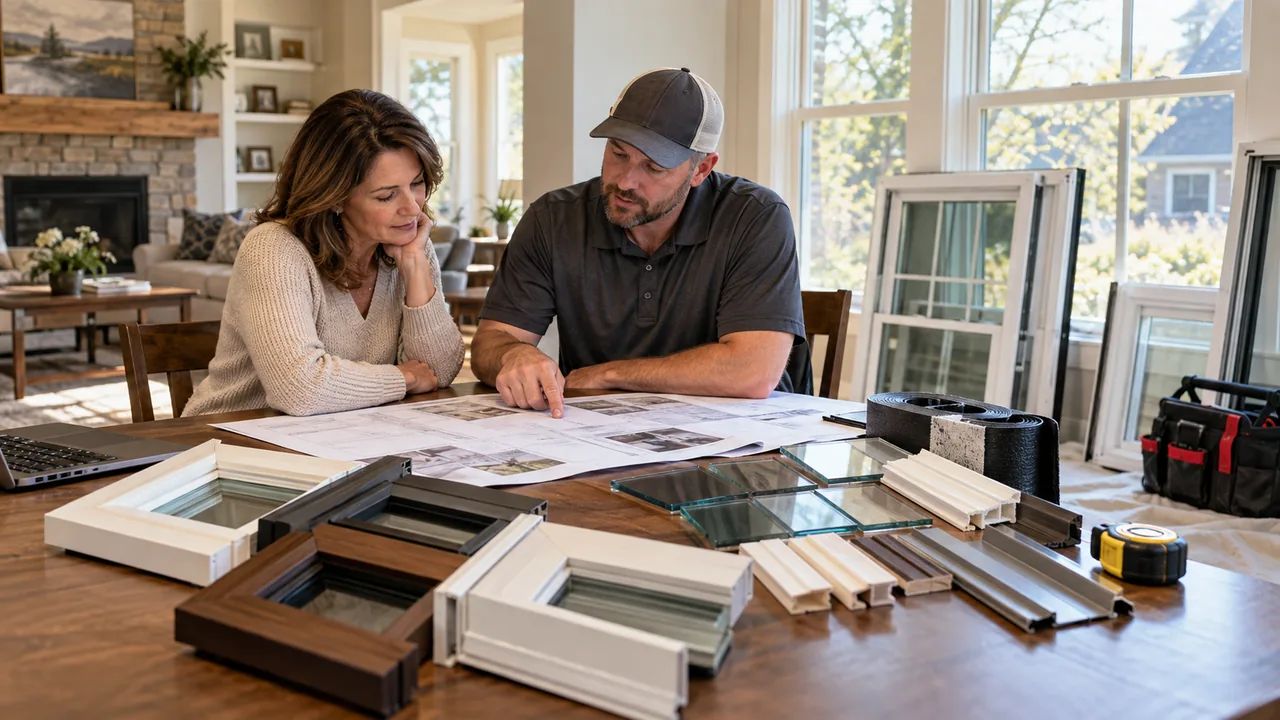

Once you’ve locked down the product, opening condition, and installation scope, compare bids line by line. That’s the only way to tell whether one quote is cheaper – or just missing parts of the job.
What Every Window Quote Should Show in Writing
Detailed quotes help cut down on change orders. Each estimate should clearly split the window unit cost from labor and spell out what’s included.
At a minimum, the quote should show:
- The Andersen series
- The window style and exact dimensions
- The glass package
- Whether the job is an insert or full-frame replacement
The quote should also spell out the work around the window, not just the window itself. That includes removal and disposal, flashing, insulation, sealing, interior casing, exterior trim, and any paint or stain touch-ups. If those items aren’t listed, there’s a good chance they’ll show up later as added charges.
It’s also smart to ask for a written rot-repair allowance. Damage behind old frames often stays hidden until the old units come out, and that can change the final price in a hurry. Last, get both warranty terms in writing: the product warranty and the contractor’s workmanship warranty.
Side-by-Side Quote Review Checklist
Use the same line items for each estimate so you’re comparing like for like.
| Scope Item | Estimate A | Estimate B | Estimate C |
|---|---|---|---|
| Andersen Product Series | |||
| Window Style & Dimensions | |||
| Glass Package | |||
| Installation Type (Insert/Full-Frame) | |||
| Removal & Disposal Included? | |||
| Flashing & Sealing Details | |||
| Interior/Exterior Trim & Casing | |||
| Repair Allowance (Rot/Sills) | |||
| Workmanship Warranty (Years) | |||
| Total Installed Price |
Choose expert window installation for clean results and dependable performance.
For full-frame projects, plan for a 10% to 25% contingency above the quoted price to cover issues found after the old frames come out [2].
Only compare total price after the line items match. Until then, the cheaper bid may not be the better one.
Conclusion: Judge Andersen Windows Cost as a Full Installed Project
Judge Andersen windows by the full installed scope, not the sticker price. A lower quote only wins if it covers the same removal, sealing, trim, and repair work. It makes sense to spend more when the payoff in comfort and long-term durability is clear, and trim costs where the existing frames are in good shape and the scope stays simple.
For free quote planning and deeper guidance on scoping your project, visit Koalaty Remodel’s window resources.