


Replacing basement windows improves energy efficiency, often by choosing the best energy-efficient windows, enhances safety, and prevents moisture problems. Key points to consider include:
- Egress Requirements: For safety, windows in habitable basements must meet specific size and height standards.
- Signs of Aging: Issues like frame rot, water leaks, or condensation between panes suggest it’s time for replacement.
- Window Types: Options include hopper, sliding, casement, fixed, and glass block – each catering to different needs.
- Materials: Vinyl and fiberglass are ideal for basements due to their durability and moisture resistance.
- Costs: Replacement costs range from $400 to $1,000 per window, with egress installations costing up to $6,000.
- Replacement Methods: Choose between inserts (lower cost, quicker install) and full-frame replacements (better for structural issues).
Plan carefully, hire trusted window installation contractors, and address moisture issues to ensure long-lasting results.
How to Replace a Basement Window (Step-by-Step)
sbb-itb-e0ea4e0
What Are Basement Windows
Basement windows are installed either below or at ground level, serving several purposes: bringing in natural light, improving ventilation to manage moisture, and providing emergency exits. Unlike standard windows, these must tackle unique challenges like ground moisture and often require window wells for proper drainage. They also need to meet specific safety codes, especially for habitable spaces like bedrooms. These unique considerations are key when deciding if it’s time to replace or upgrade your basement windows.
Ventilation, Light, and Safety Requirements
One major difference between basement and regular windows is the need to meet egress requirements. If your basement has a bedroom or any living area, it must comply with the International Residential Code for egress standards.
"Egress windows are essential for safety and code compliance, while daylight and walkout windows improve aesthetics and indoor-outdoor flow."
Beyond safety, basement windows play a big role in reducing humidity by improving air circulation. They can also turn a dark, unwelcoming space into a brighter, more practical area – especially useful if you’re using it as a gym, workshop, or additional living space.
Different window styles cater to these needs in various ways.
Types of Basement Windows
- Hopper: Hinged at the bottom and opens inward, making it ideal for tight spaces[3].
- Sliding: Features two panes that move horizontally, providing good light even with limited opening space[3].
- Casement: Hinged on the side, making it a great option for egress compliance[3].
- Fixed: Allows maximum light and enhances security but doesn’t open[4].
- Glass block: Offers privacy and light but lacks ventilation[1].
Once you’ve chosen a style, the next step is picking the right frame material for durability and performance.
Material Options
Vinyl frames are a popular choice due to their resistance to moisture and minimal upkeep. Prefabricated vinyl windows generally cost between $100 and $650. Fiberglass, though more expensive at $250 to $800, offers better durability and insulation. Aluminum frames are sturdy but less energy-efficient because they conduct heat and cold, which can lead to drafts and condensation. Wood frames provide a classic aesthetic but aren’t ideal for basements, as they’re prone to rot in humid conditions and require regular maintenance.
"Vinyl and fiberglass window frames provide superior insulation compared to aluminum frames, reducing drafts and helping maintain a consistent indoor temperature."
- Chelsea Kuhel, Pella[1]
For below-ground installations, vinyl and fiberglass are the go-to choices because they handle moisture exposure far better than wood or steel.
When to Replace Basement Windows
Spotting the signs of aging or damaged basement windows early can save you from costly repairs – like fixing foundation issues or dealing with mold – and ensure your home remains safe and comfortable. Here are the key warning signs that it’s time for a replacement.
Structural Damage and Water Leaks
One of the most obvious red flags? Frame rot. Use a screwdriver to test the frame – if it feels soft or starts to crumble, it’s time to replace the window[2][6]. Cracks in the glass or frame are another concern, as they allow water, pests, and cold air to seep in[2][4].
Signs like water stains, peeling paint, or black mold often point to leaks or broken seals[2][6]. Poor drainage in the window well can make things worse, causing water to pool and speed up deterioration. Additionally, rusted hinges, latches, or locks not only signal wear but can also compromise the window’s role as a safe emergency exit[6].
"A vinyl window is directly secured into the concrete and can be removed by leaving in the original nail fin and cutting the window out externally."
- Alex Vinet, Client Services Specialist, Custom Exteriors[8]
Performance and Security Problems
Windows that stick, jam, or require excessive effort to open are often a sign of foundation settling or warped frames[8][6]. This is especially problematic for basement windows, which are often used as emergency exits.
"If your window becomes difficult to open or close, it may signal the need for replacement. Warping, swollen frames from moisture, or damaged hardware can prevent proper operation, making emergency exits hazardous."
- Egress, Inc.[6]
Condensation between window panes is another clear indicator of trouble[8][4]. A failed seal not only reduces insulation but can also lead to mold growth between the glass layers. Broken locks or cracked glass further compromise security, as basement windows are a common entry point for intruders[4][2].
Energy Efficiency Problems
Drafts around the window frame or excessive outside noise often mean the seals have failed[2][4]. This forces your HVAC system to work overtime, which can lead to noticeably higher energy bills over time[2]. Older single-pane windows are especially inefficient compared to modern double or triple-pane options[9][6].
If you’ve upgraded other windows in your home but left the basement windows untouched, you might be undermining your overall energy efficiency[4]. A quick way to test for drafts is by feeling for air movement on a windy day[2]. Replacing outdated basement windows can save you around $20 to $80 per year per window in heating-heavy climates[11].
For more tips on improving your home’s energy performance, check out our energy efficient window replacement guide.
Next, we’ll look at replacement methods to tackle these issues.
Replacement Methods: Inserts vs Full Frame
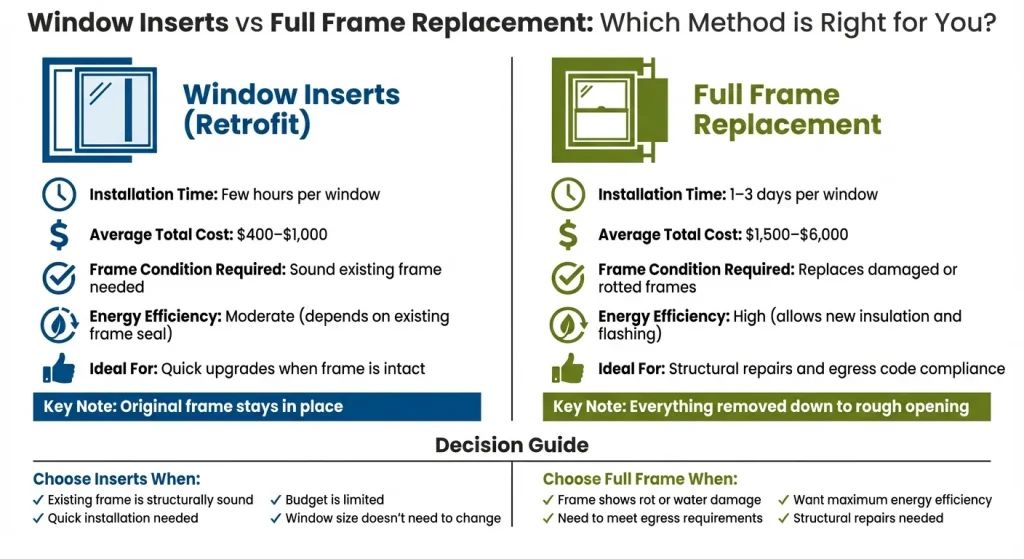
After spotting window damage or inefficiencies, homeowners face a key decision: which replacement method to choose.
How Basement Window Inserts Work
Window inserts, often called retrofit windows, are designed to slide directly into your existing window frame, leaving the original frame intact. This option works only if the current frame is in good condition – structurally sound, level, and free from issues like rot or water damage[5].
Professionals can install inserts quickly – about one hour per window – while DIY installations may take up to six hours. The process avoids cutting into concrete or masonry, which keeps costs and disruption to a minimum[8][5]. However, since the original frame stays in place, any existing drafts or moisture problems will remain[5]. This is where inserts differ significantly from full-frame replacements, which address the entire window assembly.
Comparing Inserts and Full Frame Replacements
Full-frame replacement means removing everything – the window, frame, and trim – down to the rough opening in the foundation. This method is necessary when structural repairs or code updates are required[5][7]. Though it’s more expensive and takes longer, full-frame replacement offers better insulation and sealing around the window, which can greatly boost energy efficiency[5][6]. For more guidance on energy-efficient options, check out our efficient window replacement guide.
"Most homes from prior to the mid-2000s have aluminum windows surrounded by a concrete foundation. The level of difficulty will depend on how deeply embedded the old frame is in the concrete."
- Alex Vinet, Client Services Specialist, Custom Exteriors[8]
Here’s a quick breakdown of the key differences:
| Feature | Window Inserts (Retrofit) | Full Frame Replacement |
|---|---|---|
| Installation Time | Few hours per window[11] | 1–3 days per window[11] |
| Average Total Cost | $400–$1,000[7] | $1,500–$6,000[11] |
| Frame Condition | Requires a sound existing frame[5] | Replaces damaged or rotted frames[6] |
| Energy Efficiency | Moderate; depends on the existing frame’s seal[5] | High; allows for new insulation and flashing[5][6] |
| Ideal For | Quick upgrades when the frame is intact[5] | Structural repairs and egress code compliance[11] |
If you’re transforming a basement into a living space, full-frame replacement is often necessary to meet egress window requirements, such as the minimum 5.7 square feet opening[2][11]. On the other hand, inserts are a practical choice for simple updates when the frame is in good shape and the window size doesn’t need to change.
Picking the right method not only addresses current issues but can also improve insulation and help lower energy bills.
Basement Window Installation Costs

Getting a clear picture of the costs involved is essential for budgeting. On average, replacing a basement window costs around $700, with most homeowners spending anywhere from $400 to $1,000 per window[7]. However, the final cost can vary significantly depending on several factors. Let’s break down what influences these costs and how different replacement methods compare.
What Affects Installation Cost
Several elements play a role in determining the final price of your basement window installation:
- Window size and type: Standard prefabricated hopper windows cost between $100 and $300. On the other hand, egress windows (required for basement bedrooms) are much pricier, ranging from $600 to $2,000 just for the unit[7]. Custom-sized windows can add another 25% to 50% to the cost[7].
- Frame material: Vinyl frames are the least expensive, costing $100 to $650 per prefab unit[7][10]. Wood frames are pricier at $175 to $800, while steel and fiberglass frames range from $250 to $800[7].
- Installation complexity: The condition of your existing frame matters. If the frame is rotted or damaged, you’ll need a full-frame replacement, which can double the cost as the entire opening must be rebuilt[10]. Tight spaces can also add $50 to $200 in labor costs per window[10]. Labor for standard installations typically costs $100 to $300, but structural modifications can push this up to $600[7].
- Additional expenses: These can include permits ($50 to $500 depending on location)[11][10], excavation for egress windows ($400 to $3,000+), and window wells ($150 to $1,200)[11]. Other costs to consider are disposal fees ($25 to $50 per window)[10] and interior finishing like trim and painting, which can add $100 to $700 per window[11][10].
Cost Comparison by Replacement Type
The replacement method you choose also affects the overall expense. Here’s a breakdown of the typical costs and scenarios for each type:
| Replacement Type | Cost Per Window | Best For |
|---|---|---|
| Insert (Retrofit) | $300–$700 | Quick updates when the existing frame is sound |
| Full Frame | $500–$1,200 | Fixing rotted frames or making size adjustments |
| Egress Installation | $1,500–$6,000 | Adding safety-compliant windows for bedrooms |
- Insert replacements are the least expensive option, costing $300 to $700 per window. They involve retrofitting new windows into existing frames, making them ideal for aesthetic updates. However, this method won’t address issues like moisture or poor insulation[11].
- Full-frame replacements, priced at $500 to $1,200 per window, are necessary when the frame is damaged or when resizing is required. This method ensures proper insulation and resolves structural problems[11].
- Egress window installations are the most expensive, with costs ranging from $1,500 to $6,000 per window. These projects often involve cutting through concrete, excavation, and adding safety-compliant wells[11][10].
Cost-Saving Tips
To keep costs down, consider these strategies:
- Bundle projects: Contractors often offer discounts of 10% to 15% when you replace three or more windows at once[10].
- Schedule during the off-season: Labor costs drop by 15% to 25% between December and February[11][10].
- Get multiple quotes: Request at least three itemized estimates to ensure fair pricing and uncover any hidden fees[11][10].
Planning Your Replacement Project

Once you’ve explored costs and replacement options, the next step is planning your project. A well-thought-out plan helps you avoid unexpected issues and keeps your budget on track.
Setting Your Budget
Start by calculating the full scope of your project. This includes everything from the cost of the windows themselves to excavation and finishing work. While the average cost per window ranges from $400 to $1,000, don’t forget to factor in additional expenses like:
- Excavation: $400 to $3,000+
- Window wells: $150 to $1,200
- Interior finishing (trim, paint, etc.): $100 to $700 per window
To get a clear picture of your costs, request at least three itemized estimates. These should break down expenses for materials, labor, permits, and waterproofing, making it easier to spot any hidden fees before committing to a contractor.
If you’re working with a tight budget, there are ways to save. Contractors often offer discounts of 10% to 15% for multi-window projects due to shared site-work costs. Another tip: schedule your installation during the off-season (December through February). Labor demand is lower during these months, and rates can drop by 15% to 25%.
Also, check with your local building department early in the process. Permits are often required and can range from $50 to $500, depending on the scope of your project. Permit approvals can also affect your timeline, so plan accordingly.
Once your budget is set, review your timeline to ensure your expectations are realistic.
Installation Timeline
The time needed for installation depends on the type of work involved. Here are some general guidelines:
- Simple window replacements: Professionals can complete these in about an hour, while DIY installations typically take around six hours.
- Full-frame replacements: These usually take about one day per window.
- Complex egress installations: Expect one to three days per window, as these often involve cutting through concrete, excavation, and building a window well.
Several factors can extend your timeline. Custom-sized windows, for example, may cost 25% to 50% more and require longer lead times. Weather can also delay outdoor work like excavation or masonry, and some materials – like sealants and spray foams – may need overnight curing. If you’re adding thicker vinyl frames in a finished basement, installers may need extra time to adjust drywall and make repairs.
"It takes the average homeowner about six hours to complete a DIY basement window replacement, while it may only take a pro about an hour."
Once you’ve mapped out your schedule, the next step is finding the right professional for the job.
Hiring a Contractor
Choosing the right contractor is crucial for a successful project. Start by ensuring they are fully licensed and insured. This protects you from liability and confirms they meet local regulatory standards. For egress window installations, look for contractors experienced in concrete cutting, drainage solutions, and structural modifications.
It’s also a good idea to hire installers certified by window manufacturers. These professionals are trained to follow proper installation methods, which helps keep manufacturer warranties valid.
"A lot of window manufacturers will not warrant a product that is not installed properly, or not installed by professional installers."
- Alex Vinet, Client Services Specialist, Custom Exteriors
In addition to the manufacturer’s warranty, ask for a written workmanship warranty. These typically cover one to five years, though some specialized contractors offer up to 10 years of coverage. If you’re considering a handyman for straightforward vinyl window replacements, request references or examples of their past work. For complex projects, such as cutting through load-bearing walls or addressing foundation issues, it’s best to hire a foundation or structural contractor rather than a general window installer.
Common Mistakes to Avoid

Replacing basement windows might seem straightforward, but even small missteps can lead to big problems like water damage, energy inefficiency, and costly repairs. Here’s what to watch out for.
Moisture Problems and Incorrect Sizing
Addressing moisture issues before replacing windows is critical. Skipping this step can result in water damage and mold growth. Installing new windows over rotted or moldy frames doesn’t solve the root problem but instead creates a breeding ground for mold, which can harm your health and require expensive remediation [6][4].
"Moisture leads to mold which represents a serious and potentially expensive threat to any home."
- KC Window & Glass
Another common issue is incorrect measurements. If your sizing is off, you could end up with gaps that allow water, drafts, and even pests into your home. Since basement window frames are rarely perfectly square, measure the width and height at three points each, then use the smallest measurement and subtract 1/8 inch to leave room for insulation [8]. Custom windows can’t be returned, so getting this step right is crucial [8].
Accurate sizing and addressing moisture concerns go hand in hand with proper sealing, which is the next critical step.
Poor Sealing and Installation Errors
Good sealing ensures your windows are watertight and energy-efficient. If gaps are left around the frame, moisture can seep in, causing wall discoloration, peeling paint, and even structural damage over time [2]. Air leaks can also strain your HVAC system, driving up utility bills [2].
Start by removing old caulk and debris, then apply flashing tape to protect the frame. Use moisture-resistant shims to level the window before sealing it with a continuous bead of high-quality caulk. Fill any remaining gaps with window-grade foam for a tight seal [8].
"A lot of window manufacturers will not warrant a product that is not installed properly, or not installed by professional installers."
- Alex Vinet, Client Services Specialist, Custom Exteriors
Proper sealing works hand in hand with accurate sizing and moisture control to ensure your windows perform as they should.
Choosing Based on Price Alone
It’s tempting to go for the cheapest option, but low-cost vinyl windows often come with hidden downsides. These materials can warp in extreme temperatures, leading to higher long-term costs from reduced durability and energy inefficiency [7].
High-quality basement windows typically last 20 to 30 years [7]. Upgrading to double-pane models can save $20 to $80 per window annually on heating costs [11]. Materials like fiberglass or composite frames, combined with professional installation, offer better durability and energy savings, making them a smarter long-term investment.
Conclusion
A successful basement window replacement project begins with careful planning. Start by evaluating the condition of your current windows and ensuring compliance with egress codes, especially if the basement serves as a living space.
Choosing between window inserts and full-frame replacements is a key decision. Inserts offer quicker installation, but full-frame replacements address potential structural issues and often provide better long-term results. Consider the condition of your existing frames, your budget, and your future needs when making this choice, as it directly affects your home’s energy efficiency and overall comfort.
Hiring qualified professionals is crucial to protecting your investment and maintaining your home’s structural integrity. Professional installers not only deliver efficient results but also help prevent common issues like improper sealing or moisture infiltration. It’s worth noting that many manufacturers require certified installation to keep warranties valid.
Be realistic about your project timeline and budget. On average, professionally installed basement window replacements cost between $400 and $1,000 per window, though this can vary based on factors like window type and installation complexity.
As highlighted in our energy efficient window replacement guide, proper installation enhances energy efficiency, boosts safety, and adds to your home’s value. With professional installation, basement windows typically last 20 to 30 years, ensuring lasting comfort and reliability [7].
FAQs
What are basement windows used for
Basement windows play a crucial role in any home. They ensure proper ventilation, bring in natural light, and act as a safety feature by providing an emergency escape route. These windows are not just practical but also necessary to maintain air circulation and comply with building codes, especially for specific basement purposes.
How do I know when to replace basement window units
If you spot moisture buildup, damage, drafts, or water leaks around your basement windows, it’s time to consider replacing them. Struggling to open or close the windows or noticing security concerns are also clear red flags. Another big clue? Rising heating and cooling bills, which could mean your windows are no longer energy-efficient. Tackling these problems early can boost your home’s insulation, comfort, and overall safety.
What are basement window replacement inserts
Basement window replacement inserts are a practical solution for upgrading windows without the hassle of removing the entire frame. These inserts are designed to fit snugly into the existing frame, making them a great choice when the frame is still in good condition, but the glass or seals need attention.
The advantages? Faster installation, reduced costs, and better insulation. However, if the frame is badly damaged or you’re looking to change the window’s size or style, a full frame replacement might be the way to go.
Are inserts cheaper than full replacement
When it comes to basement windows, replacement inserts are generally a more budget-friendly option compared to full replacements. They are less expensive in terms of materials and involve a quicker, less disruptive installation process. That said, full replacements might be the better choice if you’re dealing with structural issues or want to enhance security. Your decision should depend on your specific situation and priorities.
How much is basement window installation cost
The cost of installing a basement window generally falls between $600 and $1,100 for standard replacements. If you’re looking at egress windows, which require more intricate installation work, the price can range from $2,500 to $5,800, depending on factors like size, type, and specific installation needs. Overall, the final cost will depend on the window style and the complexity of the project.
How long does it take to replace basement windows
Replacing a basement window typically takes 30 to 60 minutes per window when handled by professionals. For most standard residential projects, the entire process can usually be wrapped up in a single day, depending on factors like the number of windows being replaced and how easily accessible they are.
Can basement windows improve home value
Replacing basement windows can increase your home’s value by improving energy efficiency, enhancing security, and refreshing the overall appearance of your space. Newer, well-insulated windows can help lower energy bills, which is a big plus for potential buyers.
Do basement windows need special permits
When it comes to basement windows, you might need special permits, particularly if you’re planning to enlarge them or install egress windows. Local building codes typically require permits and inspections to ensure everything meets safety standards and complies with regulations. Make sure to check with your local authorities to understand the exact requirements for your area.
Are basement windows required for egress
Only basement windows located in sleeping areas are required to meet egress code standards. That said, many homeowners opt to upgrade all basement windows – not just those in bedrooms – for improved safety and a consistent look throughout the basement.
What causes basement windows to leak
Basement windows often start leaking because of prolonged exposure to moisture, shifting foundations, or natural wear and tear over the years. These issues can weaken the seals, damage the frames, or deteriorate the materials, reducing their effectiveness in keeping water out.
Can I install basement windows myself
Yes, you can replace a window yourself, but it takes careful planning, accurate measurements, and the right tools. The process involves measuring the opening, removing the old window, positioning the new one, and sealing it correctly to prevent drafts or leaks. However, challenges like working with concrete foundations or addressing insulation can complicate things. That’s why many homeowners choose to hire professionals to avoid problems like improper sizing or poor sealing. If you decide to go the DIY route, make sure to follow safety precautions and double-check every step to ensure a proper fit.
What is the lifespan of basement windows
Basement windows typically have a lifespan of 15 to 30 years, though this can vary based on factors such as the quality of materials, how well they’re maintained, and exposure to external elements. Regular upkeep can help them last longer, while neglect or exposure to extreme conditions can reduce their longevity.
Do new basement windows improve insulation
New basement windows can improve insulation by reducing drafts, condensation, and air leaks. This contributes to better energy efficiency, lower heating and cooling expenses, and a more comfortable living environment overall.
Are basement windows customizable
Yes, basement windows can be tailored to fit your specific needs and preferences. You can choose from various styles like casement, slider, or egress windows, along with different sizes, grille patterns, and finishes. Many manufacturers also offer options for custom materials and design features, allowing you to match the windows to your aesthetic, safety, and functional requirements. This versatility ensures that basement windows can seamlessly complement your home’s overall design.
How do I measure for basement window replacement
To get accurate measurements for a basement window replacement, you’ll need to measure the width, height, and depth of the window opening. Here’s how:
- Width: Measure at three points – top, middle, and bottom of the opening. Record the smallest measurement.
- Height: Measure at three spots – left, center, and right. Again, use the smallest measurement.
- Depth: Check the depth of the opening to ensure the new window will fit properly.
For precision, always measure width from jamb to jamb and height from sill to head. Using the smallest measurements ensures the replacement window will fit securely.