


Windows might only make up 8% of your home’s exterior, but they account for 45% of heat gain or loss. If your windows are outdated or single-pane, you’re likely losing money on energy costs. Upgrading to ENERGY STAR certified windows can save you up to 13% annually on energy bills – around $568 per year in colder climates. Plus, new windows reduce drafts, block noise, and enhance your home’s look.
Key Takeaways:
- Repair or Replace? Minor issues like drafts can often be fixed with caulking or weatherstripping. But if you have rotting frames, foggy glass, or single-pane windows, replacement is a smarter long-term choice.
- Costs: Replacing a window costs about $800 on average, with prices ranging from $300 to $3,000 depending on materials, style, and installation type.
- Materials: Vinyl is affordable and low-maintenance. Wood provides great insulation but requires upkeep. Fiberglass is durable and energy-efficient but pricier.
- Energy Efficiency: Modern features like double or triple glazing, Low-E coatings, and gas fills improve insulation and reduce energy loss.
- Installation: Professional installation ensures proper sealing and performance, costing $100–$300 per window. DIY may void warranties and lead to poor results.
Ready to upgrade? Replacing old windows improves comfort, lowers energy costs, and increases your home’s value. Learn how to choose the right windows and find reliable installers in this guide.
The Full Guide to Home Window Replacement – Everything You Need To Know
sbb-itb-e0ea4e0
Should You Repair or Replace Your Windows?
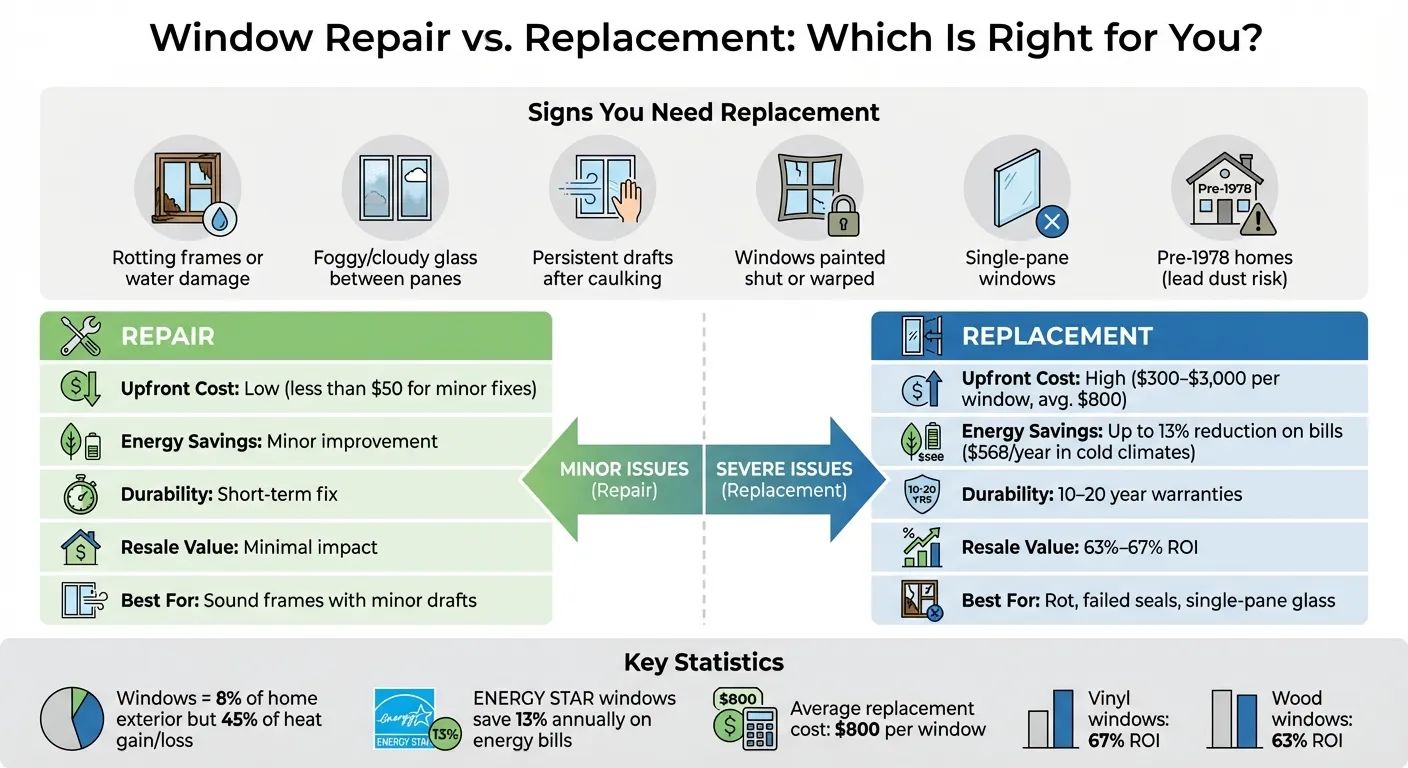
Not every window problem means you need a full replacement. Sometimes, simple fixes like caulking, adding weatherstripping, or lubricating a sticky sash can do the trick. But if your windows have rotting frames, broken seals, or are single-pane and driving up your energy bills, it might be time to consider replacing them. Below are some clear indicators that replacement could be your best option.
Signs Your Windows Need Replacement
If your wooden frames or sashes show severe rot or water damage, repairs likely won’t cut it. Water can weaken the structure, making patching a short-term solution at best [6]. Another red flag is foggy or cloudy glass between double panes, which signals a failed seal and trapped moisture.
Doug Anderson from ENERGY STAR Certified Products explains, "If those seals have failed, not only will you lose insulating power (loss of comfort), your glass may get cloudy, making it harder to see and impossible to clean" [2].
Drafts that persist even after reapplying caulk or weatherstripping often indicate a compromised window structure. Windows that are painted shut, warped, or jammed not only limit ventilation but can also pose safety risks. For homes built before 1978, old sashes might release toxic lead dust when opened or closed, making replacement a safer choice [6]. And if you’re still relying on single-pane windows, you’re likely losing a lot of energy, which directly impacts your heating and cooling costs. If these issues sound familiar, it’s time to weigh the cost of repairs against replacement.
Repair vs. Replacement: Side-by-Side Comparison
Repairing your windows can be a cost-effective choice if the frames are in good shape and the issues are minor. For example, caulking and weatherstripping – usually costing under $50 – can quickly address drafts [6]. However, these fixes are often temporary and don’t significantly improve energy efficiency.
On the other hand, replacement is a bigger investment upfront, with costs averaging $800 per window (ranging from $300 to $3,000). But it comes with long-term benefits. ENERGY STAR certified windows, for instance, can cut annual energy bills by about 13%. In colder climates, replacing 10 single-pane windows could save you around $568 per year [3].
| Factor | Repair | Replacement |
|---|---|---|
| Upfront Cost | Low (less than $50 for minor fixes) | High ($300–$3,000 per window) |
| Energy Savings | Minor improvement | Up to 13% reduction on bills |
| Durability | Short-term fix | 10–20 year warranties |
| Resale Value | Minimal impact | Approximately 63%–67% ROI |
| Best For | Sound frames with minor drafts | Rot, failed seals, single-pane glass |
Kimberly Janeway from Consumer Reports notes, "Replacing your old windows with new ones will lower your energy bills but it will take years to recoup the thousands you’ll spend on new windows and installation" [6].
For homeowners, the resale value can also be a factor. vinyl window replacement costs typically recoup about 67% of their value, while wood windows recover about 63% [3]. If your window frames are still in good shape, you might save on costs with a pocket replacement, which requires less labor and fewer materials [3]. But for homes with extensive damage or outdated single-pane windows, a full-frame replacement is the better move [3]. This comparison highlights why, in many cases, replacing old windows is the smarter long-term solution.
How to Make an Efficient Window Replacement
Once you’ve decided to replace your windows instead of repairing them, the next step is selecting the right ones to improve energy efficiency and boost your home’s appearance. The best choice will depend on factors like your budget, climate, and how much maintenance you’re willing to handle. Here’s what to consider.
Window Material Options
Vinyl is a popular choice for replacement windows because it’s affordable and low-maintenance. It doesn’t need painting, resists moisture, and won’t rot. However, its color options are often limited, and you can’t repaint it later. Insulated vinyl frames can improve thermal resistance, but standard vinyl doesn’t perform as well as wood or fiberglass in extreme temperatures.
Wood windows offer a classic look and can be painted or stained to match your home’s interior. They’re also excellent insulators, making them highly energy-efficient. The downside? Wood requires regular upkeep, like painting or staining, to prevent rot and water damage. If you love the look of wood but want less maintenance, consider wood windows with aluminum or vinyl cladding on the exterior. These combine the warmth of wood inside with a low-maintenance exterior.
Fiberglass is another strong contender. It doesn’t expand or contract as much as other materials, reducing the risk of seal failure over time. Fiberglass frames are stable and energy-efficient, but they come with a higher price tag than vinyl, though they’re generally cheaper than premium wood options.
Aluminum windows are durable and corrosion-resistant, making them a good choice for areas where strength is more important than energy efficiency. However, aluminum conducts heat and cold easily, which can lead to higher energy bills.
| Material | Durability | Maintenance | Energy Performance | Cost |
|---|---|---|---|---|
| Vinyl | Rot-resistant | Minimal | Good (if insulated) | Lowest |
| Wood | Needs protection | High | Excellent | Highest |
| Fiberglass | Very stable | Low | Excellent | Moderate to High |
| Aluminum | Corrosion-resistant | Low | Limited | Low to Moderate |
After picking a material, it’s time to think about energy-saving features to get the most out of your windows.
Energy-Saving Window Features
Double-pane glass is now the standard for modern windows. These windows have two layers of glass with a sealed space between them, which slows heat transfer. Many energy-efficient models fill this space with argon or krypton gas, improving insulation.
Triple-pane windows go even further by adding a third layer of glass. These offer better noise reduction and energy savings but are heavier and more expensive. They’re worth considering if you live in a very cold climate or a noisy area.
Low-E coatings are thin metallic layers applied to the glass. They reflect heat while letting light in. In colder climates, the coating is applied to the inside pane to retain heat. In warmer areas, it’s applied to the outside to block solar heat. Always check for the National Fenestration Rating Council (NFRC) label to compare energy performance. Look for a low U-factor (better insulation) in cold climates and a low Solar Heat Gain Coefficient (SHGC) in hot climates.
And here’s some good news: through the end of 2025, you can claim a federal tax credit of 30% (up to $600) for ENERGY STAR "Most Efficient" windows.
Window Styles and Design Options
The style of your windows affects both functionality and appearance. Once you’ve chosen a material and energy features, pick a style that suits your home and needs.
Double-hung windows are common in traditional homes. They have two sashes that slide up and down, and many tilt inward for easy cleaning. While versatile, they aren’t the most airtight option due to potential air leakage around the sliding tracks.
Casement windows open outward on a hinge and are operated with a crank. They’re more energy-efficient than double-hung windows because the sash seals tightly against the frame when closed. These work well in modern homes and kitchens where ventilation is key.
Picture windows are fixed and don’t open, making them highly energy-efficient. They’re perfect for areas where you want unobstructed views or lots of natural light, like living rooms. Since they don’t have moving parts, they require very little upkeep.
Sliding windows open horizontally and are a good fit for modern homes or tight spaces. They’re easy to use but, like double-hung windows, their tracks can allow some air leakage.
Awning windows are hinged at the top and open outward from the bottom. They work well in bathrooms or high-up placements and are ideal for rainy climates because they can stay open without letting water in.
Bay and bow windows extend outward from your home’s exterior, adding extra interior space and architectural interest. They’re often used as focal points in living rooms or dining areas but are more complex to install and maintain.
| Window Style | Energy Efficiency | Best Aesthetic Use | Maintenance Level |
|---|---|---|---|
| Double-Hung | Moderate | Traditional/Colonial homes | Low (if tilt-in) |
| Casement | High | Modern kitchens or homes | Moderate |
| Picture | Very High (Fixed) | Areas with views or light | Minimal |
| Sliding | Moderate | Tight spaces or modern homes | Low |
| Awning | High | Rainy climates; bathrooms | Moderate |
| Bay/Bow | Variable | Living rooms; focal points | High |
If you’re replacing windows gradually, replace all the windows on one side of your house at the same time for a uniform look. If your existing frames are in good condition and square, you can save money by opting for insert or pocket windows, which fit into the current frame. But if the frame is damaged or you’re changing the window size, you’ll need a full-frame replacement.
Window Replacement Costs
Knowing the costs of window replacement can help you plan your budget with confidence. On average, replacing a window professionally costs about $800 per window, but prices can vary widely – from as low as $300 to as high as $3,000 [3]. For a one-story home, the total cost for replacing all windows typically averages around $8,000 [3].
What Affects Window Replacement Costs
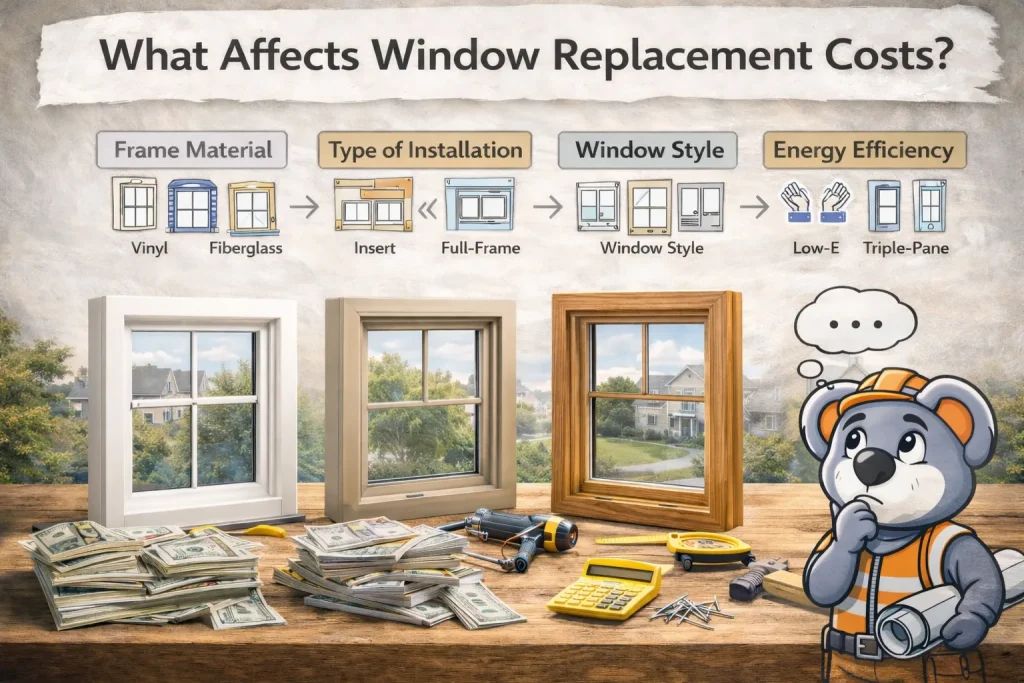
A variety of factors influence the price of replacing windows. One major factor is the frame material. Vinyl is often the most budget-friendly option, while wood frames are pricier due to their classic look and excellent insulation. Fiberglass offers a middle ground, combining durability with lower maintenance compared to wood.
The type of installation also has a significant impact. Pocket or insert windows, which fit into your existing frames, are less expensive because they require less labor. On the other hand, full-frame replacements involve removing the entire window, increasing both material and labor costs but providing better insulation in the long run [3][5]. If your home was built before 1978, additional costs may apply due to lead paint safety regulations [3][2].
Another cost factor is the style of window. Fixed picture windows are generally the least expensive since they lack moving parts or hardware. Windows with more complex mechanisms, like double-hung or casement styles, tend to cost more [4]. Adding energy-efficient features – such as Low-E coatings, argon or krypton gas fills, or triple-pane glass – raises the upfront cost but can lead to significant savings on energy bills over time [4][5].
Labor costs for installation usually range between $100 and $300 per window [3]. Replacing multiple windows – typically 8 to 12 at once – can lower the per-window cost because contractors save time on setup and travel [2]. If you opt for storm windows, expect to pay 20% to 40% more compared to standard replacements, as they provide extra protection in extreme weather conditions [3]. These price variations show how choosing the right windows can balance immediate costs with long-term benefits.
Return on Investment for New Windows
While the upfront costs may seem steep, new windows often pay for themselves over time. Windows are responsible for about 45% of your home’s heat gain or loss [2]. Installing Energy Star certified windows can reduce your annual energy bills by an average of 13% [3].
In colder climates, replacing 10 single-pane windows with Energy Star models can save homeowners roughly $568 per year. Even if you’re upgrading from older double-pane windows, you can still save about $282 annually [3]. Over the lifespan of your windows, these savings can add up significantly.
Beyond energy savings, replacing windows can boost your home’s resale value. Homeowners typically recover around 67% of the cost for vinyl window replacements and 63% for wood window replacements when they sell their home [3]. Additionally, a 30% federal tax credit – up to $600 – is available through the end of 2025 for installing windows from Energy Star’s "Most Efficient" list [3]. Local utility rebates may also help offset costs. These financial incentives, combined with energy savings, make upgrading your windows a smart investment.
Check out the vinyl windows guide if you need more information.
What Happens During Window Installation
Knowing what to expect during window installation can help you appreciate the importance of professional expertise. Each step in the process plays a key role in ensuring your windows perform well, improve energy efficiency, and last for years, which is why choosing the right window replacement strategies is essential.
Step-by-Step Installation Process
Professional installers start by delivering the windows and prepping the work area. This includes protecting your property and setting up to collect debris [2]. The next steps depend on whether you’re opting for a pocket installation or a full-frame replacement.
For pocket installations, only the window stops and old sashes are removed, leaving the existing moldings and frames in place. This method works if your current frames are in good condition and properly aligned [5]. On the other hand, full-frame replacements involve removing everything – casings, frames, sashes, and exterior trim – down to the studs. This approach is ideal for addressing insulation and structural issues often found in older homes [5].
After removing the old windows, installers inspect the opening for problems like rot, water damage, or misalignment. Once the opening is prepped, the new window is secured with fasteners [3][5][4].
The final steps include insulating with closed-cell spray foam, applying flashing and sealant per the manufacturer’s guidelines, reinstalling the trim, and disposing of the old windows. Special care is taken for homes built before 1978 to comply with lead-safe practices [5][1][3][2]. This thorough process highlights why professional installation is key to achieving reliable performance and energy savings.
DIY vs. Professional Installation
While professional installation ensures precision and safety, DIY projects often come with risks. Properly installed windows maximize energy efficiency and enhance the overall benefits of your upgrade, especially when you choose from the best energy efficient replacement windows available. However, tackling this project on your own can take days or even weeks [4].
Hiring a professional typically costs between $100 and $300 per window [3], but it provides several advantages. For one, manufacturers require windows to be installed according to specific instructions to maintain warranty coverage. The U.S. Department of Energy emphasizes:
"Even the most energy-efficient window must be properly installed to ensure energy efficiency and comfort. Have your windows installed by trained professionals according to manufacturer’s instructions; otherwise, your warranty may be void" [1].
Professionals bring the right tools, brand-specific expertise, and the ability to address challenges like rotted sills or frames that aren’t square. They’re also trained to follow lead-safe work practices for older homes [2][6]. Look for certified installers, such as those accredited by the American Window and Door Institute or Installation Masters [3].
Another benefit of professional installation is the workmanship warranty, which typically lasts one to five years. As Andrii Gurskyi, Owner of Mr. Glazier Windows and Doors, explains:
"Installation warranties, covering problems arising from poor workmanship, are usually shorter, from one year to five" [3].
Using the same contractor for both purchasing and installing your windows can also prevent disputes over responsibility if issues arise later [3].
How to Find a Window Replacement Contractor
Once you’ve got a clear understanding of the installation process, the next step is finding the right contractor to handle your window replacement. Picking a skilled professional is key to ensuring your project runs smoothly and delivers the results you’re looking for. Certifications and credentials can help you spot the best candidates.
What to Look for in a Contractor
Start by checking for manufacturer certifications from brands like Andersen, Pella, or Marvin. These certifications show that the contractor is trained to install specific products according to the manufacturer’s standards. Hiring a factory-authorized installer can minimize headaches, especially if issues arise, as they’ll understand the product inside and out and can help avoid conflicts between the seller and the installer [3].
It’s also smart to look for credentials from trusted organizations like the American Window and Door Institute (AWDI) or Installation Masters [3]. If your home was built before 1978, make sure your contractor is EPA lead-safe certified. You can verify this through the EPA’s database [3]. These qualifications demonstrate a contractor’s expertise and commitment to safety, ensuring your windows perform as promised in terms of energy efficiency and durability.
When you’ve narrowed down your options, request three detailed bids. Each bid should clearly separate labor and material costs and include specifics like the window brand, model, size, quantity, and optional features. Don’t forget to ask about warranties. Most product warranties last 10–20 years, while installation warranties – covering workmanship – typically range from one to five years. As Andrii Gurskyi, Owner of Mr. Glazier Windows and Doors, explains:
"Installation warranties, covering problems arising from poor workmanship, are usually shorter, from one year to five" [3].
Once you’ve gathered all the details, you’ll be better equipped to choose the contractor that best fits your needs.
Get Connected Through Koalaty Remodel

If researching contractors feels overwhelming, Koalaty Remodel can simplify the process. This platform connects you with local window professionals, offering a complimentary project assessment and free quotes. You can quickly compare bids from qualified contractors without the hassle of endless searching.
Conclusion
This guide has covered everything you need to know about window replacement – from exploring repair options and materials to understanding costs and installation methods. Upgrading to energy-efficient windows isn’t just a smart way to cut down on energy bills; it also increases your home’s value. Plus, new windows can make a big difference in comfort by eliminating drafts, reducing outside noise, shielding furniture from UV damage, and improving your home’s curb appeal.
But here’s the key: even the best windows won’t perform well if they’re not installed correctly. Proper sealing and fitting are crucial to ensure maximum efficiency. That’s why it’s important to work with certified contractors who know the ins and outs of manufacturer guidelines and local building codes [1].
Tired of wasting energy and money on outdated windows? Koalaty Remodel can connect you with local professionals to assess your needs and handle the installation. They even offer a complimentary evaluation and free quotes, making it easy to compare your options.
With expert help, you can transform your home into a more efficient, comfortable, and valuable space. Ready to get started? Visit Koalaty Remodel today and take the first step toward better windows.
FAQs
How much does an efficient window replacement cost?
Replacing windows can cost anywhere from a few hundred to several thousand dollars per window, depending on factors like the type of window, materials used, and your location. If you’re considering energy-efficient options, such as ENERGY STAR-certified windows, keep in mind they often come with a higher initial price. However, that investment can pay off over time by helping you save hundreds of dollars each year on energy bills.
How long does window replacement take?
Installing a replacement window typically takes about 30 to 60 minutes per window. However, the entire process – from planning and ordering to preparation and installation – can stretch over 3 to 6 weeks or even longer. The exact timeline varies based on factors like how many windows need replacing and how complicated the installation is.
Are new replacement windows energy efficient?
New replacement windows are generally designed with energy efficiency in mind. Models that meet ENERGY STAR® standards can help maintain a comfortable indoor temperature while cutting down on energy expenses. These windows reduce heat transfer and block ultraviolet light, which contributes to better insulation. Features such as double or triple panes filled with inert gases like argon or krypton, along with low-emissivity (low-E) coatings, further enhance their insulation properties. This combination makes them an effective choice for reducing heating and cooling costs over time.
Do I need a permit for window replacement?
Whether you need a permit for replacing windows comes down to your local building codes. For straightforward repairs or replacements – like swapping out a window without changing its size or structure – you probably won’t need one. But if you’re planning to change the window’s size, style, or anything that affects the structural integrity of your home, a permit is usually required.
To stay on the safe side, it’s best to check with your local building department. They can clarify what’s necessary and help you avoid potential fines. If you’re hiring professional installers, they’re often well-versed in these requirements and can guide you through the process.
Is it better to replace all windows at once or in phases?
When deciding whether to replace all your windows at once or tackle the project in phases, it really comes down to your budget, priorities, and overall goals. Replacing all the windows at the same time can be quicker, ensures a uniform look for your home, and might save you money by bundling labor and materials into one project. On the other hand, a phased approach can feel more financially manageable, letting you focus on the most urgent repairs first and spread out the expense over time. Either way, both options can boost your home’s energy efficiency, comfort, and value – it’s all about what works best for your timeline and resources.
Related Blog Posts
- Affordable Window Replacement: Budget-Friendly Options for Homeowners in 2025
- Best Replacement Windows Near Me: What to Expect in Cost and Installation in 2025
- 🏠 Top 10 Windows Replacement Near Me: Schedule an Appointment, Get a Free Estimate Today
- Best 2026 Replacement Windows Cost Guide for Homeowners Planning a Remodel