


Garden windows are a smart addition to your home, especially for those who enjoy natural light and indoor gardening. These box-shaped windows extend outward, creating a mini-greenhouse effect perfect for growing herbs or displaying plants. They’re commonly installed above kitchen sinks and provide extra shelving, better ventilation, and improved lighting.
Key points to consider when buying a garden window:
- Cost: Installation ranges from $1,200 to $5,000, depending on size, materials, and complexity. Vinyl frames are the most affordable, while wood and fiberglass options are pricier but more durable.
- Materials: Choose from vinyl (low maintenance), wood (elegant but requires upkeep), aluminum (budget-friendly but less insulated), or fiberglass (durable and long-lasting).
- Glass Options: Double-pane glass is common, but triple-pane and Low-E coatings are features of the best energy-efficient replacement windows. Insulating gases like argon or krypton can reduce heat transfer.
- Features: Operable side vents for ventilation, customizable shelving, and optional between-the-glass blinds enhance functionality.
- Brands: Popular options include Pella, Milgard, Andersen, Harvey, and Jeld-Wen, each offering various designs, warranties, and price points.
Installation Tips: Professional installation is recommended to ensure proper support and sealing. Creating a new wall opening or enlarging an existing one can add $2,000–$3,000 to the cost.
Whether you’re upgrading for better energy efficiency or adding a stylish feature to your kitchen, garden windows offer practical and aesthetic benefits. Always compare quotes and select materials that suit your climate and budget.
Garden Windows Explained: Benefits, Installation, and Design Tips for Your Home
sbb-itb-e0ea4e0
What Are Garden Windows?
A garden window is a box-shaped structure that extends 16 to 24 inches from your home’s exterior wall. It creates a mini-greenhouse effect with glass panels on the front, sides, and top, making it perfect for plants or decorative displays [10][4][1][7][6].
The design typically features a large front glass panel, two side panels, and a sloped glass top angled at 45 degrees. This angled top is practical – it allows rain to run off easily while maximizing sunlight for your plants. The side panels often open for ventilation, either as casement or single-hung windows, providing fresh air circulation [7][4][10][3].
Inside, garden windows include a deep sill with built-in shelving, often made from glass or wire, designed to hold potted herbs, flowers, or even decorative items. These windows come in various sizes, from compact 24" x 24" models to larger 72" x 60" options. They also typically use 1-inch-thick insulated glass to help maintain a comfortable indoor temperature, a key part of effective window replacement strategies [10][3][8][6].
One key distinction between garden windows and bay windows lies in their structure. Garden windows project straight out at 90-degree angles, forming a compact box shape. On the other hand, bay windows angle outward at 25 to 45 degrees and usually extend all the way to the floor [10][7].
Garden Window Styles and Design Options
Frame Material Options
When it comes to garden window frames, you have several materials to choose from, each with its own pros and cons.
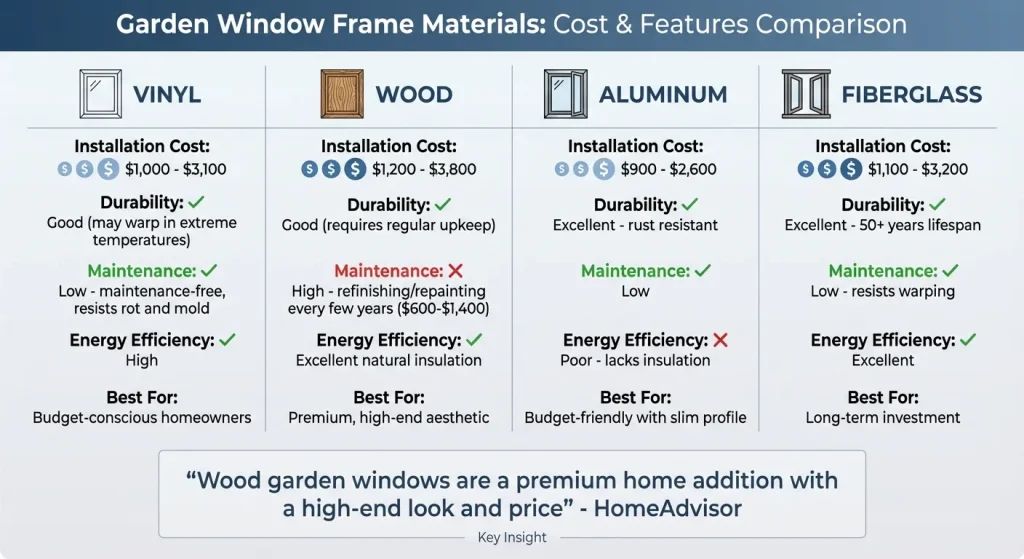
Vinyl is a go-to choice for many homeowners because it’s affordable, energy-efficient, and practically maintenance-free. It naturally resists rot and mold, though it may warp under extreme temperature swings. Installed vinyl garden windows typically cost between $1,000 and $3,100 [7][6].
Wood frames bring a classic, high-end appeal and excellent natural insulation. However, they require consistent maintenance, like refinishing or repainting every few years, to prevent moisture damage. Installation costs for wood frames range from $1,200 to $3,800 [7][6]. As HomeAdvisor highlights:
Wood garden windows are a premium home addition with a high-end look and price [7].
Aluminum frames are valued for their slim, sleek profile and resistance to rust. They’re a budget-friendly option, with installation costs between $900 and $2,600, but they lack insulation properties. According to EcoWatch:
Aluminum garden windows are a great option if you’re looking for a strong frame with a slim profile [5].
Fiberglass frames are the most durable, lasting over 50 years [6]. They resist warping better than vinyl or wood and offer excellent longevity. Installed fiberglass garden windows generally cost between $1,100 and $3,200 [7][6].
Once you’ve settled on a frame material, glass and insulation options allow you to fine-tune the window’s energy efficiency and functionality.
Glass and Insulation Features
The right glass and insulation features can make a big difference in both energy savings and plant care. If you’re growing herbs or flowers, Low-E coatings are a must. These ultra-thin layers reflect harmful UV rays and infrared light, keeping your plants healthy while maintaining a comfortable indoor temperature [1][2].
For colder regions, triple-pane glass is the top choice for thermal performance, though it comes at a higher cost, ranging from $1,500 to $3,300 installed. Double-pane glass, costing $900 to $2,500, is a solid option for most climates [6][2].
Insulating gases like argon and krypton further enhance energy efficiency. Argon gas, which is more affordable, reduces heat transfer and costs between $1,300 and $3,200 installed. Krypton, while pricier at $1,800 to $3,500, offers better insulation in tighter spaces [6][2]. Additionally, Energy Star-certified windows can help lower energy bills by an average of 13% [11].
Once performance is addressed, quality window contractors can help you explore interior design options to add a personal touch.
Interior Customization
Customizing the interior of your garden window allows you to match it to your home’s aesthetic. Many designs include adjustable glass shelves, which typically cost around $20–$30 each [2]. You can select from solid vinyl finishes like white or beige, woodgrain laminates such as Classic Oak, or stainable wood interiors for a more tailored look [12][13][14].
For added convenience, between-the-glass blinds offer a dust-free way to control sunlight exposure [1]. Hardware finishes, available in white, beige, or bronze, can be coordinated with your frame. Decorative grilles, including Colonial or Prairie patterns, provide an extra layer of charm [12][14].
Garden Window Costs
Garden window pricing depends on both the design you choose and the complexity of installation. Installation costs typically range from $1,200 to $5,000, with an average of around $2,500 [7][6]. The size of the window plays a major role in determining the price – a standard 24-by-24-inch unit costs approximately $800, while larger windows, such as a 60-by-72-inch unit, can cost anywhere from $2,500 to $6,000 when installed [6][7].
Size and Material Impact on Pricing
The frame material you select also has a noticeable effect on the overall cost. Aluminum frames are the most budget-friendly but lack some of the durability of other options. Wood frames, while offering a classic look, are more expensive and require regular upkeep. Vinyl and fiberglass fall in the middle, offering a balance of cost and durability. These material choices directly influence both your initial investment and the long-term value of your window.
These factors naturally lead to the installation challenges that can further impact costs.
Installation Complexity
Labor accounts for 20% to 35% of the total project cost, translating to about $300 to $1,500 per window [7][6]. As Paige Novak from Angi explains:
Labor makes up 20% to 35% of your total cost, roughly $300 to $1,500 per window for professional window replacement [6].
If you’re replacing an existing window with one of the same size, the costs remain relatively controlled. However, creating a new opening or enlarging an existing one can increase installation expenses by 50% or add an extra $2,000 to $3,000 to your total [6]. These structural changes often require local building permits, which adds both time and additional costs [7][5].
Upgrades and Regional Variations
Additional upgrades and regional factors can also influence overall costs. For example, double-pane glass typically costs $900 to $2,500 installed, while triple-pane options range from $1,500 to $3,300 [6][2]. Energy-efficient features, such as Low-E coatings, add $1,000 to $2,700, and argon gas fills range between $1,300 and $3,200 [6][2]. These upgrades can help lower energy bills by about 13% [11].
Operable side panels, which allow for ventilation, cost between $900 and $2,000, while fixed models are less expensive, ranging from $600 to $1,000 [6]. Labor costs and material availability vary by region, and scheduling installations during winter, when contractors are less busy, may help you secure lower rates [6][5]. These factors tie into broader considerations of quality and efficiency discussed earlier.
Garden Window Brands
When it comes to garden windows, several manufacturers offer a range of options with different materials, features, and warranty terms. Knowing what each brand provides can help you make an informed decision for your home.
Pella Garden Windows
Pella designs garden windows that extend outward, creating a mini-greenhouse effect [1]. Their ThermaStar line starts at $500, while custom units range from $1,000 to $5,000 [6][7][1][2]. One standout feature is the inclusion of integrated blinds, which let you control sunlight without the hassle of extra cleaning [1].
Pella also incorporates triple-pane glass and Low-E coatings to enhance energy efficiency [1]. Their garden windows come with side ventilation options like casement or awning styles, and some models include an Easy-Slide Operator for smooth opening [1][15]. The warranty typically covers glass for 20 years and non-glass components for 10 years [7]. As Celia Racine from Pella highlights:
The main benefit of garden windows is creating a space for plants to receive enough sunshine to grow indoors [1].
Other brands, such as Milgard and Andersen, offer additional choices to complement Pella’s offerings.
Milgard and Other Brands

Several other trusted brands also provide garden windows to suit a variety of budgets and preferences.
Milgard stands out with a full lifetime warranty on all components [6][7]. Their garden windows start at about $1,000 for a standard 35-inch by 35-inch unit, with an average cost of $1,750 [7][2]. Andersen, including its Renewal by Andersen line, offers competitive pricing with warranties covering glass for up to 20 years and non-glass parts for 10 years [7][2]. Andersen’s box casement windows feature wood interiors and vinyl exteriors, priced between $700 and $4,000 [7][2]. Renewal by Andersen uses Fibrex, a proprietary composite material marketed as a stronger and more durable alternative to standard vinyl [2].
Harvey and Jeld-Wen also provide notable options. Harvey’s garden windows average around $2,500 and include lifetime warranties on vinyl components [7][2]. Meanwhile, Jeld-Wen offers vinyl garden windows starting at about $600, making them one of the more affordable choices [7]. Ply Gem focuses on high-quality vinyl and includes specialized features like pet-resistant and solar-block screen meshes [16].
Each brand brings unique features, allowing you to weigh factors like design, energy performance, warranties, and cost to find the best fit for your home. Comparing these elements can help ensure you get the most value for your investment.
Installation Considerations for Garden Windows
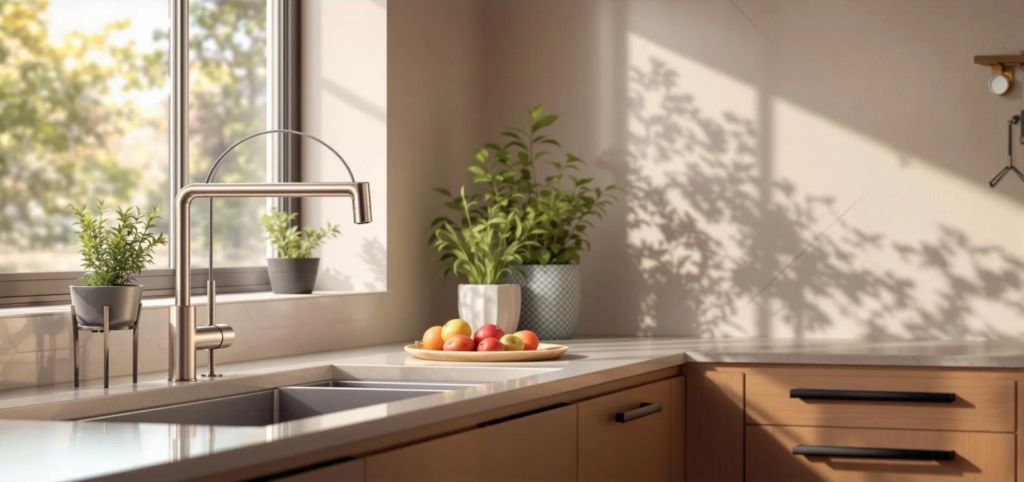
Getting the installation right is just as important as choosing the perfect design for your garden windows.
Wall Opening and Structural Support
Start by ensuring the rough opening is clean, square, level, and plumb. If the exterior sill is sloped, replace it with a flat board for proper support [17]. When measuring, deduct ½ inch from the width and height of the rough opening to allow space for shimming. To confirm the opening is square, check diagonal measurements from corner to corner – if they don’t match, use shims to adjust the alignment [17].
For larger units (wider than 36 inches) or those with deep projections, additional support is often necessary. Exterior knee braces are commonly used in these situations. Piotr Wilk, Owner of Rooster Windows and Doors, emphasizes the importance of proper support:
The wall must be able to bear the window’s weight. Units wider than 36 inches or with deep projections often require extra support braces [17].
These braces should be secured with lag bolts directly into solid wall studs, positioned about 6 inches from the outer edge of the window frame [17]. The window itself is anchored using 4-1/2 inch rust-resistant hardened steel screws, driven through the frame or nailing flange at the same points where shims are placed [17].
If the project involves enlarging an existing opening or cutting a new one, keep in mind that structural changes typically require building permits. However, replacing a window with one of the same size often does not [7][6]. Creating a new opening can significantly increase labor costs – by as much as 50% – with enlargement expenses alone ranging from $2,000 to $3,000 [6].
Once the opening is properly prepared, the next step is to focus on sealing the window against the elements.
Weather Sealing and Flashing
To prevent leaks, use adhesive flashing tape in a shingle-style sequence. Start with the sill, extending the tape up the sides. Next, apply tape to the sides, overlapping the sill tape, and finish with the top, overlapping the side pieces to guide water away from the opening [17]. When applying sealant to the nailing flange, run a continuous bead around the perimeter but leave a 2-inch gap at each bottom corner of the sill. This gap allows any trapped moisture to escape [17].
Fill the gap between the window frame and rough opening with low-expansion spray foam specifically designed for windows. Avoid over-packing fiberglass insulation, as this can reduce its effectiveness and even bow the frame [17]. Always perform a "dry fit" before securing the window to ensure it’s level and that the operable vents open and close smoothly [17].
The top glass panel, typically pitched at a 45-degree angle, helps with water runoff, but proper flashing is still critical [7]. Homeowners should inspect the exterior sealant annually for cracks or gaps and clear debris from the sill to keep weep holes unblocked [17][6]. Regular maintenance can go a long way in preventing water damage and ensuring the window remains functional for years to come.
Garden Windows vs. Other Window Styles

Comparing garden windows with bay and picture windows helps identify the best fit for your home.
Garden Windows vs. Bay Windows
Both garden and bay windows extend outward from your home, but their purposes and structures differ significantly. Garden windows are compact, box-like structures that typically project about 16 to 24 inches past the exterior wall. In contrast, bay windows consist of three angled panels, forming a rounded or polygonal shape, and often extend deeper to allow for extra floor space or a seating nook.
"Because garden windows are compact and focus on light and ventilation, they work well above a sink, while the wider bay window lends itself to seating or display space." – HomeAdvisor
Structurally, garden windows are self-contained and may require support brackets for larger installations, while bay windows demand more extensive framing and sometimes even a custom roof. Garden windows feature a built-in sloped glass top, angled at either 45° or 90°, whereas bay windows are typically positioned under the home’s existing roof overhang. Garden windows are commonly found above kitchen sinks, while bay windows are more suited for living rooms or master bedrooms.
| Feature | Garden Window | Bay Window |
|---|---|---|
| Shape | Box-like, rectangular | Angled, polygonal |
| Projection Depth | 16–24 inches | Varies, often deeper |
| Interior Space | Deep sill/shelves for plants | Designed for floor space or seating |
| Top Panel | Sloped glass roof | Typically a solid roof or integrated with eaves |
| Common Location | Over kitchen sinks | Living rooms and master bedrooms |
When compared to bay windows, garden windows excel in compact spaces and are ideal for adding light and ventilation.
Garden Windows vs. Picture Windows
The standout difference between garden and picture windows is ventilation. Garden windows include operable side panels – often casement or awning style – that provide cross-ventilation, making them perfect for housing plants and managing moisture. Picture windows, on the other hand, are fixed units with no moving parts, offering a sealed, airtight design.
Garden windows bring in light from multiple angles – front, sides, and a sloped top – creating a three-dimensional effect. In contrast, picture windows are flush with the wall and focus on delivering unobstructed views through a single, large pane. However, the extensive glass surface area of garden windows can lead to greater heat loss or gain compared to the energy-efficient design of picture windows.
| Feature | Garden Window | Picture Window |
|---|---|---|
| Ventilation | Operable side panels (casement/awning) | Fixed unit with no ventilation |
| Natural Light | Light from the front, sides, and top | Unobstructed light from a single pane |
| Depth | Projects 16–24 inches | Sits flush with the wall |
| Primary Use | Ideal for plants, herbs, and displays | Emphasizes clear views and ample light |
| Maintenance | Requires more care due to multiple components | Generally lower maintenance |
Each window style has unique advantages, with garden windows offering versatility for plants and ventilation, while picture windows prioritize simplicity and energy efficiency. Next, consider installation factors to achieve a secure and lasting fit.
When to Replace Garden Windows
Common Signs of Wear
Garden windows typically last 15 to 30 years, depending on the frame material and how well they’ve been cared for [7][6]. However, there are several signs that suggest it’s time to replace them instead of opting for another repair.
One of the most obvious issues is foggy glass or condensation between panes, which happens when the seal fails. This allows moisture to get trapped inside the insulated glass unit, reducing its effectiveness [7][6]. You might also notice frame problems – like rot, mold, or warping in wood frames, or gaps and warping in vinyl frames caused by temperature changes [7][6]. If your home feels drafty or your energy bills are creeping up, this could mean the window has structural gaps or outdated insulation [6][11].
Water leaks around the sill or inside walls are another red flag, often caused by failed weather sealing or flashing, especially in older windows [4][7]. Additionally, functional issues like sticking hinges, difficulty opening vents, or rusted hardware can signal that the moving parts are wearing out [7][6]. Cracks in the glass or severe frame damage that can’t be fixed with simple repairs like recaulking are also signs it’s time for a replacement [6].
"A typical replacement window warranty lasts 10 years, though some brands and models offer terms as long as 20 years or promise a ‘lifetime’ warranty."
– Andrii Gurskyi, Owner, Mr. Glazier Windows and Doors [11]
When repair costs are more than 50% of the cost of a new window, replacement is the better choice [19][20]. For example, repairs like fixing seals or replacing latches usually cost between $175 and $650, while installing a new garden window can range from $1,500 to $5,000 [6][2]. If your window has multiple problems, replacing it not only solves them but also brings the perks of modern upgrades.
Benefits of Upgrading
New garden windows come with a host of advantages over older models. For starters, Energy Star certified windows can help homeowners save an average of 13% on annual energy bills [11][18]. These savings are thanks to advanced features like double or triple-pane glass, Low-E coatings, and gas fills like argon or krypton [2][9]. Since windows are responsible for 25% to 30% of energy use in heating and cooling a home [18], upgrading to more efficient models can ease the load on your HVAC system.
Replacing your windows also enhances home value and curb appeal. On average, homeowners recover about 67% of the cost for vinyl window replacements and 63% for wood windows when selling their property [11]. Previously, a 30% federal tax credit was available for Energy Star "Most Efficient" windows (up to $600); check current policies to see if similar incentives are still offered [11][18].
Beyond energy efficiency, modern garden windows provide better functionality. They feature smooth-operating vents, improved weather sealing, and durable materials like vinyl or fiberglass, which require less upkeep compared to wood [2][6]. If you notice that one room is significantly hotter in summer or colder in winter compared to the rest of your house, it could mean the window’s glass coatings or gas fills have deteriorated – making now the perfect time to consider efficient window replacement [4][2].
Garden Window Buying Checklist
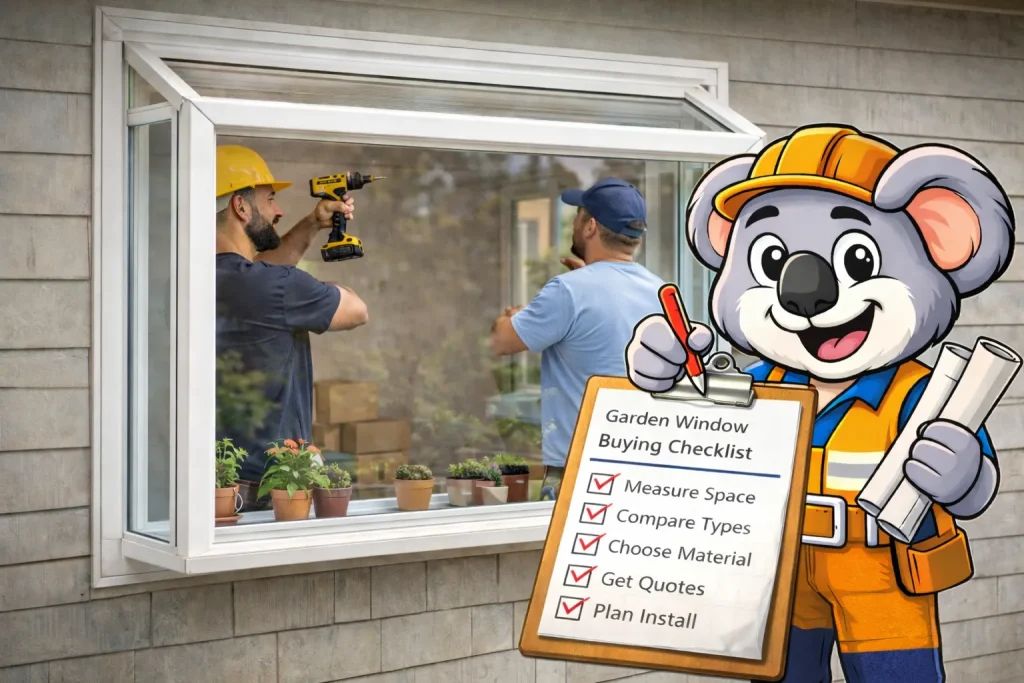
This checklist simplifies the process of selecting and installing a garden window, helping you make informed decisions.
Measuring and Assessing the Space
Start by measuring the width and height of your current window opening or the designated installation area [7][8]. Pay attention to the projection depth, as garden windows typically extend 16 to 24 inches outward from the exterior wall [5][6]. Make sure the placement won’t interfere with walkways, roof overhangs, or landscaping. If the unit exceeds 36 inches in width, you may need extra structural support, so consulting a professional is a good idea [10].
Once you’ve assessed the space, you’ll be ready to compare various garden window options based on cost and features.
Comparing Costs and Features
With your size requirements in hand, look at material options and energy efficiency features. Here’s what to expect:
- Vinyl windows: Cost around $1,000–$3,100 for a 36"x48" model and are budget-friendly.
- Fiberglass windows: Priced between $1,100 and $3,200, these offer durability lasting over 50 years [6].
- Wood frames: Range from $1,200 to $3,800 and provide an elegant appearance but require refinishing every few years, which can add $600–$1,400 in maintenance costs [6].
Check the NFRC label for energy ratings, focusing on the U-factor and Solar Heat Gain Coefficient (SHGC) to compare energy efficiency [11]. Decide whether you need operable side vents for ventilation or a fixed model – ventilation is key if you plan to grow herbs or plants, as it prevents wilting [2].
Requesting Quotes and Installation Details
Obtain at least three detailed quotes that specify the brand, model, size, glass type, and whether services like removal and cleanup are included [7][11]. Labor typically makes up 20% to 35% of the total cost, ranging from $300 to $1,500 per window [7]. Reviewing these details can help you identify any pricing inconsistencies.
"Using the same contractor for purchase and installation means that if a problem arises later, there will be no doubt who is responsible for fixing it; the window seller can’t blame the installer or vice versa."
– Tobie Stanger, Author, Consumer Reports [11]
Ensure your contractor is licensed, bonded, and insured, and check for manufacturer certifications, as some brands train installers specifically for their products [2][11]. If your project involves enlarging the wall opening, expect additional costs of $2,000–$3,000. Confirm that the contractor will handle the permit process, as structural changes often require local building permits [6]. Some companies may charge $30 to $60 for professional measurements, though this fee is usually credited toward the final installation cost [8].
Conclusion
Garden windows are a fantastic way to invite natural light and greenery into your home, especially over kitchen sinks. They create a mini-greenhouse effect, perfect for growing herbs or small plants. Selecting the right unit involves weighing factors like frame materials, glass options, and ventilation features while keeping your budget and climate in mind. Vinyl and fiberglass frames are known for their durability and low upkeep, while wood offers a timeless look but requires more maintenance. Opting for energy-efficient glass with Low‑E coatings and argon fills is a smart choice, as it helps offset the energy demands of these large glass surfaces. These considerations not only enhance your home’s style but also make the installation process smoother.
Proper installation is key to the success of your garden window project. Since these windows extend 16 to 24 inches from your exterior wall, professional installation is highly recommended to ensure structural support and weatherproofing. As Piotr Wilk from Rooster Windows and Doors explains:
While this guide covers the DIY approach, I recommend professional installation for these complex units to ensure a perfect, weatherproof seal [17].
Although labor costs can be significant, they safeguard your investment by preventing issues like leaks, condensation, or structural damage. After installation, getting multiple quotes can help you lock in the best deal.
Before committing, it’s essential to compare at least three detailed quotes that outline the brand, model, glass type, and installation services. Ensure contractors are licensed, bonded, and insured, and verify that they’ll handle any necessary permits for structural modifications [2]. For potential savings, consider scheduling your project during the off-season [2][6].
A well-installed garden window can last anywhere from 15 to 30 years – or up to 50 years with fiberglass frames – while increasing natural light, curb appeal, and the joy of indoor gardening [6][7].
Thinking about upgrading your home with garden windows? Get started by requesting a quote here: https://koalatyremodel.com/windows/
FAQs
What is a garden window?
A garden window is a box-shaped window design that projects outward from an exterior wall. It has glass panels on the front, sides, and top, creating a mini greenhouse effect inside your home. These windows are perfect for showcasing plants or decorative pieces while bringing in extra natural light to brighten up your space.
How much does a garden window cost?
A garden window generally costs between $1,200 and $3,650, with the average price landing around $2,500. The final cost can vary based on factors like the window’s size, the materials used, and how complex the installation process is.
Are garden windows energy efficient?
Garden windows can offer energy efficiency, particularly when equipped with insulated glass. This type of glass enhances insulation, minimizes heat loss, and helps maintain a comfortable indoor environment.
What is the difference between a garden window and a bay window?
Garden windows are compact, box-like structures with glass panels on the top, front, and sides, making them perfect for creating a mini-greenhouse environment for plants. On the other hand, bay windows are larger, extend further outward, and typically consist of multiple panels – some fixed and others operable. Bay windows not only offer more interior room but also provide a wider, more expansive view. While garden windows are ideal for smaller areas like kitchens, bay windows act as standout architectural elements that require additional structural support.
Do garden windows open for ventilation?
Yes, many garden windows come with venting side panels that can be opened to let fresh air into your home. This adds ventilation while making the space more practical and enjoyable.
How long do garden windows last?
Garden windows can last anywhere from 15 to 30 years, depending on how well they’re maintained. Routine upkeep – like cleaning the glass and checking for issues with the seals or frames – plays a big role in keeping them in good shape for as long as possible.
Is a Pella garden window worth the price?
A Pella garden window might be worth the investment thanks to its range of customization options, energy-saving features, and included warranty. However, whether it’s the right choice for you will depend on your unique needs, style preferences, and budget. Take time to weigh these factors before making your decision.
Can garden windows be installed in any kitchen?
Garden windows are a popular choice for kitchens, especially above sinks or in smaller spaces. However, installing them requires careful consideration of the wall’s structure. The wall must be able to handle both the weight and the outward projection of the window to ensure a secure and lasting installation.
Do garden windows increase home value?
Garden windows can brighten up your home by letting in more natural light and adding a touch of charm. While their effect on home value depends on factors like design, build quality, and the housing market, they often make a property more appealing to buyers. Their distinctive look and functionality can set your home apart, even if the financial boost isn’t easy to measure.
Are garden windows hard to maintain?
Garden windows are simple to care for when you stay on top of basic maintenance. Make it a habit to clean the glass and seals regularly to prevent problems like seal failure or frame rot. Occasional inspections can also go a long way in keeping your window in great shape over the years.
Related Blog Posts
- Awning Windows: Benefits and Best Places to Install in Your Home 2025
- Vinyl Windows: 12 Most Popular Durable and Energy-Efficient Options for Homeowners
- Affordable Window Replacement: Budget-Friendly Options for Homeowners in 2025
- 📞 Window Installation Near Me: Get a Free Quote from Local Window Installers