

A Marvin window can cost $400 to $2,000 for the unit alone, but the installed total often lands at $1,000 to $4,000 per window. If your quote looks high, the extra cost is usually tied to labor, opening repairs, glass upgrades, and finish work, not just the window brand. For broader planning context, review the window replacement cost guide. This factor also matters in a broader window replacement project.
If I had to boil it down, the final number usually comes from five things:
- Window line: Marvin’s entry line costs less than its custom lines.
- Style and size: Large, heavy, or specialty windows cost more to buy and install.
- Glass package: Low-E, triple-pane, laminated, and tempered glass add to the bill.
- Install method: Insert installs cost less than full-frame replacements.
- Hidden job-site work: Rot, framing issues, trim, permits, and second-story access can add a lot.
In other words: the quote is about the whole opening, not just the glass and frame. A lower bid may leave out repairs, trim work, or disposal. A higher bid may include those items from the start.
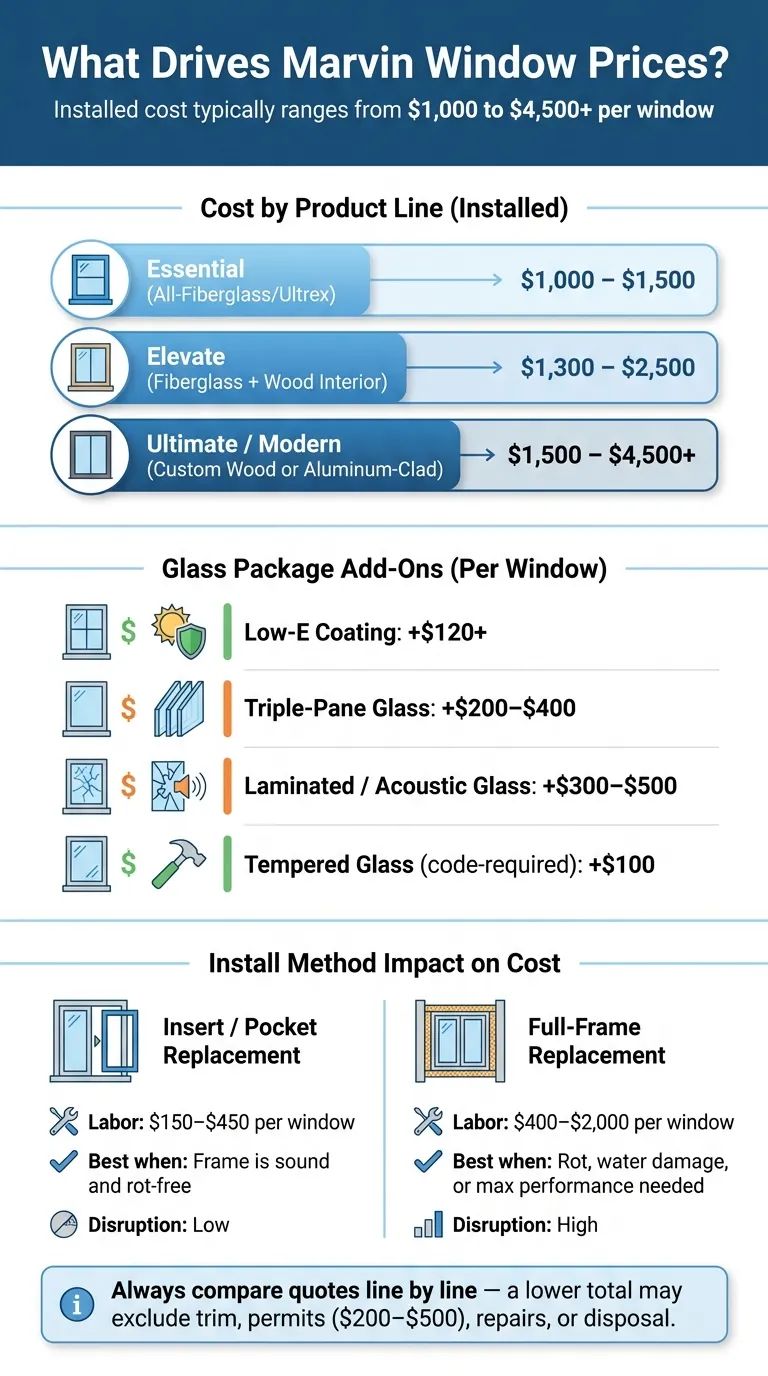 Marvin Windows Installed Cost by Series, Style & Glass Upgrade
What is the Average Cost of a Marvin Window?
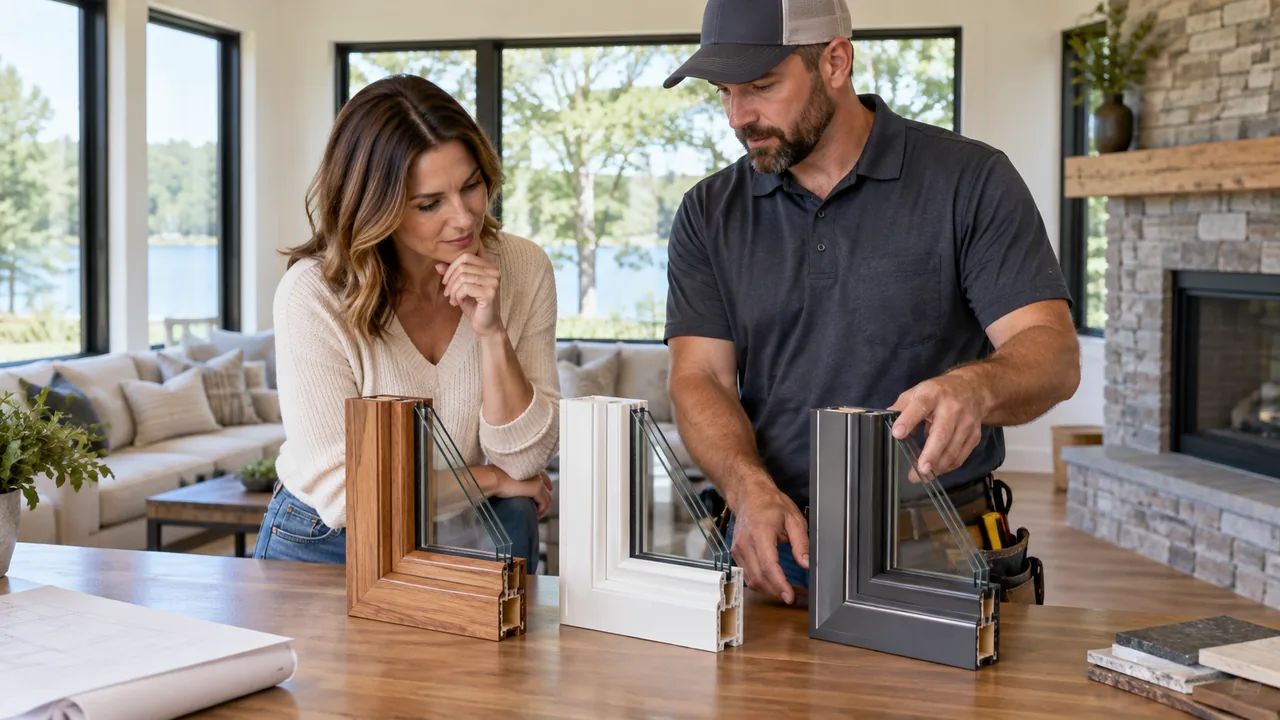
Quick Comparison
| Cost Driver | What it changes | Typical effect on price |
|---|---|---|
| Marvin product line | Base window cost | Entry line starts lower; custom lines cost more |
| Window style | Hardware, labor, support needs | Bay/bow and casement often cost more than double-hung |
| Window size | Weight, handling, install time | Bigger windows usually cost more |
| Glass upgrades | Energy use, sound control, code needs | Often adds $100 to $500+ per window |
| Install type | Labor and finish work | Full-frame usually costs more than insert replacement |
| Opening condition | Repairs and framing work | Rot or water damage can add major labor costs |
| Project size | Labor efficiency | Whole-home jobs often lower per-window labor |
| Quote scope | What is and isn’t included | Missing trim, cleanup, or permits can skew comparisons |
If you’re comparing bids, I’d focus less on the total alone and more on what each contractor is including for that price.
Product Choices That Push Marvin Windows Prices Up
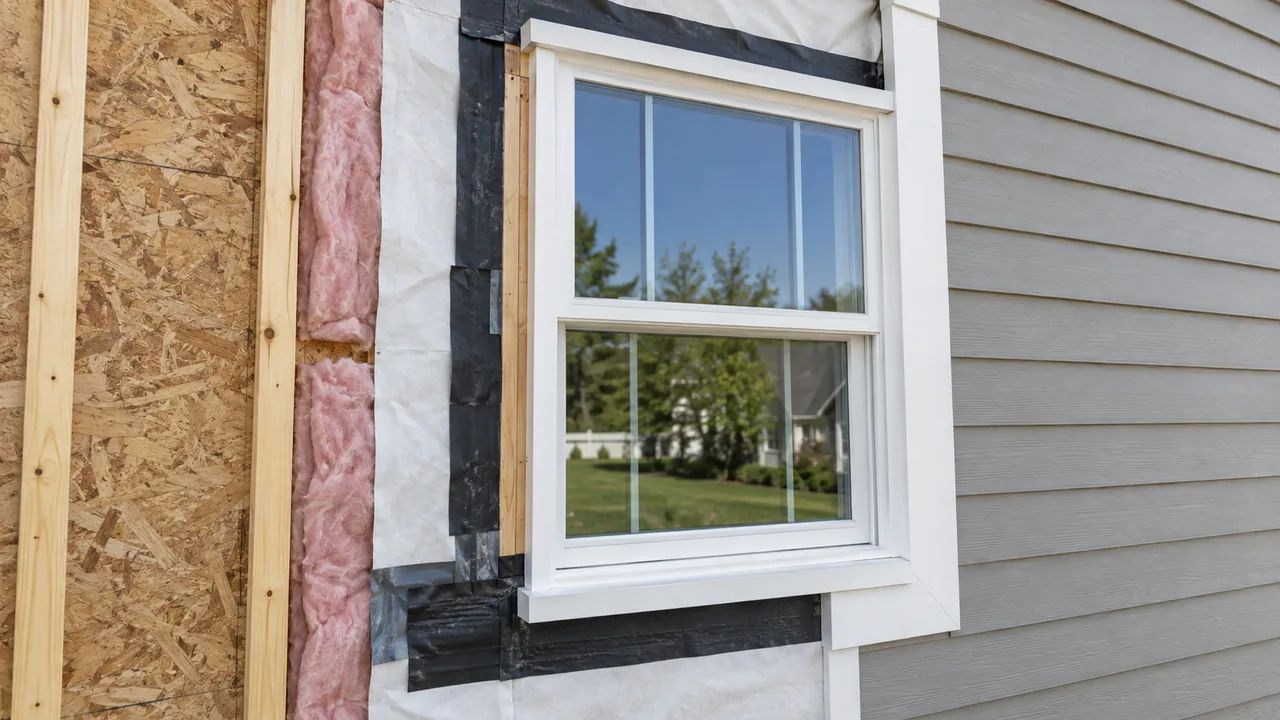

Marvin Series and Frame Material
The Marvin series sets the starting point for price. Essential is the lowest-priced line, Elevate adds a wood interior, and Ultimate and Modern are geared toward custom work.
Essential uses an all-fiberglass Ultrex frame and usually costs about $1,000 to $1,500 installed per window [1]. Elevate pairs a fiberglass exterior with a wood interior – pine, cherry, or Douglas fir – and usually falls around $1,300 to $2,500 [1][4]. Ultimate and Modern are made for custom sizes and shapes, with pricing that often ranges from $1,500 to $4,500+ based on the setup [1][4].
One reason fiberglass shows up so often here: it stays dimensionally stable, which helps with performance when temperatures swing [4].
| Series | Installed Price Range | Frame Material | Maintenance | Best Use |
|---|---|---|---|---|
| Essential | $1,000 – $1,500 | All-Fiberglass (Ultrex) | Low | Modern homes, budget-conscious upgrades |
| Elevate | $1,300 – $2,500 | Fiberglass Exterior / Wood Interior | Moderate | Traditional look with durable exterior |
| Ultimate/Modern | $1,500 – $4,500+ | Wood or Aluminum-Clad Wood | Higher | Custom homes, historic restorations |
Once you pick the series, the next big cost shifts usually come from the window style and the glass package.
Window Style, Size, and Room Function
Window style changes the parts, the labor, and the final bill. Double-hung windows are usually the baseline and tend to be the most affordable. Casement windows need more hardware and tighter alignment, which often bumps the base price by 10% to 15% [6].
At the top end, bay and bow windows cost more because they often need structural support and extra labor [5]. Size matters too. Bigger units are heavier, harder to handle, and take more time to install. If the window is going on a second story, labor and equipment costs usually go up as well [2].
| Style | Cost Impact | Typical Width | Installation Complexity |
|---|---|---|---|
| Double-Hung | Baseline | 2′ – 4.5′ | Low to Moderate |
| Casement | +10–15% | 2′ – 3′ | Moderate (hardware alignment) |
| Picture | Lower (fixed) | Up to 8’+ | Moderate to High (weight/size) |
| Bay / Bow | Highest | 4′ – 10′ | Very High (structural support) |
So even before you get to upgrades, the shape and size of the unit can change the quote quite a bit.
Glass Packages and Performance Upgrades
Choosing energy-efficient glass options can move pricing up fast. A Low-E coating adds $120 or more per window and can help reduce heat gain in sun-facing rooms [5]. Triple-pane glass usually adds about $200 to $400 and makes the most sense in colder climates where added insulation matters more [4].
If noise is a problem, laminated or acoustic glass costs more but does the best job cutting sound in street-facing rooms [5]. Tempered glass is often not optional at all. It’s required by code in bathrooms, stairways, and low openings, and it adds about $100 per window [3].
| Glass Option | Added Cost | Best Use |
|---|---|---|
| Low-E Coating | +$120+ | Sun-facing rooms |
| Triple-Pane | +$200–$400 | Cold climates, north-facing rooms |
| Laminated / Acoustic | +$300–$500 | Street-facing or noisy areas |
| Tempered | About +$100 | Bathrooms, stairways, low-to-floor installs |
Planning these details is a key part of effective window replacement strategies. After product choices, opening condition is the next major cost driver.
Installation Scope and Hidden Repair Costs
Opening Damage That Adds to the Estimate
After you choose the window line and glass package, the opening itself often becomes the next big pricing factor. Hidden damage in the opening is one of the most common reasons a Marvin quote goes up after inspection. Rot, water damage, stained trim, drafts, and cracked caulk show up a lot in older homes, and they may not be part of the first price until a contractor takes a close look.
Openings that are out of square, old patchwork, and framing changes can all push costs higher. They add labor, extra materials, and sometimes more repair time than homeowners expect. If the windows are on a second story, access can add more cost too.
How much of that damage gets addressed usually comes down to the type of install: pocket replacement or full-frame tear-out.
Insert Replacement vs. Full-Frame Replacement
The install method can make two similar-looking quotes end up far apart. An insert, also called a pocket replacement, places the new window inside the existing frame. That usually keeps the surrounding trim in place. It’s faster and less disruptive, but it works best when the old frame is square, level, and free of rot.
Full-frame replacement takes out the entire window assembly down to the rough opening. That gives the installer a clear view of hidden damage and makes room for new insulation and flashing. The downside is simple: more labor and more finish work.
| Replacement Method | Labor Scope | Impact on Surrounding Materials | Relative Cost | When It Makes Sense |
|---|---|---|---|---|
| Insert (Pocket) | Lower; fits into the existing frame | Minimal; preserves existing trim | Lower | Existing frame is sound, square, and rot-free |
| Full-Frame | Higher; complete tear-out | High; requires new flashing, trim, and possible siding work | Higher | Rot, water damage, or maximum performance goals |
Standard installation labor usually runs $150 to $450 per window [1]. More involved full-frame work can climb to $400 to $2,000 per window depending on structural needs and local labor rates [2].
Once the opening method is decided, finish work is often where bids start to split.
Trim, Sealing, Cleanup, and Exterior Finish Work
This is where quote scope often gets fuzzy. One contractor may include removal, disposal, flashing, insulation, interior trim, exterior capping, and final cleanup. Another may price only the window and basic sealing.
Permits also matter, and they vary by municipality. In many cases, they run $200 to $500 [2]. Interior trim finishing is another item worth checking line by line, especially if the quote includes unfinished trim but does not include painting or staining [1][4].
A lower bid can look like a better deal at first glance, but sometimes it leaves out labor or finish work that another quote already includes.
The next price swing comes from the number of windows being replaced and whether the project happens all at once or in phases.
How to Plan the Project and Compare Quotes Accurately
After you’ve picked the product and nailed down the repair scope, two things still shape the price in a big way: project size and how the quote is written.
Number of Windows and Phasing the Project
Project phasing changes Marvin windows prices because it affects labor efficiency, scheduling, and how consistent the finished work feels across the house. If you want the lowest labor cost per window, a full-home replacement usually wins. If you want more control over upfront spending, phasing can make more sense.
Here’s the tradeoff: larger batches often bring down labor per window. Smaller phases often cost more per window because the crew has to repeat setup, travel, and coordination each time.
Keep the same Marvin series across phases so the look and specs stay consistent throughout the home.
| Project Approach | Budget Impact | Comfort Improvement Speed | Scheduling Complexity |
|---|---|---|---|
| Full Home (All at Once) | Highest upfront; lowest per-window labor | Immediate across all rooms | High; requires multi-day access |
| Phasing by Floor | Moderate; maintains volume discounts | Strong improvement for treated areas | Moderate; requires 2+ visits |
| Worst Rooms First | Lowest upfront; highest per-window labor | Immediate in the most urgent rooms | Low; short, focused visits |
Once you’ve set the project size, the next step is simple: compare what each quote actually covers.
Choose expert window installation for clean results and dependable performance.
What a Clear Marvin Window Quote Should Include
A good quote should show the product line, glass, installation method, and repair scope in one place. A single total number sounds neat, but it can hide big differences in scope. An itemized quote makes those gaps easier to spot.
Ask each contractor to break the quote down line by line. That way, you can see what’s included – and what isn’t.
- Marvin product line (Essential, Elevate, or Ultimate)
- Frame material (fiberglass, wood-clad, or aluminum-clad)
- Window style and size
- Glass package (Low-E, triple-pane, or tempered)
- Installation method (insert vs. full-frame)
- Repair scope (allowance for rot or frame damage)
- Exterior flashing and sealing
- Interior and exterior trim (casing, brickmould, or capping)
- Cleanup and disposal (removal and hauling of old units)
- Warranty coverage (glass, manufacturing, and labor)
When Paying More Makes Sense and When a Simpler Option Works
It often makes sense to spend more on street-facing windows, living rooms, and rooms you use every day. The same goes for sun-drenched spaces or rooms near a busy road, where premium glass upgrades can do more for comfort and noise control.
For low-use rooms or standard openings that are already in good shape, a simpler scope is often enough.
A higher quote is worth it only when it includes a more complete scope, realistic damage allowances, and experienced labor – not just a pricier product. A lower quote may look better at first glance, but it may also assume fewer repairs. That’s why the final price matters less than the full installed scope behind it.
Conclusion: Check the Full Installed Scope Before Approving the Quote
Marvin window prices go up based on the product line, glass upgrades, window style, and any repairs needed at the opening.
A lower quote can look great at first glance. But it often assumes the opening is clean and the install will be simple. That’s usually where surprise costs show up. A quote that includes room for hidden damage and proper finish work may seem higher upfront, but it’s less likely to climb once the job starts.
It makes sense to spend more on primary rooms, sun-exposed spaces, or problem openings. For secondary rooms, a simpler setup usually does the job.
If you still have questions about pricing details, review the FAQ below. Request a free window quote for a clear installed-scope estimate.