


Replacement windows improve energy efficiency, reduce maintenance, and enhance home aesthetics. They fit into existing openings, making upgrades easier without major construction. Here’s what you need to know:
- Types: Pocket windows fit into existing frames; full-frame replacements remove everything for a fresh start.
- Materials: Choose from vinyl (affordable, low maintenance), fiberglass (durable, weather-resistant), aluminum (lightweight, strong), or composite (wood-like, moisture-resistant).
- Costs: Expect $300–$3,000 per window, with vinyl being the cheapest and wood or composite on the higher end. Professional installation adds $100–$300 per window.
- Energy Efficiency: ENERGY STAR-certified windows save up to 13% on energy bills. Look for low U-factor (heat loss) and SHGC (solar radiation) ratings.
- Styles: Options include double-hung, sliding, casement, awning, and bay windows, each offering unique functionality and design benefits.
Quick Tip: Inspect your current frames before deciding between pocket or full-frame installation. For older homes, ensure compliance with lead-safe protocols during replacement.
For more details on costs, materials, and efficiency, keep reading.
Homeowner’s Guide To Choosing The Right Window Material
sbb-itb-e0ea4e0
Window Materials: Fiberglass, Aluminum, Vinyl, and Composite
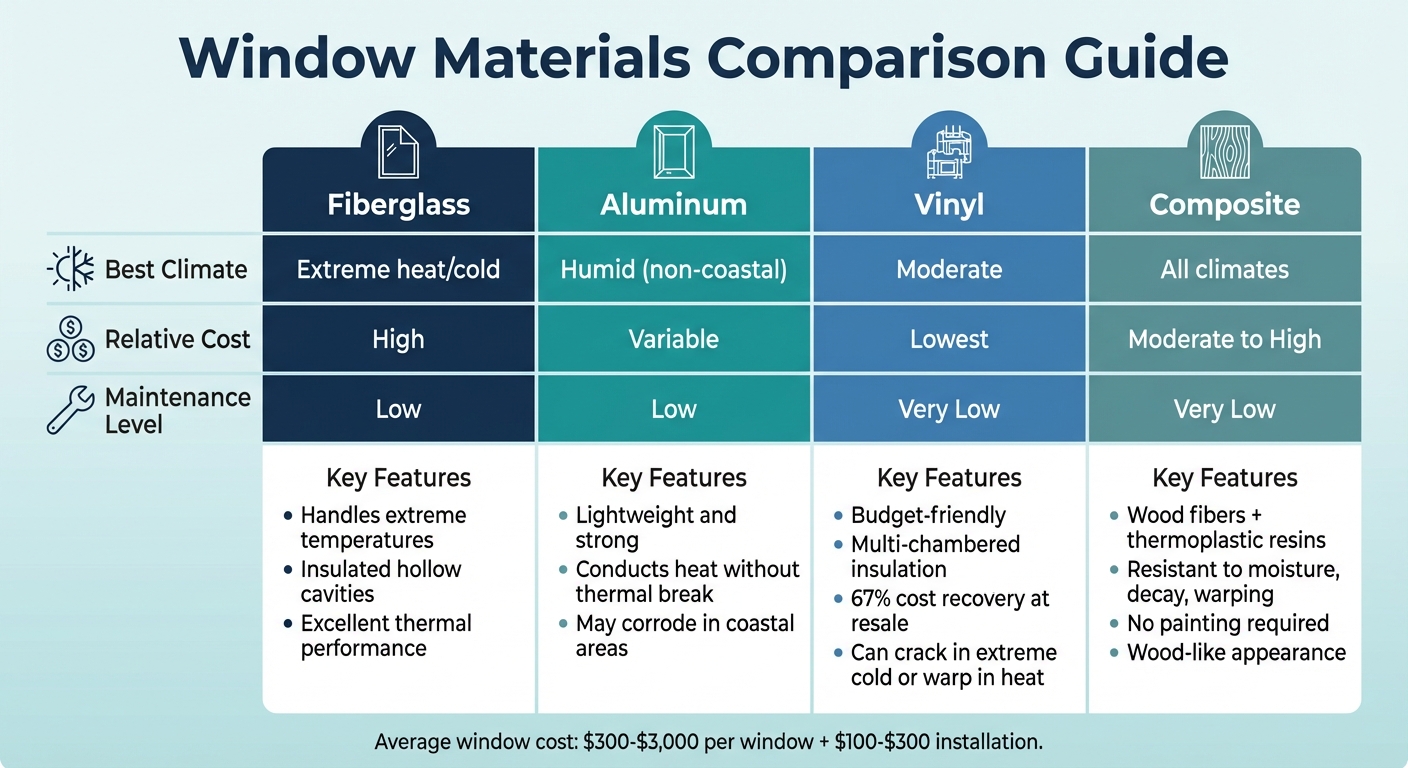
Replacement Window Materials Comparison: Cost, Climate, and Maintenance Guide
Fiberglass and Aluminum Windows
Fiberglass windows stand out for their ability to handle extreme temperatures while maintaining durability and stability. They also feature insulated hollow cavities, which help improve thermal performance. On the other hand, aluminum windows are lightweight and strong but have some drawbacks. Without a thermal break, they can conduct heat quickly under direct sunlight, and they may corrode in coastal environments.
Vinyl Windows: Affordable and Low Maintenance
Vinyl windows are a go-to option for many homeowners due to their budget-friendly price, excellent insulation from multi-chambered designs, and minimal upkeep. Unlike wood frames, they resist moisture damage, and when it comes to resale value, homeowners often recover about 67% of their replacement cost [2]. However, vinyl isn’t perfect – it can crack in extremely cold weather or warp in high heat. To offset this, manufacturers typically offer lighter color options, which help reduce heat absorption.
Composite Windows: Strength and Style
Composite windows combine wood fibers with thermoplastic resins, delivering the charm of wood with the low-maintenance qualities of vinyl. These windows are highly resistant to moisture, decay, and warping, making them a solid choice for any climate. Materials like Fibrex offer added benefits by reducing expansion and contraction, which helps maintain tight seals even in harsh temperature swings.
"The nature of Fibrex material as a composite makes it highly resistant to warping, cracking, and fading – even in extreme heat and cold conditions." – Renewal by Andersen [8]
Composite windows are versatile, working well in all climate zones. They don’t require painting and are a great option for those looking for durability without the premium cost of wood.
| Material | Best Climate | Relative Cost | Maintenance Level |
|---|---|---|---|
| Fiberglass | Extreme heat/cold | High | Low |
| Aluminum | Humid (non-coastal) | Variable | Low |
| Vinyl | Moderate | Lowest | Very Low |
| Composite | All climates | Moderate to High | Very Low |
Window Styles and Configurations
Standard Window Styles
The style of a window plays a major role in both its functionality and how it complements your home’s design. Whether you’re aiming for a sleek, modern vibe or a timeless, classic look, the right window style can make all the difference.
Double-hung windows are a timeless favorite, fitting seamlessly into both traditional and contemporary homes. With both upper and lower sashes sliding vertically, they allow for better airflow throughout the space [2][9]. If you’re looking for a similar look on a smaller budget, single-hung windows are a great choice. They closely resemble double-hung windows but only the bottom sash opens, making them a practical option for traditional aesthetics.
For homes with a modern flair, sliding windows are a popular pick. They open horizontally, making them perfect for larger glass panels that create clean lines and uninterrupted views [10]. Similarly, casement windows, which are hinged on one side and open outward with a crank, are known for their energy efficiency. Their tight seal when closed and ability to catch side breezes make them both functional and stylish [2][10]. Awning windows, hinged at the top and opening outward, are ideal for spaces like kitchens or bathrooms where ventilation is needed even during light rain [2][10].
For a bold, modern touch, black windows are increasingly popular. Their dark frames provide a striking contrast that works beautifully with both contemporary and older homes. On the other hand, picture windows – which don’t open – are perfect for maximizing natural light and framing scenic views, especially in living rooms where ventilation isn’t a concern [10]. For those who love a dramatic statement, bay and bow windows are excellent choices. Bay windows typically feature three panels, while bow windows use four or more, creating a curved, outward projection that captures light from multiple directions [5][10].
For more specific needs, specialized windows offer tailored solutions.
Specialty Window Applications
Privacy glass windows are a smart choice for bathrooms and other areas where you want to block views without sacrificing natural light. These windows use frosted, textured, or obscured glass to maintain privacy while still letting sunlight in. Garage door windows are another thoughtful addition, enhancing curb appeal and brightening up garage spaces. These windows can range from simple designs to more decorative patterns that align with your home’s overall look.
If you’re dealing with a manufactured home, mobile home windows require careful consideration. Since these homes use standardized dimensions different from traditional site-built houses, the windows are often smaller and designed to fit thinner walls. Accurate measurements and ordering windows specifically rated for manufactured housing are essential.
For those looking to improve energy efficiency and weather protection, storm windows offer a practical solution.
Storm Windows
Storm windows create an insulating layer of air, making them an affordable way to boost energy savings and protect against harsh weather [9]. Typically, storm windows cost about 20% to 40% more than standard replacement windows [2]. Among the available options, aluminum storm windows are especially popular for their strength and durability.
When installing storm windows, you’ll need to choose between interior and exterior mounting. Exterior storm windows are the more common choice and are easier to maintain. Interior storm windows, however, provide a sleeker appearance from the outside. If you’re looking to save on costs, individual storm window parts – like glass panels, frames, and weatherstripping – can be purchased for repairs instead of replacing the entire unit. For homes with only one or two particularly drafty windows, adding a single storm window may be enough to reduce energy loss without upgrading every window in the house.
Window Hardware, Components, and Maintenance
Window Hardware Basics
Window hardware plays a key role in ensuring windows function properly, stay secure, and help with energy efficiency. Take crank handles, for example – these are commonly found on casement and awning windows. They let the sash swing outward and create a tight seal when used correctly. If the crank becomes stiff or the gears are stripped, it’s time for a replacement. To get the right part, check the identification label on the frame or between the panes [3][6][11].
For double-hung windows, sash locks and latches are crucial. They not only improve security but also help reduce drafts. If the locks aren’t pulling the sash tightly against the frame, air leaks can become an issue. Many modern double-hung models include tilt-in sashes, which make cleaning the exterior glass easier. However, this feature only works well if the locking pins and balances are in good shape [2][6]. Sliding windows, on the other hand, use tracks and rollers for horizontal movement. Dirt or damage in these areas can cause sticking or make operation difficult [6].
"A typical replacement window warranty lasts 10 years, though some brands and models offer terms as long as 20 years or promise a ‘lifetime’ warranty." – Andrii Gurskyi, Owner, Mr. Glazier Windows and Doors [2]
To catch problems early, test each window by opening and closing it a few times. This helps identify any operational issues. Afterward, inspect the internal components to ensure everything is functioning smoothly.
Window Components and Repairs
Windows don’t just rely on visible hardware – internal components like window balances are just as important. These balances allow double-hung windows to stay open at any height without slamming shut. If the sash unexpectedly drops or feels sticky, it’s likely time to replace the spring or block-and-tackle balance. Fixing these parts is often more affordable than replacing the entire window, as long as the frame is still in good condition [8][11].
Regularly check windowsills for signs of trouble, such as soft spots, peeling paint, or mold. These issues often point to water damage or rot. A spongy feel or an uneven sill might require epoxy repairs – or, in severe cases, a full frame replacement [2][11][12]. Vinyl frames can also have problems, like cracking in cold weather or warping in extreme heat, which may necessitate replacing the entire unit [8][11].
If you notice condensation between double or triple panes, it’s a sign that the seal has failed and the desiccant inside is no longer working. In this case, replacing the sash or even the whole window is often the best way to restore energy efficiency [12]. For homes built before 1978, always check for lead paint on sills and moldings before starting any repairs [2].
Window Wells for Basements
Window wells serve two purposes for basement windows: they provide an emergency exit and let in natural light. These wells should be inspected regularly for debris, rust, or drainage problems, as these issues can lead to water infiltration. If the metal well is corroded, consider replacing it with galvanized steel or composite materials that resist moisture damage. Make sure the well extends at least 8 inches beyond the window opening and includes a gravel base to support proper drainage.
Costs and Buying Guide
Material and Installation Costs
The cost of replacement windows can vary widely, ranging from $300 to $3,000 per window. On average, homeowners spend about $800 per window, including professional installation [2]. Installation labor alone typically adds $100 to $300 per window to the overall cost [2].
The type of material you choose plays a big role in pricing. Vinyl windows are the most budget-friendly and require little to no upkeep – no need for painting or staining. Fiberglass and composite windows are more expensive but offer excellent durability and stability. At the top of the price spectrum are wood windows, valued for their classic look, though they often require exterior cladding to protect against rot [2][10].
The installation method also influences costs. A pocket installation, which fits new windows into the existing frame, is less expensive than a full-frame replacement [2][7]. Specialty designs like bay, bow, or large picture windows come with higher price tags due to their size and the complexity of installation [10]. Opting for features like triple-pane glass, argon gas fills, or Low-E coatings increases upfront costs but can lead to significant energy savings over time [10][4]. Additionally, older homes may require lead-safe installation protocols, which can add to the expense [2][3].
"Low-emissivity (low-e) coatings on glass… typically cost about 10% to 15% more than regular windows, but they reduce energy loss by as much as 30% to 50%." – U.S. Department of Energy [4]
Understanding these costs is the first step to making an informed decision, especially when factoring in energy efficiency for long-term savings.
Energy Efficiency and Performance Ratings
While upfront costs are important, energy efficiency can significantly impact your long-term savings. Energy-efficient windows can reduce heating and cooling bills, which is no small matter considering windows account for 25% to 30% of a home’s energy use [1]. Choosing ENERGY STAR-certified windows can lower annual energy bills by an average of 13% [2]. For instance, replacing 10 single-pane windows with ENERGY STAR models in the Northern U.S. can save homeowners around $568 annually [2].
To assess efficiency, check the National Fenestration Rating Council (NFRC) label on each window. This label provides key metrics like the U-factor, which measures heat loss (lower is better), and the Solar Heat Gain Coefficient (SHGC), which indicates how much solar radiation passes through (lower is better for warm climates) [3][1]. In colder regions, aim for a U-factor of 0.22 or lower, while in warmer areas, an SHGC of 0.23 or lower is ideal [3].
Energy-efficient windows also come with financial perks, such as federal tax credits. Until the end of 2025, you can claim 30% of the cost (up to $600) for windows that meet the "Most Efficient" ENERGY STAR criteria [2][3]. Additionally, homeowners typically recover about 67% of the cost of vinyl window replacements when selling their home [2].
Buying Checklist
Before purchasing replacement windows, keep these key points in mind. Start by determining whether you need pocket installation or a full-frame replacement, depending on the condition of your existing window frames [2][7]. Get quotes from at least three installation companies and research their Better Business Bureau ratings [3].
Make sure your contract specifies that the windows will be ENERGY STAR-certified for your climate zone (Northern, North-Central, South-Central, or Southern) and includes the exact U-factor and SHGC values [3]. If possible, request physical samples to inspect the color and feel of the frame material – don’t rely solely on catalog images [3].
Inspect the new windows before installation to confirm they have the correct NFRC and ENERGY STAR labels [3]. After installation, test each window to ensure smooth operation and check that caulking is applied evenly with no gaps [3]. Keep all labels and documentation for utility rebates, tax credits, and warranty claims [3]. For enhanced durability, ask about 3mm "double-strength" glass, which is twice as strong as standard glass [3].
By considering both material and energy performance, you can ensure your new windows provide the best combination of value, durability, and efficiency.
Ready to start your window upgrade? Compare options and request a quote here: https://koalatyremodel.com/windows/
For more tips on maximizing energy savings, visit our efficient window replacement guide.
FAQs
What are the best replacement windows for energy efficiency?
Windows made from vinyl, fiberglass, or composite materials are among the top choices for energy efficiency because they provide strong insulation. To boost thermal performance, consider features like low-emissivity (Low-E) glass, gas fills, and advanced spacers. For added peace of mind, choose ENERGY STAR-certified windows, which meet established energy-saving standards.
Are fiberglass windows better than vinyl?
Fiberglass windows stand out for their strength, durability, and ability to maintain energy efficiency over the long haul. They’re designed to resist issues like warping, swelling, and damage caused by temperature fluctuations, ensuring consistent performance. Although the initial cost of fiberglass windows is higher, their long lifespan and minimal maintenance needs can make them a smart investment.
Vinyl windows, on the other hand, are a more budget-friendly option. However, they are more susceptible to expanding or warping due to temperature changes, which may affect both their durability and energy efficiency over time.
How much do replacement windows cost?
Replacement windows generally range from $650 to $2,250 per window. If you’re planning to replace 10 windows, you can expect the total cost to fall between $3,840 and $6,530. The final price depends on factors like the material you choose, the size of the windows, and the brand. Since costs can vary, it’s a good idea to factor in your specific requirements and preferences when setting your budget.
What is the difference between pocket windows and full frame replacement?
Pocket window replacement is when a new window is installed directly into the existing frame, leaving the original frame untouched. On the other hand, full frame replacement involves removing both the window and the frame, offering a complete overhaul. This option is ideal for addressing structural issues or when a fresh start is needed. The choice between the two depends on the condition of the current frame and the goals for the upgrade.
When should I consider storm window replacement?
When storm windows show signs of damage, wear, or fail to perform their job – like reducing energy loss, blocking noise, or standing up to tough weather – it might be time to replace them. Look out for issues such as drafts, condensation buildup, or windows that are hard to open and close. Upgrading can enhance insulation and improve their overall functionality.
Are aluminum storm windows still effective?
Aluminum storm windows are still a solid choice thanks to their long-lasting nature and dependable protection. With proper care – like routine cleaning and checking the seals – they can continue to work efficiently for years.
What is included in window balance replacement?
Replacing a window balance involves a few key steps to restore smooth operation. First, the sash is removed to access the old balance. The old balance is then carefully taken out, and a new one is installed in its place. During the process, it’s also a good idea to check and repair or replace any related hardware that might be worn or damaged. This ensures the window functions properly and operates smoothly once reassembled.
Can I perform DIY replacement windows safely?
Yes, replacing windows yourself is doable, but safety should always come first. Proper preparation of the window frame is key, and you’ll want to wear safety glasses and secure the work area to avoid accidents.
That said, there are risks involved. Mistakes like incorrect measurements, poor sealing, or even causing structural damage can result in drafts, leaks, or other issues down the line. Plus, handling heavy glass or sharp tools demands extra caution.
If you’re confident in your skills and take all the necessary precautions, tackling a DIY window replacement can be a rewarding project. Just make sure you’re fully prepared before diving in.
How do I fix a window crank handle?
To repair a window crank handle, start by determining whether it’s a snap-on or set screw type. For handles with set screws, use a screwdriver or an Allen wrench to remove them. If it’s a snap-on type, gently detach it by pulling or prying it off.
Once removed, check for any signs of wear or damage. Tighten any loose screws, and clean or lubricate the mechanism to improve functionality. If the handle or mechanism is still not working properly, consider replacing it with a compatible part. After repairs or replacement, reattach the handle securely to ensure it operates smoothly.
What causes window seal repair issues?
Window seal problems often arise from worn-out weather stripping, poor installation, or damaged sealant. These issues can lead to drafts and energy inefficiency, making it harder to keep your home comfortable. To avoid these headaches, it’s a good idea to inspect and maintain your window seals regularly.
Are black windows more expensive?
Black windows are generally priced similarly to white vinyl windows. The cost is influenced more by the material and style than the color itself. For instance, black frames made from high-end materials like fiberglass or aluminum often come with a higher price tag compared to standard vinyl options.
What are privacy glass window options?
Privacy glass windows come in various styles, such as frosted, etched, or tinted glass, all designed to block visibility while still letting natural light flow through. These options work perfectly for areas like bathrooms or bedrooms where privacy is essential.
Some models even include integrated blinds or shades placed between the glass panes, giving you extra control over light and privacy. However, keep in mind that certain finishes or coatings offer privacy only during the day. At night, when indoor lights are on, these may become transparent. It’s a balance of functionality and style to consider when choosing the right option.
Do mobile home windows require special sizing?
Yes, windows for mobile homes require specific sizing because of their unique framing systems and shallower wall depths, typically around 3-1/4 inches. Common sizes include 30" x 60", 36" x 60", and 36" x 54". These dimensions are designed to ensure a proper fit and seamless installation within the distinct structure of mobile homes.
When is window well replacement necessary?
A window well replacement becomes necessary when the current well is no longer doing its job due to damage, wear, or other issues. Problems like water seeping in, rust forming, or the structure becoming unstable are common signs. A properly functioning window well is key to keeping your basement dry and protecting the overall structure of your home.
What should I look for in the best replacement windows?
When choosing windows, focus on options with strong energy efficiency ratings, sturdy hardware, and materials designed for your specific climate. Look for features like effective insulation, low-maintenance finishes, and dependable weather resistance. Don’t forget to check for warranties that promise lasting performance – these details can help ensure you’re making a smart, long-term investment.
Related Blog Posts
- Affordable Window Replacement: Budget-Friendly Options for Homeowners in 2025
- Best Replacement Windows Near Me: What to Expect in Cost and Installation in 2025
- 🏠 Top 10 Windows Replacement Near Me: Schedule an Appointment, Get a Free Estimate Today
- Best 2026 Replacement Windows Cost Guide for Homeowners Planning a Remodel