


When deciding between storm window replacement and full window replacement, the choice depends on your budget, the condition of your current windows, and your goals for energy efficiency and durability.
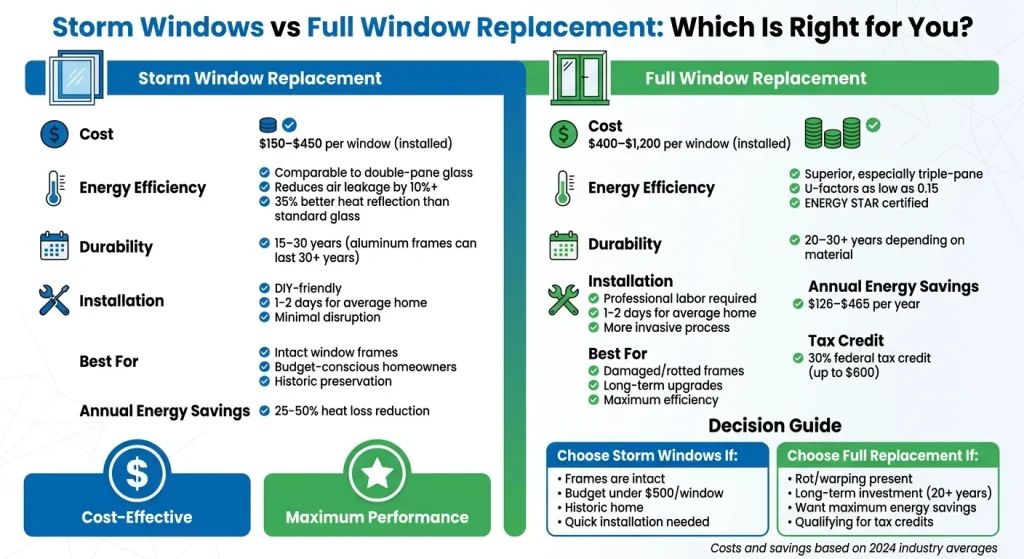
- Storm windows: Add a secondary layer over existing windows. Cost: $150–$450 per window (installed). Ideal for homes with intact frames, offering quick installation, energy savings, and noise reduction at a lower cost.
- Full window replacement: Replaces the entire window unit, including the frame. Cost: $400–$1,200 per window (installed). Best for damaged or inefficient windows, providing advanced energy efficiency, long-term durability, and modern designs.
Quick Comparison
| Feature | Storm Window Replacement | Full Window Replacement |
|---|---|---|
| Cost | $150–$450 per window | $400–$1,200 per window |
| Energy Efficiency | Comparable to double-pane glass | Superior, especially with triple-pane |
| Durability | 15–30 years (aluminum frames) | 20–30+ years depending on material |
| Installation | DIY-friendly, minimal disruption | Professional labor required |
| Best For | Intact window frames, budget-conscious | Damaged frames, long-term upgrades |
If your windows are in good shape but drafty, storm windows are a cost-effective fix. However, if your windows have damage or you’re seeking maximum efficiency and longevity, energy efficient replacement windows are worth the investment.
 Get the perfect balance of style and function with expert window installation.
Storm Windows vs Replacement Windows
What is Storm Window Replacement?
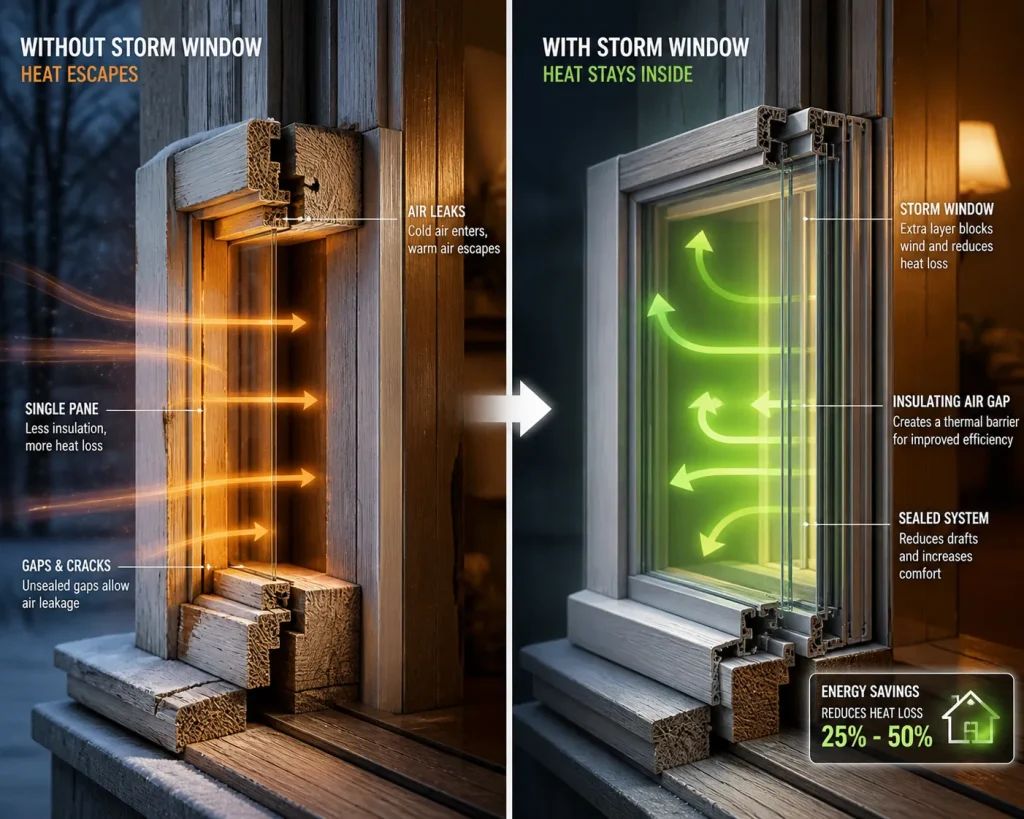
Storm window replacement involves adding a secondary window unit over your existing windows – either inside or outside your home. This creates an insulating air pocket between the two glass layers, which helps reduce drafts, limit heat transfer, and shield your primary windows from harsh weather conditions like rain, wind, and debris [3][4][1].
Many modern storm windows come with low-emissivity (low-e) coatings, a thin layer designed to reflect radiant heat. This feature helps maintain a comfortable indoor temperature by reflecting heat 35% better than standard clear glass [3]. The best part? You can enjoy energy savings comparable to full window replacements, but at about one-third of the cost [3].
How Storm Windows Work
The sealed air pocket between the storm window and your main window acts as a barrier, cutting down on drafts and improving insulation [3]. Low-e storm windows can reduce your home’s air leakage by 10% or more [3].
Exterior storm windows are installed on the outside of your window frame, secured with screws or clips. Interior models, on the other hand, attach using magnets, adhesive strips, or compression seals. For exterior versions, weep holes are essential – they let moisture drain out, preventing wood rot [4][1]. If you’re using aluminum storm windows on metal-framed primary windows, adding non-metal separators (thermal breaks) is crucial to stop heat from transferring through the frames [4].
These thoughtful design elements translate into practical benefits for homeowners.
Benefits of Storm Window Replacement
One of the biggest advantages is cost. Storm windows typically cost $150 to $450 per window installed [1], making them much more affordable than full window replacements. Professional installation costs range from $75 to $175 per window [1], and many interior models are DIY-friendly, which can save you even more money.
The installation process is quick and hassle-free, often taking just 1 to 2 days for an average home [1]. Unlike full replacements, which may require removing siding or trim, storm windows are mounted over your existing frames with minimal disruption. Plus, quality aluminum storm windows can last over 30 years, offering a durable, long-term solution [1].
"Storm windows can help reduce air movement into and out of existing windows, helping to improve comfort and reduce heating and cooling costs." – Department of Energy [3]
In addition to saving energy, storm windows also help with noise reduction. The extra layer of glass and the air gap create a sound barrier, cutting down on outdoor noise [5][6]. They’re also a great choice for historic preservation, allowing you to retain the charm of vintage windows while enjoying modern energy efficiency [5][1].
What Does Full Window Replacement Involve?
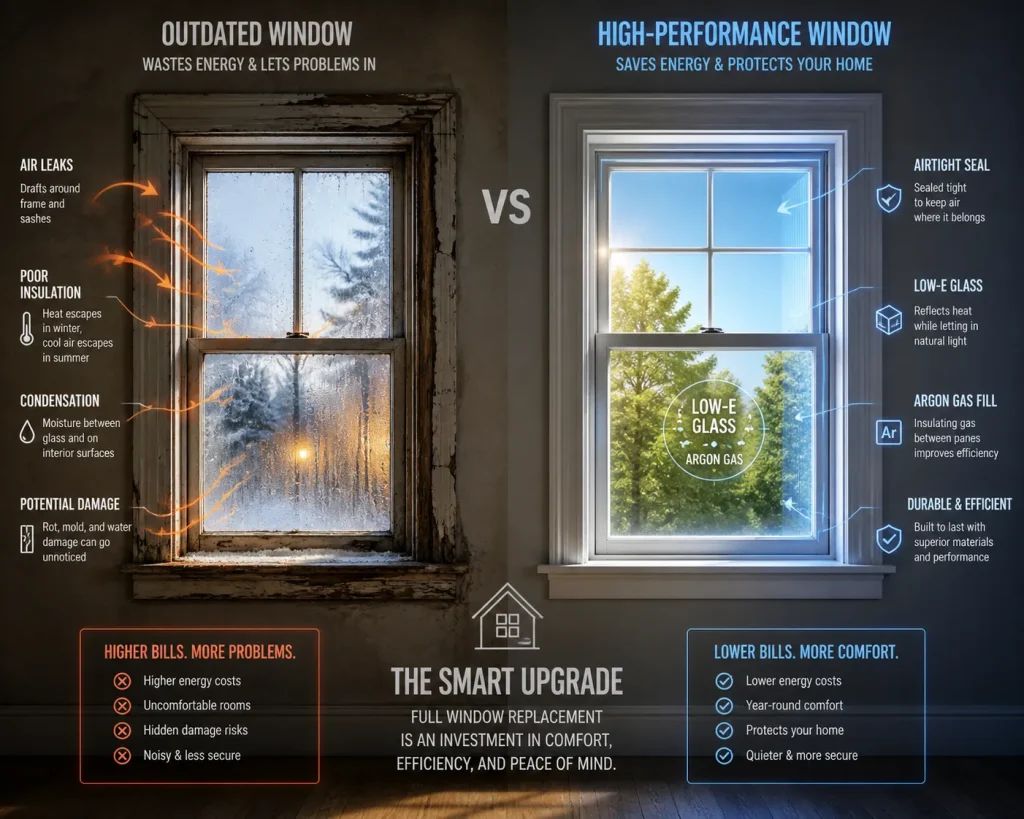
Full window replacement means removing the entire existing window unit, including the frame, sashes, and trim, to expose the structure underneath. This process allows installers to check for hidden problems, such as rot or water damage, and properly prepare the area using modern weatherproofing materials [2].
Unlike storm windows, which only add a protective layer, full replacement completely upgrades your window system. Instead of patching over inefficient windows, this process installs a brand-new unit with features like fiberglass or vinyl frames, Low-E glass coatings, and argon gas fills between panes [2][5]. This thorough approach addresses both visible and hidden issues that storm windows can’t fix.
How Full Window Replacement Works
The process generally follows a seven-step sequence. First, installers remove the old window unit, including all interior and exterior trim. Then, they inspect the rough opening for issues like water damage or rot, making repairs as needed and identifying ways to improve sealing [2]. Next, the opening is prepped with weatherproof barriers and flashing. After that, the new window is positioned using shims for precise alignment and insulated around the edges with low-expansion foam to prevent drafts while avoiding frame distortion. Finally, new trim is added inside and out, caulking is applied, and the window is tested to ensure smooth operation and water resistance [2].
"Full-frame replacement removes the entire window unit including the frame, exposing the rough opening for inspection and preparation. This approach allows for proper flashing, insulation, and waterproofing." – Weatherguard Construction [2]
Since this process often involves removing siding or exterior trim, hiring professionals for installation is highly recommended [5]. These detailed steps ensure the new window performs efficiently and lasts longer.
Benefits of Full Window Replacement
Full window replacement offers more than just a cosmetic upgrade – it delivers advanced materials and modern technology that go far beyond what storm windows can achieve.
One of the biggest advantages is improved energy efficiency. Windows account for 25% to 30% of a home’s heating and cooling costs. Replacing single-pane windows with ENERGY STAR-certified models can lower annual energy bills by $126 to $465 [2]. Modern designs, such as triple-pane glazing with U-factors as low as 0.15 (well below the 0.30 standard for northern climates), provide energy savings that storm windows can’t match [2].
Another benefit is durability. While storm windows typically last 15 to 20 years, replacement windows often last 20 to 30 years or more [5]. Costs for full replacements range from $400 to $1,200 per window, with premium brands like Andersen or Pella priced between $700 and $1,000 per window, including installation [2].
Beyond functionality, full window replacements enhance curb appeal and increase home resale value [5][6]. Plus, the Inflation Reduction Act offers a 30% federal tax credit (up to $600) for qualifying ENERGY STAR windows, making this upgrade more affordable [2].
Storm Window Replacement vs New Windows: Side-by-Side Comparison
This comparison breaks down the key differences between storm windows and full replacements, helping you decide which option aligns with your budget and performance goals.
Storm windows offer energy savings similar to double-pane windows, while full replacements – especially triple-pane models – deliver top-tier efficiency with U-factors as low as 0.15 [2].
Storm windows are designed to fit over existing frames, making them a project many homeowners can tackle themselves in just a few hours [5]. On the other hand, full window replacement involves removing the entire unit, allowing for inspections and repairs. This process typically takes 1–2 days for an average home [2].
The tables below summarize the main features and pros and cons of each option to help you make an informed decision.
Feature Comparison Table
| Feature | Storm Window Replacement | Full Window Replacement |
|---|---|---|
| Energy Efficiency | Comparable to double-pane performance [1] | Superior efficiency, especially with triple-pane units [2] |
| Upfront Cost | Low ($150–$450 per window) [1] | High ($400–$1,200 per window) [2] |
| Durability | Aluminum frames can last 30+ years [1] | 20 years to a lifetime, depending on material [2] |
| Installation | DIY-friendly; fits over existing frame [1] | Requires professional labor; involves frame removal [2] |
| Maintenance | May need extra cleaning (e.g., triple-track designs) [1] | Varies by material – low for vinyl/fiberglass, higher for wood [2] |
Pros and Cons Table
| Option | Pros | Cons |
|---|---|---|
| Storm Windows | • Budget-friendly • Preserves historic architecture • DIY installation • Protects existing glass [1] | • Doesn’t resolve rotted frames • Adds an extra cleaning layer • Interior models don’t protect exterior glass [1] |
| Full Replacement | • Maximizes energy efficiency • Fixes structural problems • Boosts curb appeal • Better soundproofing [2] | • Expensive upfront costs • Requires professional installation • More invasive process [2] |
When to Choose Each Option
 Get the perfect balance of style and function with expert window installation.
Deciding on the right upgrade comes down to weighing your home’s style, the condition of your windows, and what you need in terms of energy efficiency.
When Storm Window Replacement Makes Sense
Storm windows are a great choice if your current window frames are in good shape but let in drafts. As long as the wood or vinyl isn’t rotting and the windows still open and close easily, adding storm windows can reduce heat loss by 25% to 50% [5]. This option is especially appealing if you want to keep your home’s original look intact.
For historic homes, storm windows are often a must since many preservation districts don’t allow full window replacements [1][6]. They’re also a budget-friendly solution – basic storm windows can start at $95, and installation is often a DIY-friendly project [5][1].
"Storm windows offer a cost-effective upgrade that can significantly improve insulation and comfort, especially for older homes." – J. C. Tonnotti Window Company [5]
However, if your windows show structural damage, such as rot or warping, it’s time to consider a full replacement instead.
When Full Window Replacement Makes Sense
While storm windows work well for frames in solid condition, full replacements are the better choice if there are structural issues. Rot, warping, water damage, or condensation are signs that storm windows won’t solve the problem [5]. If your windows are hard to open or have visible damage to the sills or frames, replacing them is the smarter move to fix the root of the problem.
"While storm windows are a lower-cost upgrade, they’re most beneficial if your existing windows are in decent shape. If your current windows are rotting, cracked, or poorly sealed, replacing them might offer better long-term value." – J. C. Tonnotti Window Company [5]
Modern replacement windows, especially triple-pane models with U-factors as low as 0.15, offer impressive energy savings – ranging from $126 to $465 per year – and qualify for a 30% federal tax credit (up to $600) under the Inflation Reduction Act [2]. If you’re planning a major renovation or intend to stay in your home for 20 to 30 years or more, the upfront cost of new windows can pay off with lower maintenance needs and better performance over time.
Conclusion: Choosing the Right Window Upgrade

The decision between storm windows and full replacements comes down to your home’s condition, your budget, and what you’re hoping to achieve. If your existing window frames are in good shape but drafty, storm windows are a practical option. They provide energy savings at a fraction of the cost of replacements and are an excellent choice for historic homes where maintaining original details is important [1].
On the other hand, full window replacements are the way to go if your windows are suffering from rot, warping, or seal failure. Modern replacements not only improve energy efficiency – with potential annual savings ranging from $126 to $465 – but also qualify for a 30% federal tax credit of up to $600 [2]. While the upfront cost is higher, the benefits include better aesthetics, modern functionality, and long-lasting durability.
"The best choice depends on your home’s condition, budget, and goals." – J.C. Tonnotti Window Company [5]
Start by inspecting your windows for signs like drafts, condensation, or structural issues. If your frames are solid and you’re working with a limited budget or need a quick fix, storm windows can make a noticeable difference. However, if your windows are beyond repair or you’re planning a major home update, replacements offer a comprehensive solution.
Need help deciding? Get a free assessment from local window experts who can evaluate your home’s specific needs and guide you toward the best investment.