


Replacing vinyl windows is a smart move if you’re dealing with drafts, rising energy bills, or aging frames. Here’s what you need to know:
- Timeline: From consultation to installation, expect the process to take 3–8 weeks. Actual window installation is quick – 30–60 minutes per window.
- Costs: Typical cost per window, including installation, ranges from $400 to $800. Full-home projects with 10–15 windows usually cost $4,500 to $12,000.
- Installation Types: Choose between insert installation (uses existing frames) or full-frame installation (replaces everything, ideal for damaged frames).
- Benefits: Vinyl windows offer better insulation, lower energy bills, and little to no maintenance. They last 20–30 years and resist rot, insects, and fading.
Pro Tips:
- Clear 3–5 feet around windows before installation.
- Get multiple quotes to compare prices.
- Consider energy-efficient replacement windows with upgrades like Low-E glass or argon gas fills for long-term savings.
Replacing your windows not only improves comfort but can also boost your home’s energy efficiency and curb appeal.

How to Install Vinyl Replacement Window Inserts – Andersen Narroline -to- Provia

What Is Vinyl Window Replacement?
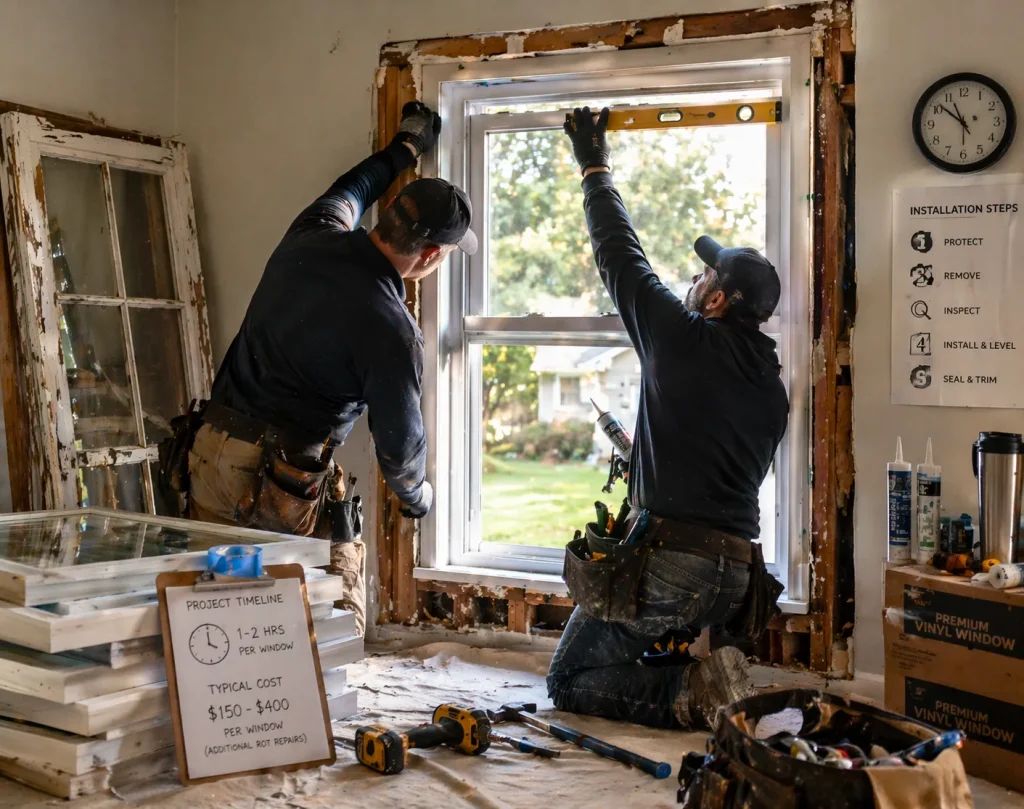 Improve energy efficiency and curb appeal with expertly installed replacement windows.
Vinyl window replacement means swapping out old windows for new ones made of vinyl. This can be done in two ways: insert (retrofit) installation or full-frame installation. Insert installation keeps the existing frame intact and replaces only the window sashes, while full-frame installation removes everything down to the wall studs, replacing the entire window structure.
The method you choose depends on the condition of your current frames. If the frames are in good shape – square and undamaged – insert installation is quicker and more budget-friendly. But if there’s rot, moisture damage, or warping, a full-frame replacement is necessary to fix underlying problems and ensure proper insulation.
"The actual window installation is surprisingly quick – about an hour per unit in most cases." – Nico Fries, Cobex [7]
During installation, professionals take care to protect your home, remove old windows, inspect openings, install and level the new units, and seal them with caulk and trim. Standard windows take about 30–60 minutes each, while more complex styles like bay or bow windows can take 2–6 hours [3][7]. Materials typically account for 70% to 80% of the total cost, with labor making up the remaining 20% to 30% [6]. If you live in an older home, be prepared for potential rot repairs, which can add $150 to $400 per window [6].
When to Replace Windows Instead of Repairing
Understanding replacement methods helps clarify when to replace windows instead of repairing them. Small issues like loose hardware, worn weatherstripping, or dried-out caulking are easy to fix and usually cost less than $100. But some problems signal it’s time for a full replacement.
For example, condensation between glass panes indicates a failed seal that can’t be fixed with cleaning [1]. Cracked, warped, or brittle frames – especially in older wood or aluminum windows – may no longer provide adequate structural support or energy efficiency [1]. You might also notice cold spots, drafts, or rising energy bills, which suggest poor insulation. Builder-grade windows often wear out after 15 to 20 years, while higher-quality vinyl windows can last 20 to 30 years [1]. When multiple problems arise, replacing your windows is often a smarter, long-term solution.
Benefits of Vinyl Windows
Vinyl windows stand out for their performance and ease of maintenance. Unlike wood windows, they don’t need painting, sanding, or staining. A quick wipe with a non-abrasive cleaner and occasional lubrication of moving parts are usually all that’s needed to keep them in great shape [1][6].
Their thermal performance is another major perk. Vinyl frames with multi-chambered designs, combined with Low-E glass coatings and argon gas fills, provide excellent insulation. This can help lower heating and cooling costs, especially in extreme climates [1][6].
"Vinyl windows deliver an unbeatable combination of energy efficiency, low maintenance, and affordability." – Insight Glass [6]
Durability is another strong point. High-quality vinyl windows are made with UV stabilizers to resist yellowing, brittleness, and fading over time [1]. Unlike wood, vinyl won’t rot, and unlike aluminum, it won’t corrode, making it a great option for humid or coastal areas. If noise is a concern, upgrading to vinyl windows with laminated or triple-pane glass can reduce outside noise by about 30% [2].
Vinyl Window Replacement Timeline
Replacing vinyl windows typically takes 3 to 8 weeks from start to finish [7]. While the actual installation itself is quick – usually wrapped up in a day or two – the majority of the timeline is spent on ordering and manufacturing your custom windows.
Consultation and Measurement
The process kicks off with an in-home consultation, where a contractor discusses your style preferences, energy efficiency goals, and budget. They’ll also take precise measurements from multiple points to ensure the windows fit perfectly [8]. Even a small error here can lead to delays.
Before the contractor arrives, it’s helpful to clear the area around your windows. Move furniture away, remove blinds or curtains, and ensure exterior paths are accessible. Consultations are usually scheduled within 1 to 3 days after your request [7].
Once measurements are confirmed, the ordering phase begins.
Ordering and Manufacturing
The manufacturing phase can take anywhere from 4 to 12 weeks, depending on the level of customization and the current demand. Standard vinyl windows are typically ready in about 4 to 6 weeks, while specialized options – like impact-resistant windows or uniquely shaped designs – may stretch the timeline to 10 to 12 weeks or longer [2] [5] [9].
"Manufacturing generally takes about 4–6 weeks once measurements are confirmed. This timeframe exists because proper fabrication and quality control for your home can’t be rushed."
This step ensures your windows are built to fit your home’s exact specifications, setting the stage for a smooth installation.
Installation Process
On installation day, professional crews can replace 5 to 10 windows in a single day. However, more intricate designs like bay or bow windows might take 2 to 6 hours each to install.
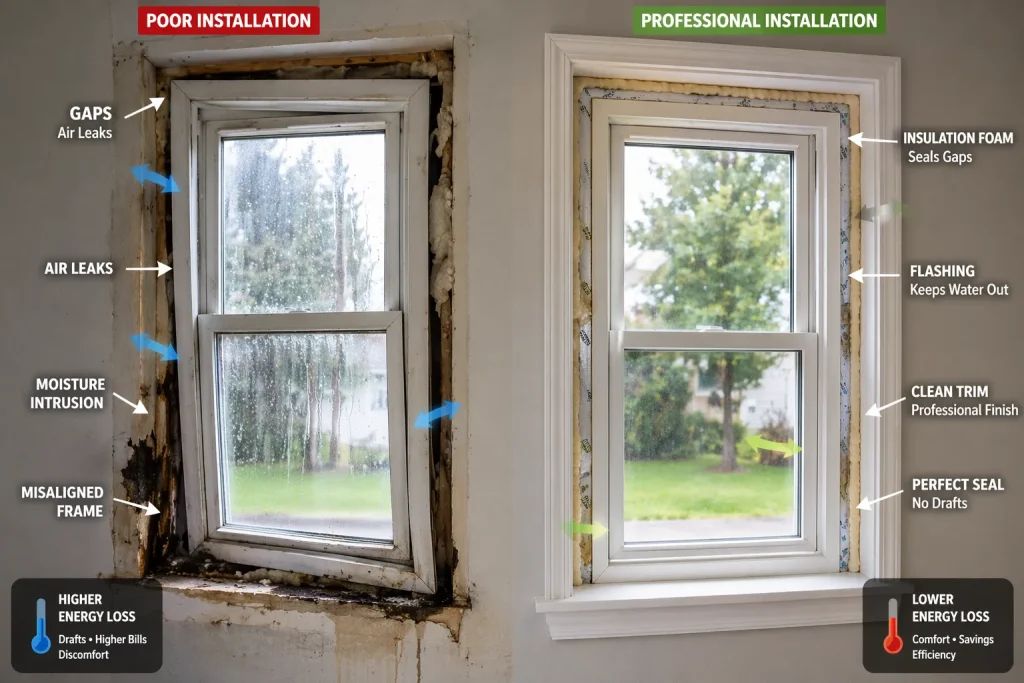
The team will protect your home with drop cloths, remove the old sashes and jamb liners, and inspect the rough openings for any damage. They’ll then install weatherproof flashing, position the new vinyl windows, and secure them with shims and screws. To ensure a tight seal, gaps are filled with expandable foam and finished with caulking to block air and water leaks. For a typical three-bedroom home with 10 to 15 windows, installation usually takes 1 to 3 days [3] [7].
After installation, the final step is a detailed inspection.
Final Inspection and Testing
Once the windows are installed, the contractor conducts a thorough inspection to confirm quality and performance. They’ll check that each window opens and closes smoothly, ensure the seals are airtight, and clean up the work area. Any minor issues are addressed during this final review to guarantee everything meets expectations.
Vinyl Window Replacement Costs

Replacing vinyl windows typically costs $400 to $700 per window, which includes both the materials and professional installation fees [6]. For a standard home with 10 to 15 windows – like a typical three-bedroom house – homeowners generally spend between $4,500 and $12,000 for the entire project [6].
The majority of the expense comes from materials, which account for 70% to 80% of the total cost. Labor makes up the remaining 20% to 30%, with installation fees ranging from $100 to $300 per window [6]. Below, we’ll break down how factors like window style, size, and installation method can impact overall costs.
Average Cost Breakdown
The style of the window plays a big role in determining the price. Here’s a quick look at some common options:
- Single-hung windows: $300 to $800 (installed)
- Double-hung windows: $450 to $1,000
- Casement windows: $600 to $1,400
- Bay or bow windows: $1,500 to $3,500 or more [6]
Brand choice also affects costs. Budget-friendly brands like Jeld-Wen or Reliabilt cost $200 to $500 per window (installed), mid-range brands like Milgard or Simonton range from $500 to $900, and premium options such as Andersen 100/200 or Pella 250 start at $900 and up [6].
Installation methods further influence pricing. Insert (retrofit) replacements, which keep your existing trim intact, cost $300 to $700 per window. On the other hand, full-frame replacements, which involve removing the entire window down to the studs, range from $600 to $1,500 or more [6].
Factors That Affect Costs
Several factors can push costs higher:
- Window size and customization: Oversized or uniquely shaped windows may exceed $1,000 per unit [6].
- Energy-efficient upgrades: Features like triple-pane glass, argon gas fills, or Low-E coatings increase upfront costs but can lower utility bills over time [6].
- Accessibility: Installing windows on a second story often adds $50 to $100 per window due to the need for scaffolding or lifts [6].
- Regional labor rates: Independent contractors typically charge $35 to $60 per hour, with rates varying by location [6].
To get the best deal, follow the "Three-Quote Rule": request estimates from a big-box retailer and at least two local window companies. Pricing for the same job can differ by as much as 50% or more [6].
Additional Expenses to Consider
Unexpected costs can arise during the project. For example:
- Rot repair: If water damage or wood decay is found, fixing the frame can add $150 to $400 per window [6].
- Disposal fees: Hauling away old windows typically costs $25 to $50 per unit [6].
- Building permits: These range from $50 to $200 for the entire project [6].
If you’re opting for full-frame replacements, remember to account for additional expenses like new interior trim, exterior casing, and insulation. Experts recommend setting aside an extra 10% to 15% of your total budget to cover unexpected repairs, especially in older homes [6].
For more detailed guidance on planning your project, check out this comprehensive window replacement cost guide.
Tips for a Successful Vinyl Window Replacement
Choosing the Right Vinyl Windows
Selecting the right vinyl windows means balancing style, functionality, and your home’s specific needs. For example, double-hung windows are a great fit for traditional homes and make cleaning easy with their tilt-in sashes. On the other hand, casement windows are ideal for areas that are harder to reach, thanks to their crank mechanism and excellent ventilation. If uninterrupted views and top-notch energy efficiency are priorities, picture windows might be the perfect choice [6].
Energy performance is another key factor. Check for a low U-Factor to ensure good insulation and choose a Solar Heat Gain Coefficient (SHGC) that matches your home’s sun exposure. Refer to Energy Star zones to find windows specifically rated for your region, ensuring they’ll perform well regardless of the season [1]. Additionally, high-quality uPVC with UV stabilizers can prevent yellowing and cracking, helping your windows last for 20 to 30 years [1].
Finally, the installation method matters. Depending on your home’s condition, you’ll want to pick the right window types and trust experienced professionals to get the job done correctly.
Working with Professional Installers
A professional installation is key to getting the most out of your new windows. Skilled installers ensure proper shimming, flashing, and water management, which are critical for avoiding leaks and maximizing the windows’ lifespan. They can also identify hidden problems, such as wood rot or moisture damage, that might otherwise go unnoticed.
"Professional installers plan carefully so your home is never left with openings uncovered overnight." – Awpwindows.com [2]
It’s worth noting that many manufacturer warranties require professional installation to remain valid. Attempting a DIY installation could void coverage for both the frames and glass units. When hiring a contractor, make sure their quote includes a labor warranty in addition to the manufacturer’s product warranty. Also, confirm they’ll handle the removal and disposal of your old windows as part of their service.
Once you’ve chosen a trusted installer, it’s time to think about timing your project.
Timing Your Project
The best time to schedule your installation depends on availability and demand. Late fall or winter often offers better availability and fewer delays, as the late spring and summer months tend to book up quickly [2]. Use the spring to gather quotes and secure your preferred installation date before the summer rush begins [6]. Local window specialists can often provide faster scheduling and pricing that’s 20% to 40% lower than big-box retailers [6].
Before the installation team arrives, make sure to clear 3 to 5 feet around each window and remove any blinds, curtains, or alarms [2][3]. If you’re opting for retrofit or insert replacements, these can be done in winter with minimal disruption, typically taking only 1 to 2 hours per window while maintaining your home’s warmth [6].
Conclusion
 From consultation to installation, we make window replacement simple and reliable.
Replacing vinyl windows effectively calls for thoughtful planning, a sensible budget, and skilled installation. From the initial consultation to the final installation, the entire process generally takes about 3 to 8 weeks [2][4][7]. On installation day, most homes with 8–12 windows can expect the work to be completed in a single day, with each window taking approximately 30–60 minutes to install [2][3][4].
The cost per window ranges from $300 to $1,200, with the expenses typically divided evenly between materials and labor [10][11]. High-quality vinyl windows not only last 20–30 years but also help reduce energy bills by providing excellent insulation [1][10]. As the J.C. Tonnotti Window Company emphasizes:
"A long warranty isn’t a substitute for proper installation or realistic expectations about expected service life" [1]
Proper installation is essential, not only for maintaining the warranty but also to avoid issues like leaks or damage [1][6]. To prepare for installation, clear a 3–5 foot space around each window and remove any treatments, such as blinds or curtains, beforehand [2][4].
If you’re replacing windows gradually, prioritize those on the south-facing side or areas with the most sun exposure. This approach helps you stay within budget while getting the most noticeable benefits early on [1][7][11]. Additionally, remember to take advantage of rebates and tax credits available in 2026 to enhance your investment’s value [1][10].
To ensure a smooth process, request multiple quotes, verify that contractors are licensed and insured, and conduct a detailed walkthrough after installation to confirm everything is functioning properly [2][11]. When installed correctly, quality vinyl windows can enhance your home’s comfort, energy efficiency, and overall appearance for years to come.