

If your shower glass is already cloudy, a daily spray will not fix it. I’d use a glass cleaner to remove soap scum, haze, and hard water spots first. Then I’d use a daily spray after each shower to slow new buildup.
Here’s the short answer:
- Glass cleaner = removes buildup that is already on the glass
- Daily spray = helps stop new spots and film from sticking
- Hard water = usually means you’ll need both
- Poor airflow = makes buildup show up faster
- Frameless glass and less hardware = less area to clean
A few facts help explain why this matters:
- The average American shower uses about 17 gallons of water, based on an 8-minute shower with a 2.1 gallons-per-minute showerhead
- Hard water affects about 85% of U.S. homes
- Even small mineral deposits can leave visible spots on clear glass after the water dries
The Best Way to Clean Glass Shower Doors!
Quick Comparison
| Option | What I use it for | Best time to use it | What it will not do | Effort |
|---|---|---|---|---|
| Glass cleaner | Remove haze, soap scum, and hard water spots | When glass already looks cloudy or dirty | It won’t stop new buildup by itself | Medium to high |
| Daily spray | Slow new residue after showering | Right after each shower on clean, wet glass | It won’t remove old stains or cloudy film | Low |
My rule of thumb: clean first, then maintain.
If you have clear glass, hard water, bar soap, or a shower used by more than one person, buildup will show up faster. In that case, I’d keep the routine simple: deep clean when needed, spray after showers, and make sure the bathroom dries out well.
When a Glass Cleaner for Shower Doors Is the Right Choice
Use a dedicated glass cleaner for shower doors when buildup is already easy to see: a cloudy film, soap scum along the bottom edge, or hard water spots that don’t come off with a quick wipe. This is the fix after prevention didn’t do the job. At that point, the next thing to look at is what these stronger products actually do to the glass.
What Deep-Clean Products and Methods Actually Do
Stronger cleaners are meant to remove buildup that’s already there, not for day-to-day upkeep. They break down bonded soap residue and mineral spots that a daily spray can’t touch. On clear shower glass, even a small amount of residue can make the whole bathroom feel worn out. Once buildup shows up, the job shifts from prevention to removal. That extra strength helps, but it also means you need to use the product with care.
Where Stronger Cleaners Can Cause Damage
Since these cleaners do more heavy lifting, the next concern is protecting the glass, hardware, and nearby finishes.
When Daily Shower Spray Is the Better Habit
After a deep clean, a daily spray helps stop new residue from sticking to the glass.
How Daily Spray Helps Prevent Fresh Buildup
Spray the glass right after showering. When the glass is already clean, daily spray can slow mineral spots, soap film, and streaks before they set in.
Think of it like wiping crumbs off a counter before they get ground in. It’s a small habit, but it makes a difference.
Why Daily Spray Does Not Fix Cloudy Glass
Daily spray won’t remove old stains or thick soap scum. And it won’t clear a cloudy film that’s already bonded to the glass.
If your shower glass already looks cloudy or spotted, start with a dedicated glass cleaner first. After that, use daily spray to keep buildup light between deep cleans.
Next, compare both routines against hard water, ventilation, and how often the shower gets used.
Glass Cleaner vs. Daily Spray: Side-by-Side Comparison
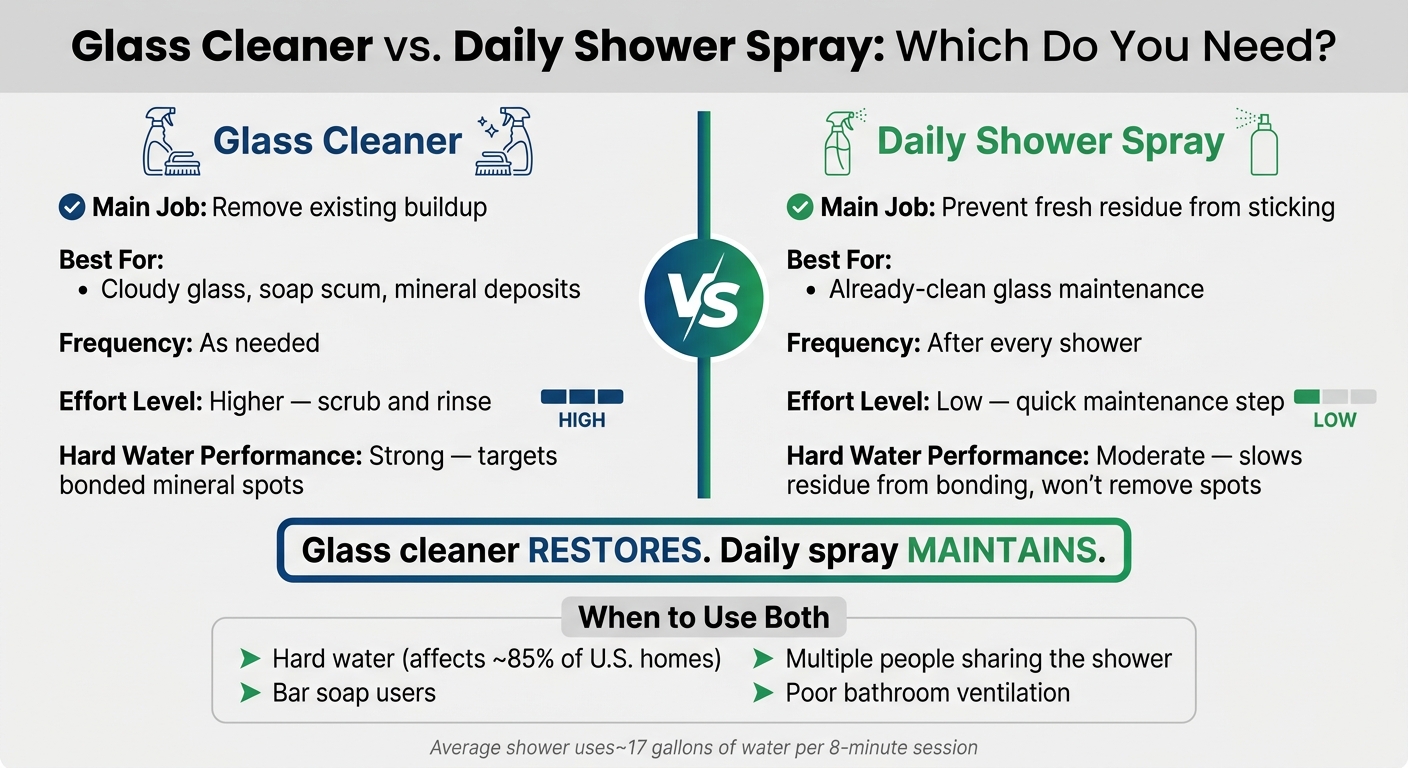
Glass Cleaner vs. Daily Shower Spray: Which Do You Need?
The right pick comes down to one thing: what problem are you trying to fix? These products do different jobs. One clears away buildup that’s already there. The other helps keep new residue from settling in.
| Option | Main Job | Best For | Frequency | Effort Level | Hard Water Performance |
|---|---|---|---|---|---|
| Glass Cleaner (Deep-Clean) | Remove existing buildup | Cloudy glass, soap scum, mineral deposits | As needed | Higher – scrub and rinse | Strong – targets bonded mineral spots |
| Daily Shower Spray | Prevent fresh residue from sticking | Already-clean glass maintenance | After showers | Low – quick maintenance step | Moderate – slows residue from bonding, won’t remove spots |
Glass cleaner restores. Daily spray maintains.
How Hard Water, Soap Choice, and Ventilation Change the Answer
Water quality, soap residue, and airflow all shape how fast buildup comes back.
Hard water makes mineral deposits form faster. If you live in a hard water area, a daily spray may help, but it often can’t keep pace on its own. That usually means you’ll need deeper cleaning more often.
Soap choice matters too. Bar soap tends to leave more residue than many liquid body washes, so film can build up faster on the glass.
Ventilation also plays a big part. When airflow is poor, moisture hangs around longer. That gives residue more time to stick and set. Better airflow helps both products do their job by helping the glass dry sooner.
Picking a Routine You Will Actually Stick To
The best routine is the one that fits how your home actually works.
A daily spray is the easy option. It takes only a moment after each shower. A deep clean asks for more work – scrubbing, rinsing, and a bit more time – but you only need it when the glass starts to show buildup.
If the shower gets a lot of use, using both can be a smart middle ground. Daily spray helps slow the mess down, and deep cleaning steps in when the glass needs a reset. That choice also gets simpler when the shower design itself makes cleaning less of a chore.
Remodel Planning: How to Make Shower Glass Easier to Maintain
Once you know whether you need a cleaner or a daily spray, the next step is making the shower itself easier to live with. Products help. But in a lot of cases, the shower design has an even bigger effect.
A layout that limits splash, helps the glass dry faster, and cuts down on edges can save you a lot of cleanup from the start.
Design Choices That Cut Down on Cleaning Work
Start with the features that reduce splash, residue, and drying time.
Simple layouts are easier to clean. Frameless panels and minimal hardware leave fewer seams, tracks, and corners where buildup can collect. Framed or semi-framed doors add more edges, which usually means more scrubbing over time.
It also helps to place the showerhead so it doesn’t spray directly onto the glass. That one choice can make a bigger difference than people expect.
Ventilation matters just as much as glass choice. Good ventilation helps the glass dry faster and lowers how often buildup sticks. Use the Shower Remodel Guide before you lock in the glass, layout, and materials.
Key Points Before Choosing a Cleaning Routine
Once the layout is set, match the cleaning routine to the shower’s water, use, and finish.
- Glass already cloudy? Start with a dedicated glass cleaner to remove existing buildup before switching to any prevention routine.
- Hard water in your area? Expect to deep-clean more often, and use a daily spray as a supplement – not a substitute.
- Multiple people using the shower? A daily spray habit becomes more useful when the glass gets heavy use throughout the day.
- Protecting a new remodel? Use only cleaners that are safe for coated glass and metal hardware.
For a full overview of what goes into planning a bathroom project, the Complete Bathroom Remodeling Guide is worth reading before making final decisions.
Ready to plan a shower that’s easier to maintain from day one? Get Your Free Bathroom Quote